Strategy in the Heartland: Why the Republican Midterm Convention is Centering Around Dallas
Dallas hosts the first-ever midterm GOP convention as leadership looks to solidify gains in Texas and regain control of Congress in the upcoming elections.
Editorial disclaimer: Opinions and analysis on Keep TX Red are editorial content — not statements of fact. See our editorial standards.
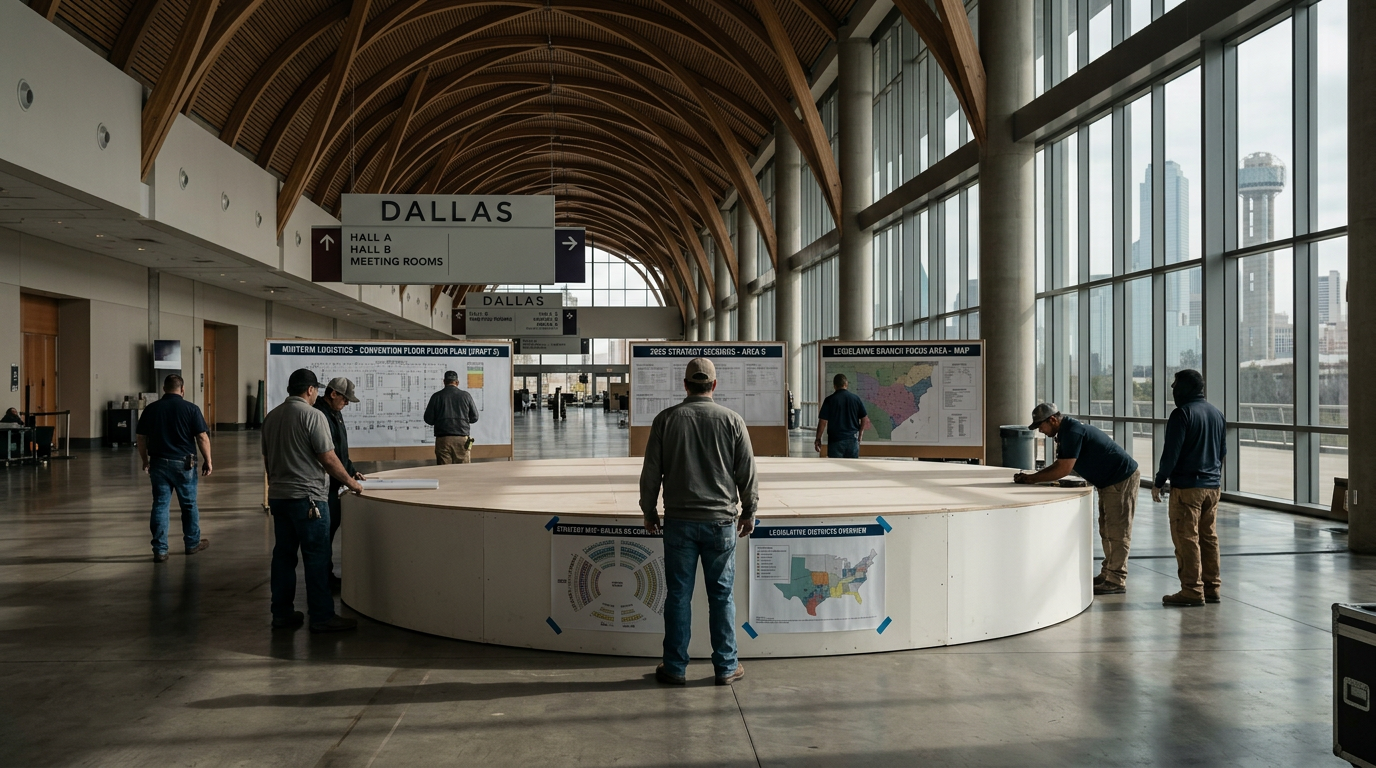
The political eyes of the nation are shifting toward North Texas as the Republican National Committee departs from historical tradition to host a first-of-its-kind midterm convention in Dallas. Historically, major party conventions are reserved for presidential election years, serving as a platform to officially nominate a candidate for the White House. However, the decision to convene in 2026 marks a strategic pivot for the GOP, focusing specifically on the legislative branch and the critical role that states like Texas play in maintaining a congressional majority. This gathering serves as an ideological rallying point and a logistical headquarters for the home stretch of the campaign season. The context of this move is rooted in years of evolving party strategy. For decades, the midterm cycle was considered a quieter period for national party structures, often characterized by localized fundraising and state-level rallies. By centralizing operations in Dallas this July, the RNC is attempting to mirror the energy of a presidential cycle during a year when the balance of power in Washington D.C. hangs by a thread. This precedent suggests that the national party views Texas not just as a reliable donor base, but as the essential battleground for defining the conservative mandate for the rest of the decade.
Texas relevance
Texas serves as the cornerstone of the Republican infrastructure, and hosting this event in Dallas provides a distinct home-field advantage for the state's leadership. Within the context of Texas precedent, the state has frequently acted as a policy laboratory for the rest of the country, particularly regarding border security and economic deregulation. By selecting Dallas—a major urban hub within a red state that has seen shifting demographics—the GOP is making a calculated statement about its intent to defend its turf against increasing Democratic investment in the 'Texas Triangle.' This convention ensures that local organizers have direct access to national resources, while simultaneously boosting the visibility of Texas-based candidates on a national stage.
Breaking the Four-Year Convention Tradition
The standard political calendar in the United States has long been dictated by the four-year presidential cycle. For over a century, the Republican and Democratic parties have utilized the summer months preceding a presidential election to showcase their platform and unify their various factions. These events are massive undertakings, requiring years of planning and hundreds of millions of dollars in security and logistical infrastructure. The decision to hold a convention during a midterm year is a radical departure from this established norm, signaling that the party leadership no longer views the off-years as secondary.
By establishing a midterm convention, the party is essentially professionalizing the legislative campaign process. Rather than leaving individual House and Senate candidates to fend for themselves with purely local messaging, the Dallas convention provides a unified narrative. This allows the party to synchronize its attacks on the current administration's policies while offering a cohesive vision for what a Republican-led Congress would achieve. It also serves to prevent the 'voter fatigue' that often plagues the party that is out of power during midterms, keep energy levels high among the grassroots base.
The Strategic Layout of North Texas
Dallas was not chosen by accident. While the city itself leans blue, the surrounding North Texas suburbs represent some of the most critical political territory in the country. These areas are home to a massive influx of new residents who have moved to Texas for its business-friendly climate and lower cost of living. The RNC is banking on the idea that by bringing the national spotlight to this region, they can secure the loyalty of these new voters who are still forming their political identities within the state.
The logistics of Dallas also make it an ideal host for a convention of this magnitude. With world-class facilities and a central geographic location, it allows delegates from both coasts to converge easily. Furthermore, the presence of major corporate headquarters in the Dallas-Fort Worth metroplex provides a fertile environment for high-level donor networking. The party is utilizing the city's infrastructure to prove that Republican governance leads to the kind of prosperity seen in the Texas economy, using the surrounding skyline as a visual metaphor for their economic platform.
Impact on Congressional Races
The primary goal of the Dallas gathering is to solidify the path to a congressional majority. During a midterm year, every seat in the House of Representatives is up for grabs, and the GOP is looking to capitalize on historical trends that typically favor the opposition party during a president's second year. By holding the convention in July, the party is timing its peak media saturation to coincide with the start of the most intense period of campaigning.
Candidates from across the country will be expected to attend, but the focus will remain heavily on the 'flippable' districts in the Sun Belt. Texas itself has several key races where the margin of victory has narrowed in recent years. Party leaders believe that the presence of national figures like the RNC Chair and various governors will provide down-ballot candidates with the 'rub-off' effect of national relevance, helping them to raise funds and recruit volunteers in their home districts more effectively.
Economic Implications for Dallas
Beyond the political theater, the convention represents a significant economic windfall for the city of Dallas. Large-scale political events bring in thousands of delegates, security personnel, media members, and lobbyists. This surge in visitors translates to a massive spike in revenue for the hospitality industry, particularly hotels, restaurants, and transportation services. Local officials have been preparing for months to handle the increased demand on the city's utility and safety infrastructure.
However, the economic impact is a double-edged sword. While it brings in immediate revenue, the cost of hosting such an event often requires significant public investment in policing and traffic management. The city has had to coordinate with federal agencies to ensure a safe environment, given the high-profile nature of the attendees. Despite these challenges, the long-term benefit of being the center of the political universe for a week is seen as a major win for the Dallas's reputation as a premier destination for international-scale events.
Unifying the Party Factions
Modern political parties are rarely monolithic, and the GOP is currently navigating several internal debates regarding its future direction. The Dallas convention provides a controlled environment for these factions to come together and iron out a platform that appeals to both the traditional conservative wing and the more populist grassroots movement. By having these discussions in a red state like Texas, the party hopes to anchor the conversation in core conservative values that have proven successful at the state level.
Speakers at the convention are expected to focus on a 'commitment to America' theme, emphasizing border security, inflation, and energy independence. By focusing on these high-polling issues, the party aims to project an image of a united front. The goal is to leave Dallas with a clear, concise message that every candidate from Maine to California can use on the stump. Transitioning from internal debate to external action is the primary objective of the week's proceedings.
The Role of Texas Leadership
Texas politicians are set to play a prominent role in the convention's programming. Figures such as Governor Greg Abbott and Senators Ted Cruz and John Cornyn are expected to utilize the platform to highlight the 'Texas Model' of governance. Their involvement is a testament to the state's outsized influence on national policy. Their speeches will likely contrast the growth seen in Texas with the challenges facing states with more restrictive regulatory environments, framing Texas as the blueprint for a national Republican resurgence.
This elevated visibility also helps position Texas leaders for future national roles. By hosting the convention on their home turf, these politicians can showcase their ability to manage complex political landscapes and mobilize a diverse electorate. The convention serves as a bridge, connecting the successful strategies used in the Lone Star State to the broader national effort to reclaim legislative control in Washington.
Analysis
This move is less about a single candidate and more about the preservation of the Republican brand in a changing political landscape. By moving the convention to Dallas, the RNC is effectively 'circling the wagons' around its most vital asset. Texas provides the largest Republican electoral vote count and a massive congressional delegation. If the GOP can demonstrate unity and strength in Dallas, it sends a message of stability to the national donor class and suburban voters who may be on the fence. Furthermore, it focuses the national narrative on Texas-centric issues, which often favor Republican talking points more than coastal or Midwestern controversies.
Source attribution
This story was reported using a public release from the Texas Standard. Keep TX Red rewrote the coverage independently and links to the official statement for verification.
Frequently Asked Questions
- Why is the RNC holding a convention during a non-presidential year?
- The RNC is breaking tradition to prioritize the battle for Congress. By holding a midterm convention, they can provide national-level support, funding, and media attention to legislative candidates who usually operate with less centralized coordination.
- What significant impact will this have on the city of Dallas?
- Dallas will see a major economic boost through tourism and hospitality revenue. Logistically, it requires extensive coordination between local police and federal security to manage the thousands of visitors and high-profile delegates attending the event.
- Will there be a presidential nominee named at this convention?
- No. Presidential nominations only occur during the four-year cycle (next in 2028). This convention is specifically designed to focus on the 2026 midterm elections and the goal of winning majorities in the U.S. House and Senate.
- How does this event affect Texas voters?
- Texas voters will see an increase in political activity and campaign spending in the region. It also gives Texans a chance to see national political figures up close and ensures that Texas-specific issues remain at the forefront of the national Republican platform.
Official Sources
Take the next step
Browse the Newsroom →Read more about Keep Texas Red → Our full guide to what Keep Texas Red means and why Texans support it.
Get Texas updates delivered weekly.
Independent Texas reporting on politics, policy, and daily life. One email a week. Unsubscribe anytime.
Keep TX Red Newsroom
The Keep Texas Red Editorial Staff produces nonpartisan explainers, policy breakdowns, and educational resources to help Texans understand how their government works. All content is reviewed for accuracy and updated regularly.
About Keep TX Red →