South Texas Lawmakers Push to Restore Landowner Exemptions for Border Wall Construction
Representative Henry Cuellar leads legislative efforts to bring back waivers for South Texas landowners impacted by border barrier projects.
Editorial disclaimer: Opinions and analysis on Keep TX Red are editorial content — not statements of fact. See our editorial standards.
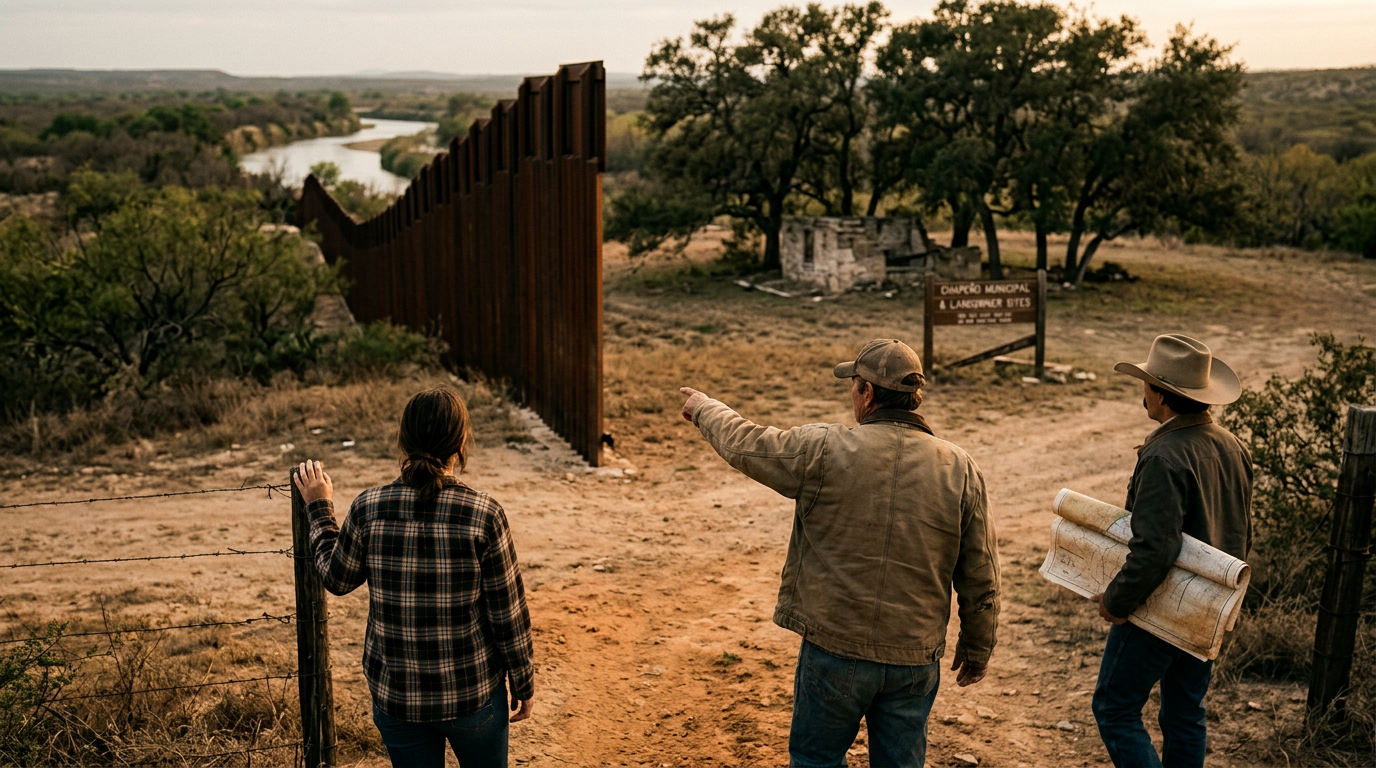
A renewed legislative effort has emerged from South Texas as Representative Henry Cuellar seeks to reinstate critical exemptions for property owners facing federal border wall construction. This movement specifically targets the restoration of language that was previously omitted from federal appropriations, which had protected certain historical sites, indigenous lands, and municipal parks from being dissected by physical barriers. The current push focuses on balanced border security that respects the unique geography and cultural heritage of the Rio Grande Valley. Historically, these exemptions were a staple of federal spending bills, ensuring that the Department of Homeland Security could not simply override local land usage without specific congressional oversight. The removal of these protections in recent cycles has created a legal vacuum that has left many South Texas stakeholders vulnerable to federal land seizures. By pushing for these reinstatements, lawmakers are attempting to reconcile the federal government's security mandates with the private property rights that are central to the identity of the Lone Star State. This initiative reflects a broader shift among border region representatives to exert more local control over how federal infrastructure projects are managed within their districts.
Texas relevance
The state of Texas holds the longest international boundary with Mexico, and the majority of that land is privately owned. Unlike many other border states where federal lands predominate, Texas property rights are a cornerstone of the state's legal framework. In South Texas, particularly in Webb and Starr counties, the proposed border wall threatens to cut off ranchers from their water sources and municipalities from their recreational riverfronts. The relevance of this legislative push cannot be overstated for the residents of Laredo and the surrounding Rio Grande Valley, who have fought for decades to maintain access to the river that sustains their local economies. If these exemptions are not reinstated, the federal government maintains expanded authority to utilize eminent domain, potentially fundamentally altering the landscape and economy of South Texas for generations. This situation echoes past Texas legal battles where the state has asserted its sovereignty over internal land use against federal overreach.
The Evolution of Border Barrier Exemptions
The concept of exempting specific South Texas sites from border wall construction dates back to the late 2010s. During various budget negotiations, lawmakers successfully carved out protections for the Santa Ana National Wildlife Refuge, the La Lomita Mission, and the National Butterfly Center. These areas were deemed too culturally or ecologically significant to be bisected by a steel bollard fence. For years, these exemptions were renewed annually as part of the Department of Homeland Security's funding package.
However, shifts in the political landscape and changes in the executive branch's priorities led to the expiration or removal of these specific protections. This left the door open for federal contractors to plan routes through territory that had previously been considered off-limits. The current legislative push aims to codify these protections more permanently, ensuring that the local heritage of South Texas is not sacrificed in the name of a singular infrastructure strategy.
Impact on Private Landowners and Agriculture
In many parts of South Texas, the Rio Grande is the lifeblood of the agricultural industry. Farmers and ranchers depend on direct access to the river for irrigation and cattle watering. When a border wall is constructed, it is often built several hundred yards inland due to the floodplain of the river, effectively creating a 'no man's land' between the barrier and the actual international boundary. This can trap thousands of acres of productive Texas soil on the 'wrong' side of the fence.
Without the exemptions that Representative Cuellar is fighting for, landowners face a difficult legal road. Eminent domain proceedings can drag on for years, often leaving families in a state of financial and legal limbo. By reinstating specific exemptions, the law would provide a shield for these agricultural operations, preventing the federal government from splitting contiguous ranches and disrupting the delicate balance of the local cattle and produce markets.
Historical and Religious Site Preservation
The Rio Grande Valley is home to sites that predate the modern borders of the United States. Locations like the La Lomita Mission in Mission, Texas, serve as vital links to the region's Spanish and Mexican heritage. Previous attempts to build walls through these areas were met with fierce resistance from local religious leaders and historical preservationists who argued that a physical barrier would desecrate the sanctity of the grounds and limit access for the faithful.
By restoring the waiver language, the proposed legislation would ensure that federal funds cannot be used to dismantle or bypass the historical significance of these structures. This is a critical issue for South Texans who view their history as a blend of cultures that should be respected by federal planners. The exemptions act as a safeguard, forcing the government to find alternative security solutions, such as 'smart wall' technology, rather than physical destruction.
The Role of Technology as an Alternative
One of the primary arguments for reinstating the exemptions is that modern technology has made physical barriers less necessary in certain terrains. South Texas lawmakers have long advocated for a 'high-tech' border that utilizes sensors, drones, and camera towers. These tools provide the necessary surveillance without the permanent environmental and economic damage caused by a physical wall.
The legislative effort emphasizes that security and preservation are not mutually exclusive. By exempting certain tracts of land, the federal government is encouraged to invest in these advanced monitoring systems. This not only protects the rights of Texas landowners but also provides Border Patrol agents with better real-time data than a static fence ever could. This shift toward technological solutions is a key component of the strategy being pushed by the Texas delegation.
Bipartisan Realities in the Texas Delegation
While border security is often viewed through a partisan lens, the issue of property rights in South Texas frequently creates unusual alliances. Both Republican and Democratic representatives from Texas have, at various times, expressed concern over federal land grabs. The push to reinstate these exemptions reflects a localized consensus that the federal government must be held accountable for how it treats Texas land.
The success of this effort depends on the ability of the Texas delegation to influence the larger appropriations process in Washington. By presenting a unified front regarding the protection of specific Texas landmarks and private properties, they increase the likelihood that these protections will be included in future spending bills. This regional advocacy is essential for ensuring that Texas interests are not overlooked by national policymakers.
Future Outlook for Texas Border Security
As the debate over the border continues, the outcome of this legislative push will serve as a bellwether for federal-state relations. If the exemptions are successfully reinstated, it will signal a return to a more cautious and respectful approach to border infrastructure. It would give South Texas communities more leverage in determining how their backyard is managed and protected from both security threats and federal overreach.
Should the effort fail, the Rio Grande Valley could see a surge in federal land acquisitions and construction projects that bypass local concerns. The legal battles that would follow would likely reach the highest courts in the land, as Texas landowners fight to maintain their constitutional rights. For now, the focus remains on the halls of Congress and the efforts of those seeking to balance the scales of national security and local sovereignty.
Analysis
The move by Henry Cuellar represents a pragmatic middle ground in the often-polarized debate over border security. By advocating for these specific exemptions, he is not necessarily opposing the concept of a secure border, but rather challenging the 'one-size-fits-all' approach favored by Washington bureaucrats. From a Texas perspective, this is an essential defense of property rights. The federal government’s history with eminent domain in the Rio Grande Valley has been fraught with delays, under-compensation, and ecological disruption. Reinstating these waivers would force the Department of Homeland Security to adopt more technologically advanced or less intrusive surveillance methods in sensitive areas, rather than relying solely on physical fencing. This approach aligns with the Texas tradition of prioritizing local stakeholder input over federal mandates. For conservatives and liberals alike in South Texas, the preservation of historical landmarks and private ranch access is a unifying issue that transcends national party lines.
Source attribution
This story was reported using a public release from the Texas Congressional Delegation (Google News). Keep TX Red rewrote the coverage independently and links to the official statement for verification.
Frequently Asked Questions
- Why were these border wall exemptions removed in the first place?
- The exemptions were originally part of annual appropriations bills. Changes in federal administration priorities and shifts in congressional leadership led to the removal of this protective language in recent budget cycles, allowing for more aggressive land acquisition strategies by the federal government.
- Which areas in Texas are most affected by this legislation?
- The most significantly impacted areas are in South Texas, specifically within the Laredo and Rio Grande Valley sectors. This includes Webb, Zapta, and Starr counties, where much of the riverfront is privately owned or contains sensitive historical and ecological sites.
- Does this mean no border wall will be built?
- No, the legislation does not stop all border wall construction. Instead, it seeks to reinstate specific 'carve-outs' for certain types of land. It forces the government to use different security methods in those specific locations rather than building a continuous physical wall.
Official Sources
Take the next step
Browse the Newsroom →Read more about Keep Texas Red → Our full guide to what Keep Texas Red means and why Texans support it.
Get Texas updates delivered weekly.
Independent Texas reporting on politics, policy, and daily life. One email a week. Unsubscribe anytime.
Keep TX Red Newsroom
The Keep Texas Red Editorial Staff produces nonpartisan explainers, policy breakdowns, and educational resources to help Texans understand how their government works. All content is reviewed for accuracy and updated regularly.
About Keep TX Red →