Rising Costs End Trend of Complimentary Chips and Salsa in Texas Eateries
Economic pressures across the Lone Star State are forcing many Mexican restaurants to pivot away from complimentary chips and salsa services.
Editorial disclaimer: Opinions and analysis on Keep TX Red are editorial content — not statements of fact. See our editorial standards.
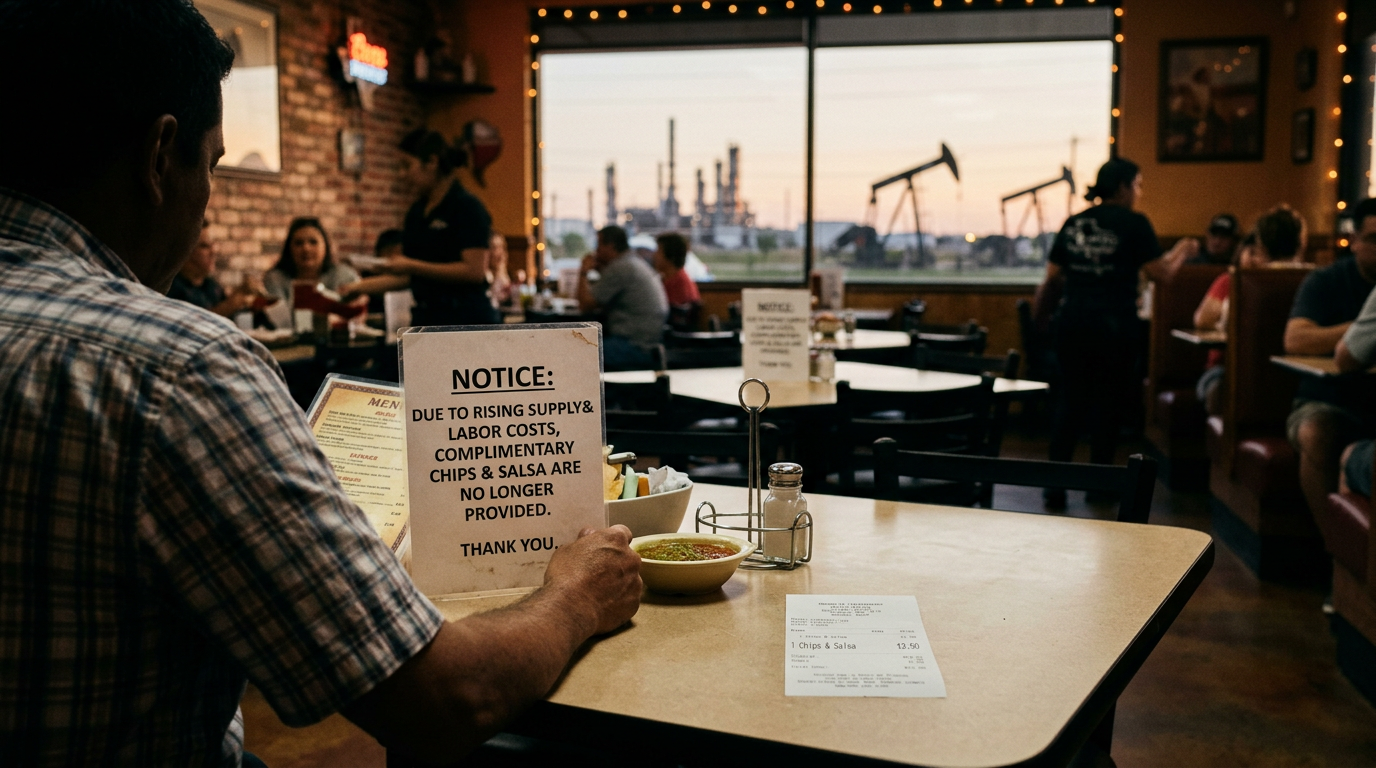
For decades, the standard dining experience at Mexican and Tex-Mex establishments across the Lone Star State has been defined by the immediate arrival of a warm basket of tortilla chips and a bowl of salsa, provided at no additional cost to patrons. However, a significant shift in the operational landscape of the Texas hospitality industry is beginning to take root. Driven by the compounding effects of supply chain volatility, labor cost increases, and general inflationary pressures, more owners are opting to remove the ‘complimentary’ status of these appetizers. This represents a fundamental change in the social contract between the diner and the establishment, reflecting a broader necessity for survival in a highly competitive market where profit margins are thinner than ever before. Historically, this tradition began as a low-cost hospitality gesture to keep guests occupied while waiting for their main meals, but the scale of modern dining has turned this modest offering into a major financial burden for family-owned venues and large chains alike. Contextually, this shift aligns with previous adjustments made in other sectors of the food industry, such as the introduction of service fees or the removal of free bread baskets in upscale European-style bistros. In Texas, where Tex-Mex is culturally ingrained, the move is more than just a pricing update; it is a cultural pivot. Previous economic downturns in the 1980s and 2008 saw some attempts to charge for basic appetizers, but those efforts were often met with fierce local resistance. Today’s economic environment appears more restrictive, as the costs of corn, oil, peppers, and tomatoes have risen simultaneously with the electricity required to fry the chips and the wages for staff to prepare the salsa daily. Restaurateurs are now caught between maintaining a beloved tradition and ensuring their business remains solvent.
Texas relevance
The issue of complimentary chips and salsa is uniquely relevant to Texas, as the state is the widely recognized heart of Tex-Mex culture. Cities like San Antonio, Austin, Houston, and Dallas house thousands of establishments where this practice is considered a standard of service. Because the Texas agricultural sector provides much of the raw materials for these products, price fluctuations in local crops directly impact the menu pricing of local cafes. The shift affects millions of residents who view these appetizers as an essential part of the social dining experience, making any change in pricing policy a matter of significant public interest and local economic discussion.
The Crippling Math of Free Appetizers
The financial math behind 'free' food has become increasingly difficult for Texas independent operators to justify. According to industry data, the cost of bulk frying oil—essential for making tortilla chips—has seen dramatic price hikes over the last 24 months. When combined with the rising price of corn flour and the energy intensity of commercial fryers, a single basket of chips that costs a restaurant only cents a decade ago now costs significantly more to produce and serve.
Beyond the raw ingredients, the labor required to maintain the tradition is substantial. In a typical Texas restaurant, one or more employees must be dedicated specifically to the constant production of chips and the fresh blending of salsa. As the state’s labor market remains tight and wages rise to meet the cost of living, the overhead associated with 'free' labor hours becomes a primary target for cost-cutting measures. Owners are finding that they can no longer absorb these costs as 'marketing' expenses.
Furthermore, the issue of food waste plays a critical role in the decision-making process. When items are provided at no cost, diners are less likely to finish them, leading to significant amounts of wasted food that still incurred a production cost. By placing a price tag on the item, restaurants encourage more conscious consumption, which reduces waste and streamlines kitchen operations during busy peak hours.
Impact on the Traditional Tex-Mex Identity
Tex-Mex food is more than a culinary style; it is a cultural cornerstone of the state. For many families, the local Mexican restaurant is a community hub where the 'free' chips and salsa act as a catalyst for conversation. Removing this feature changes the tempo of the meal. Without the immediate arrival of snacks, diners may feel a sense of impatience, forcing restaurants to re-evaluate their overall speed of service and hospitality staff training.
There is also the concern of brand loyalty. In competitive markets like San Antonio or the Rio Grande Valley, the promise of free appetizers has long been a tool to draw in crowds. Owners who adopt a charging model risk losing long-term regulars to competitors who choose to keep the tradition alive. This has created a fractured landscape where some establishments are holding the line on free service as a point of pride, while others have moved toward a 'premium' chip model where customers pay for higher quality, house-made variations.
Despite the risk, many consultants argue that the Texas palate has become more sophisticated. Customers are often willing to pay for salsa if it means they are receiving fire-roasted ingredients or unique regional recipes rather than a standard, mass-produced product. This pivot allows restaurants to market chips and salsa as a legitimate 'starter' course rather than a throwaway commodity, potentially elevating the perception of the entire menu.
Global Supply Chain and Local Consequences
The instability of global supply chains has a trickle-down effect that hits the corner taco shop in rural Texas just as hard as it hits major metropolitan hubs. Disruptions in the supply of fertilizer and equipment parts have slowed down the production of key ingredients like tomatoes and jalapeños. When a drought hits the Rio Grande Valley or northern Mexico, the scarcity of produce causes immediate price spikes at the wholesale level, which restaurants must navigate weekly.
Because chips and salsa require a high volume of perishable goods, they are particularly sensitive to these fluctuations. Unlike a frozen steak or a bag of rice, salsa ingredients must be used quickly. This high turnover means that restaurant owners are essentially gambling on price stability every time they offer a free refill. By charging a set fee, they create a financial buffer that protects the business from the sudden volatility of the produce market.
Additionally, the shipping and logistics costs within the state have risen. Fuel prices impact the delivery of all materials, and the specialized equipment needed for chip production often requires expensive maintenance. When these factors are viewed collectively, the 'free' model appears to be an artifact of an era with much lower logistical overhead, one that current economic reality can no longer sustain without hurting the quality of the meal's primary proteins.
Consumer Sentiment and the New Normal
Public reaction to these changes has been mixed, reflecting a generational and regional divide. Older patrons, accustomed to decades of consistent service standards, often view the charge as an affront to hospitality. However, younger diners, who are more familiar with a-la-carte pricing in other cuisines, tend to be more accepting of the change. This cultural shift suggests that while the transition is painful, it may eventually become the accepted standard across the state.
Restaurants that have successfully implemented a charging model often do so by offering a more robust appetizer experience. Instead of a single bowl of red salsa, they may offer a 'flight' of salsas with varying heat levels or add unique dipping options like bean dip or specialty queso. By adding value to the transaction, they mitigate the 'sticker shock' that customers experience when they see a charge for something they previously received for free.
Ultimately, the sustainability of the Texas restaurant industry depends on the ability of owners to adapt to their internal ledger. If the choice is between raising the price of every taco by two dollars or charging five dollars for an optional basket of chips, many business owners believe the latter is the more honest approach. This allows the customer to choose their level of spending rather than forcing every diner to pay a 'hidden' chip tax embedded in the price of their fajitas.
What’s Next for Texas Dining Standards?
The move toward charging for chips and salsa may be the first of several changes in the Texas casual dining scene. As economic pressures persist, we may see more 'inclusive' dining features moved to an a-la-carte model, such as side salads, bread rolls, or even soda refills in some markets. This follows a broader national trend in the service industry where transparency in pricing is becoming a survival tactic against rising inflation.
However, the competitive nature of the Texas market will likely prevent a total disappearance of the free model. Some legacy establishments may choose to use their 'free chips' policy as a primary marketing differentiator, hoping to attract the price-sensitive customers who are being turned away by larger chains or modernized concepts. This could lead to a two-tier dining market in Texas: one that prioritizes tradition and one that prioritizes modern economic efficiencies.
In the long term, the survival of the Tex-Mex tradition depends on the relationship between the diner and the chef. As long as Texas patrons value the labor and ingredients that go into their favorite meals, they will likely continue to support their local establishments, even if it means paying a few extra dollars for the crunch of a tortilla chip. The state's food culture has always been resilient, and this current economic challenge is likely just another chapter in its evolution.
Analysis
Opinion: While many regulars may initially bristle at the prospect of paying three to five dollars for a once-free staple, this change likely signifies a stabilization of the industry. By separating the cost of appetizers from the price of the main entree, restaurants can avoid inflating the cost of a standard plate of enchiladas or tacos. This 'unbundling' of expenses is a transparent way for small business owners to communicate the reality of modern food overhead without deceptive hidden fees. Ultimately, if paying for chips ensures that a local, multi-generational family business can keep its doors open, most loyal Texas diners will likely accept the new reality as a necessary trade-off for quality and community continuity.
Source attribution
This story was reported using a public release from the Texas Monthly. Keep TX Red rewrote the coverage independently and links to the official statement for verification.
Frequently Asked Questions
- Why are Texas restaurants starting to charge for chips and salsa now?
- The combination of high inflation, increased labor costs, and the rising price of kitchen essentials like frying oil and fresh produce has made it difficult for restaurants to absorb the cost of complimentary items without going into the red.
- How much are restaurants typically charging for these items?
- While prices vary by location and the quality of the product, many establishments are setting prices between $3.00 and $7.00, often including free refills once the initial fee is paid.
- Will every Mexican restaurant in Texas start charging?
- No, some 'legacy' establishments and smaller family cafes may choose to keep the practice for as long as possible to maintain customer loyalty and preserve traditional dining culture.
- Is this trend unique to Texas?
- While the national restaurant industry is seeing similar trends with 'free' items, the impact is most visible in Texas due to the massive prevalence and cultural importance of Tex-Mex dining.
Official Sources
Take the next step
Browse the Newsroom →Read more about Keep Texas Red → Our full guide to what Keep Texas Red means and why Texans support it.
Get Texas updates delivered weekly.
Independent Texas reporting on politics, policy, and daily life. One email a week. Unsubscribe anytime.
Keep TX Red Newsroom
The Keep Texas Red Editorial Staff produces nonpartisan explainers, policy breakdowns, and educational resources to help Texans understand how their government works. All content is reviewed for accuracy and updated regularly.
About Keep TX Red →