Lone Star State Showcased at Great American State Fair in D.C.
Texas officials promote tourism and economic development at a prominent national fair in the capital to attract new visitors.
Editorial disclaimer: Opinions and analysis on Keep TX Red are editorial content — not statements of fact. See our editorial standards.
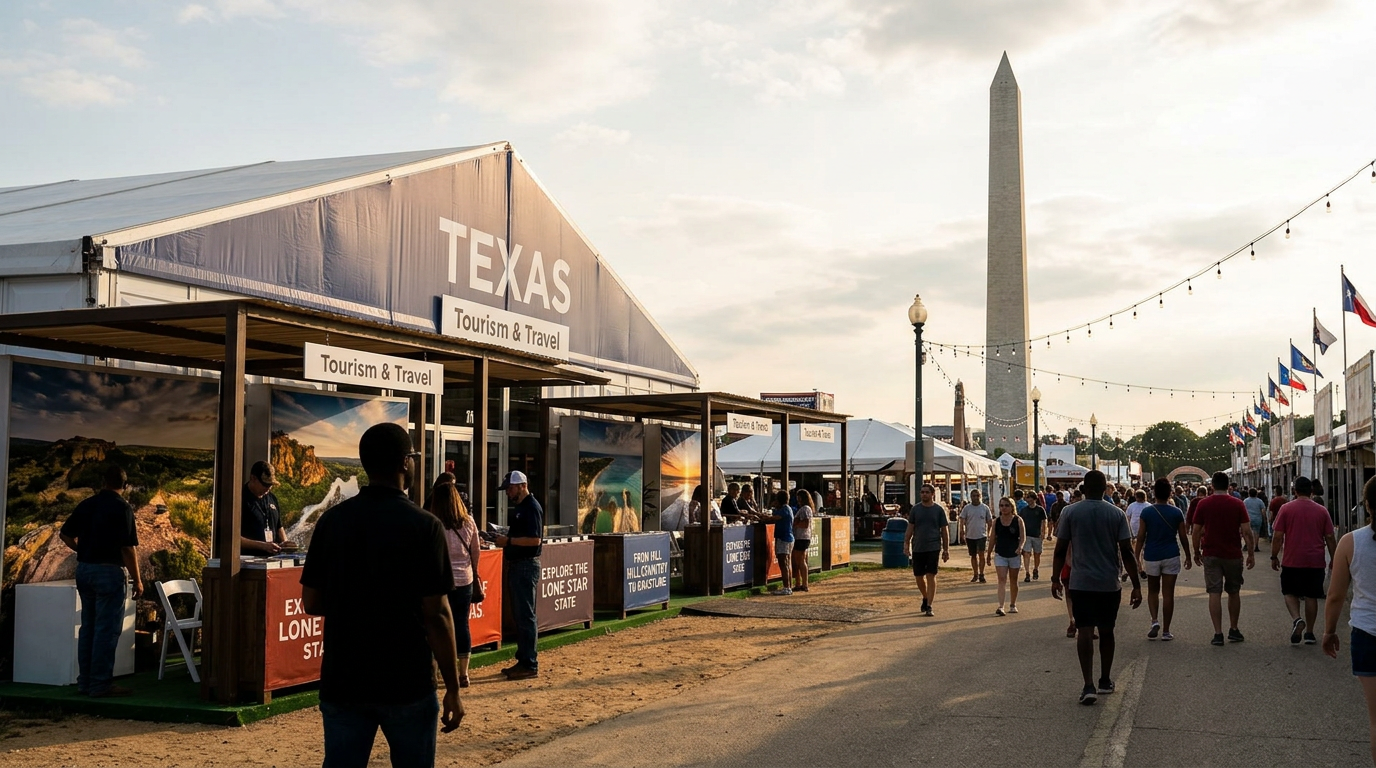
In early July 2026, representatives from the State of Texas arrived in Washington, D.C., to participate in the Great American State Fair. Led by the Texas Economic Development and Tourism Office, the delegation focused on highlighting the diverse travel opportunities available across the Lone Star State to a national audience. This presence in the capital is part of an ongoing strategy by the Office of the Governor to maintain Texas' status as a top-tier destination for both domestic and international travelers. By utilizing the visibility of the fair, state officials aim to translate foot traffic in D.C. into actual visitors for Texas cities and rural landmarks. Historically, Texas has leveraged large-scale public events to brand itself as a unique cultural and economic powerhouse. The state has previously invested significantly in the 'Travel Texas' campaign, which targets high-growth markets to ensure a steady stream of revenue for the hospitality sector. This recent appearance at the Great American State Fair follows a pattern of proactive marketing intended to outpace other large states like Florida or California in the competition for discretionary travel spending. The effort emphasizes the state’s varied landscapes, from the Gulf Coast to the High Plains, as a way to appeal to a broad demographic of vacationers.
Texas relevance
The economic impact of tourism on Texas cannot be overstated, as the industry supports hundreds of thousands of jobs and generates billions in tax revenue. For communities from El Paso to Beaumont, the success of these promotional tours in Washington, D.C., translates directly to increased occupancy rates in local hotels and higher spending at small businesses. By showcasing the state at the Great American State Fair, officials are attempting to secure the financial future of the Texas tourism sector against national economic fluctuations. This outreach is particularly relevant to the state's post-pandemic recovery efforts, where maintaining a dominant presence in the national travel conversation remains a top priority for the Austin-based economic teams.
Strategic Marketing in the Capital
The Great American State Fair provides a unique intersection of political influence and public engagement. By setting up a prominent display, Texas officials are able to engage directly with residents of the D.C. metro area, as well as visitors from across the country who flock to the capital during the summer months. The Texas Economic Development and Tourism Office utilizes these interactions to distribute information about the state’s natural wonders, historical sites, and metropolitan centers.
Choosing Washington, D.C., as a venue for this outreach is no coincidence. The capital acts as a hub for international travelers and diplomatic staff, offering Texas a chance to market itself to a global audience without leaving the country. This strategic placement ensures that the message of Texas as a premier travel destination reaches individuals who have the high discretionary income typical of the capital region's demographics.
The Role of Travel Texas
Travel Texas, the state’s official tourism marketing brand, is the primary vehicle through which these promotional activities are funneled. The brand focuses on storytelling that highlights the 'only in Texas' experiences, such as the unique culinary scene, the deep-rooted rodeo culture, and the burgeoning tech and music festivals. These elements were center stage at the fair, presented to pique the interest of those looking for more than a standard beach vacation.
The personnel involved in these efforts are tasked with presenting a cohesive image of the state that bridges the gap between its traditional heritage and its modern economic status. By integrating traditional symbols like the Lone Star with modern attractions, Travel Texas seeks to create a multifaceted appeal. This strategy is designed to ensure that the state remains relevant to younger travelers while maintaining its base of traditional visitors.
Governor Abbott's Economic Vision
Governor Greg Abbott has consistently linked the state's tourism success to its broader economic health. Under his leadership, the Texas Economic Development and Tourism Office has been empowered to act as an aggressive advocate for the state's business interests. The participation in the D.C. fair is a manifestation of this policy, treating tourism as a vital pillar of the Texas 'miracle' that continues to draw people and businesses to the state.
The Governor’s office views these tourism initiatives as a way to diversify the state’s economic portfolio. While oil, gas, and technology remain major drivers, a robust tourism sector provides a buffer against volatility in those markets. The presence at the Great American State Fair is a clear indicator that the administration intends to keep Texas at the forefront of the national conversation regarding travel and economic opportunity.
Adriana Cruz and the Implementation Team
Adriana Cruz, as the Executive Director of Texas Economic Development and Tourism, oversees the tactical execution of these promotional campaigns. Her office is responsible for coordinating with various stakeholders across the state, ensuring that the representation in Washington, D.C., accurately reflects the interests of all regions of Texas. This requires a complex logistics operation to move materials and staff to the capital fairgrounds.
Cruz’s leadership has focused on data-driven marketing, where the success of appearances like the one at the Great American State Fair is measured against visitor conversion rates. By analyzing how many fair attendees eventually book trips to Texas, her office can refine its messaging for future events. This professionalized approach to state promotion helps justify the budget allocations received from the legislature for these national tours.
Economic Implications for Local Businesses
When visitors are drawn to Texas through national fairs, the benefits trickle down to a wide array of local businesses. Small town boutiques, family-owned restaurants, and local tour guides all see an uptick in revenue when tourism numbers rise. The D.C. event specifically targets travelers who may have previously overlooked the interior of the country in favor of coastal destinations.
Furthermore, increased tourism helps support the maintenance of state parks and historical sites. The revenue generated by visitors often funds conservation efforts and educational programs that benefit Texans year-round. Therefore, the promotional activity in Washington, D.C., is not just about attracting outsiders, but also about securing the resources needed to preserve the state’s own natural and cultural heritage.
Analysis
Opinion: The decision to plant the Texas flag firmly at a Washington, D.C. event suggests that the Abbott administration views tourism not just as a leisure industry, but as a critical tool of soft power and economic resilience. By dominating the narrative at the Great American State Fair, Texas is essentially signaling its readiness to compete for global investment and talent, using tourism as the 'front door' to the state's broader economic opportunities. While other states may participate in such events, the scale of the Texas presentation reflects a strategic confidence that the state’s brand is its strongest asset in attracting outside capital. Furthermore, this move aligns with a broader conservative governance philosophy that prioritizes market-driven growth. Rather than relying solely on internal development, the state is aggressively 'exporting' its image to lure external spending. This approach minimizes the tax burden on residents by shifting a portion of the infrastructure and service costs to out-of-state visitors via hotel and sales taxes. As long as these promotional efforts continue to yield high returns on investment, the Texas Economic Development and Tourism Office is likely to expand its footprint at major national and international venues.
Source attribution
This story was reported using a public release from the Texas Travel Stories (Google News). Keep TX Red rewrote the coverage independently and links to the official statement for verification.
Frequently Asked Questions
- Why does Texas promote itself at a fair in Washington, D.C.?
- Washington, D.C. serves as a high-traffic hub for both domestic travelers and international visitors. By establishing a presence there, Texas can reach a large, diverse audience and encourage them to spend their vacation dollars within the Lone Star State, which boosts the Texas economy.
- What is 'Travel Texas'?
- Travel Texas is the official tourism marketing agency for the state. It falls under the Office of the Governor and works to attract visitors by highlighting the state's unique culture, landmarks, and experiences through various advertising and promotional events.
- How does tourism benefit the average Texan?
- Tourism brings in billions of dollars in revenue from out-of-state visitors. This money supports local businesses, creates jobs in the hospitality and service sectors, and generates tax revenue that helps fund state infrastructure and schools, often reducing the direct tax burden on Texas residents.
Official Sources
Take the next step
Browse the Newsroom →Read more about Keep Texas Red → Our full guide to what Keep Texas Red means and why Texans support it.
Get Texas updates delivered weekly.
Independent Texas reporting on politics, policy, and daily life. One email a week. Unsubscribe anytime.
Keep TX Red Newsroom
The Keep Texas Red Editorial Staff produces nonpartisan explainers, policy breakdowns, and educational resources to help Texans understand how their government works. All content is reviewed for accuracy and updated regularly.
About Keep TX Red →