Legislative Push Intensifies to Reinstate Federal Border Wall Construction Exemptions in South Texas
A South Texas representative is leading a legislative effort to restore federal exemptions necessary to expedite border wall construction along the Rio Gra
Editorial disclaimer: Opinions and analysis on Keep TX Red are editorial content — not statements of fact. See our editorial standards.
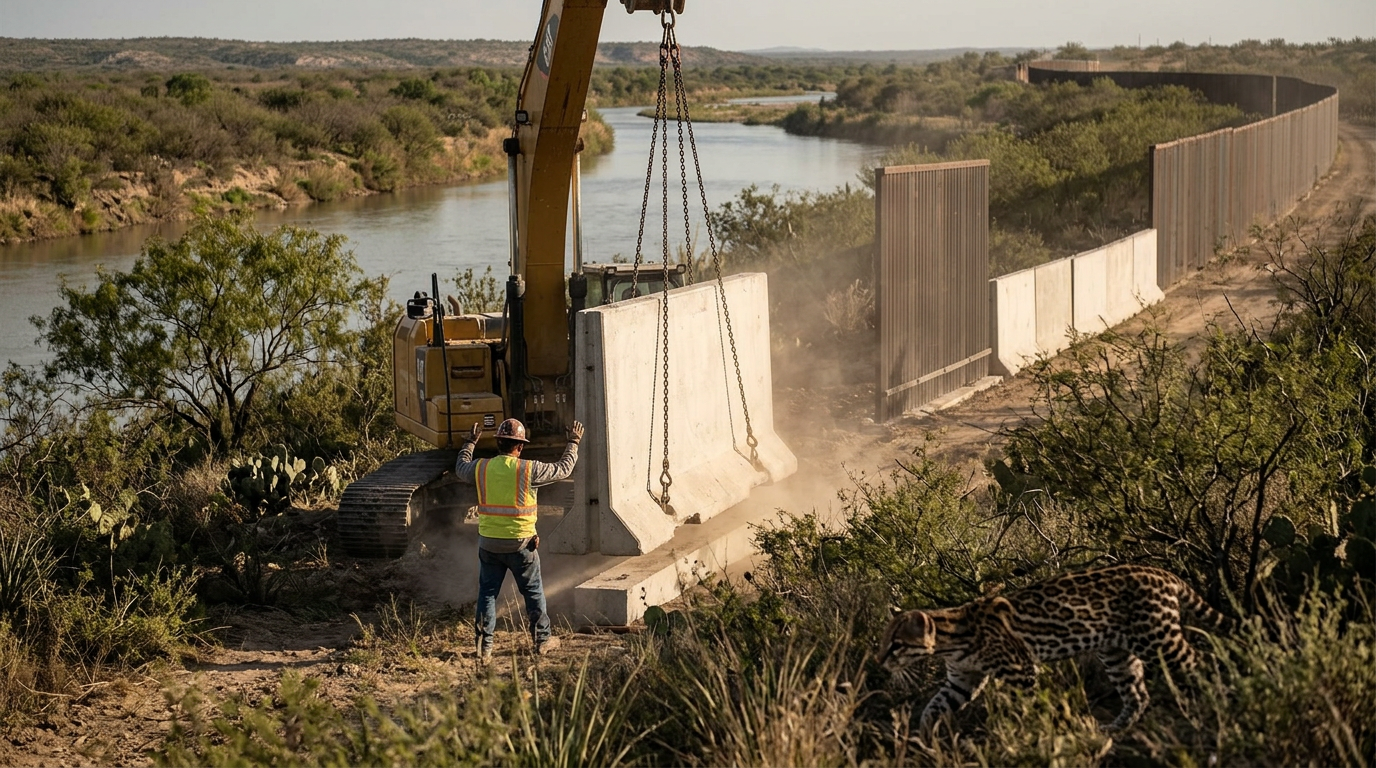
A significant legislative effort is underway within the Texas congressional delegation to restore specific federal exemptions aimed at accelerating the construction of physical barriers along the United States-Mexico border. Historically, these waivers allowed the federal government to bypass certain environmental and land-use regulations that often delay infrastructure projects by months or years. The recent push, led by representatives from South Texas, seeks to reinstate these legal mechanisms to ensure that pending wall segments in the Rio Grande Valley and surrounding areas can proceed without the hinderance of administrative litigation. For decades, the legal framework surrounding border construction has toggled between aggressive expansion and environmental preservation, with current efforts focusing on the former as a matter of national and state security. This shift follows years of stalled projects that left numerous gaps in the existing fencing, particularly in vulnerable corridors used by human traffickers and drug cartels. The proposed changes would effectively shield border projects from a range of traditional regulatory hurdles, including the Clean Air Act and the Endangered Species Act, specifically for projects located within designated high-traffic border zones. The focus remains on the unique geography of the Rio Grande, where varied terrain and private property rights have historically complicated federal construction efforts. Proponents argue that the current pace of construction is insufficient to meet the challenges posed by recent surges in unauthorized crossings and that a streamlined process is the only viable solution for local law enforcement agencies currently overwhelmed by the volume of illegal activity.
Texas relevance
The state of Texas shares approximately 1,254 miles of border with Mexico, more than any other state in the nation. The outcome of this legislative push directly affects the security landscape of Texas border towns like McAllen, Laredo, and Brownsville. In recent years, Texas has taken an unprecedented role in border security through Operation Lone Star, spending billions of state taxpayer dollars to fill what officials describe as a void left by federal inaction. Reinstating these exemptions would represent a major shift in how federal and state resources are coordinated along the Texas shoreline. Historically, Texas has been the primary battleground for eminent domain disputes and environmental lawsuits regarding the border wall, and this new federal effort aims to resolve those conflicts in favor of rapid construction. Local ranchers and property owners in South Texas are among the most impacted stakeholders, as the renewal of these exemptions could mean a faster timeline for federal agents to access and secure private lands adjacent to the Rio Grande.
The Evolution of Border Construction Waivers
The concept of waiving federal laws to build border barriers dates back to the Illegal Immigration Reform and Immigrant Responsibility Act of 1996, which was later expanded by the Real ID Act of 2005. These laws granted the Secretary of Homeland Security the authority to waive all legal requirements necessary to ensure expeditious construction of barriers and roads. Over the years, these waivers have been used sparingly and frequently contested in federal court, often leading to a patchwork of completed and uncompleted wall segments.
In the Texas context, the use of these waivers has always been controversial due to the state's diverse ecosystem and the reliance on the Rio Grande for agricultural and municipal water needs. However, as illegal crossings reached record highs in the early 2020s, the demand for a more streamlined approach to infrastructure became a central theme for Texas congressmen. The current effort seeks to bring back the broad authority seen in earlier decades to bypass the National Environmental Policy Act (NEPA) and other similar statutes.
Without these exemptions, every mile of proposed wall must undergo rigorous environmental impact studies that can last upwards of three years. For a state like Texas, where the border is a dynamic and often dangerous environment, these delays are frequently characterized by local officials as unacceptable risks. The proposed legislation aims to standardize the application of these waivers regardless of which political party holds the executive branch, providing a more permanent legal foundation for border security projects.
Impact on South Texas Property Owners
A major component of the border wall debate in Texas involves the rights of private landowners. Unlike other border states where the federal government owns much of the land near the frontier, the vast majority of Texas borderland is privately owned. Reinstating construction exemptions would likely streamline the eminent domain process, allowing the government to take possession of land more quickly for the purpose of erecting barriers.
Proponents believe this is necessary for a continuous and effective barrier, while some landowners express concern over the loss of property rights without due process. However, the legislative push emphasizes that the safety of these property owners is also at stake. Many South Texas ranchers have reported significant property damage, livestock loss, and threats to personal safety due to high volumes of trespassers crossing their lands.
The goal of the new exemptions is to provide a clear, predictable framework for how land is acquired and how construction proceeds. By removing the ability for outside interest groups to file lengthy injunctions based on environmental or technical grounds, the legislation seeks to finalize the border map in Texas once and for all, providing certainty to both the federal government and the local communities living on the front lines.
State vs. Federal Jurisdiction Over Security
The push for federal exemptions coincides with Texas's own independent efforts to secure the border. Under Governor Greg Abbott, Texas has deployed its own segments of wall and state-funded floating barriers. The tension between state-led initiatives and federal authority is a constant theme in Texas politics, and this congressional effort represents an attempt to align federal capabilities with the urgency felt at the state level.
If the federal government reinstates these exemptions, it could lead to better integration between federal Border Patrol infrastructure and the Texas Department of Public Safety's technological assets. Currently, the lack of a uniform physical barrier often forces state and federal agencies to play a 'cat and mouse' game with smugglers, moving resources from one open gap to another.
Texas lawmakers argue that a unified approach, backed by the legal authority to move quickly, is the only way to effectively manage the border. They contend that the state shouldn't have to carry the financial and logistical burden alone and that the federal government must use every tool available—including regulatory waivers—to fulfill its constitutional duty to protect the border.
Economic Implications for Border Communities
The construction of a border wall is not just a security matter; it has significant economic implications for South Texas. Rapid construction facilitated by exemptions would bring an influx of federal contracts and jobs to the region. Many local businesses in cities like Laredo and Eagle Pass depend on a stable and secure environment to facilitate the billions of dollars in legal trade that crosses the border daily.
Conversely, some argue that excessive barrier construction could hinder the movement of goods or affect tourism in sensitive areas like the Sabal Palm Sanctuary. The legislative effort currently being debated includes provisions to ensure that port-of-entry operations remain efficient while the surrounding areas are secured with physical barriers. Balancing these economic needs is a key part of the negotiation process in Washington.
For many Texans living in these regions, the primary economic concern is the cost of public services strained by the influx of migrants. By expediting the wall through regained exemptions, supporters argue that the overall fiscal burden on local hospitals, schools, and emergency responders will be reduced, as the flow of unauthorized entries becomes more manageable and directed toward legal ports.
Environmental and Historical Preservation Concerns
One of the primary reasons for the original suspension of these exemptions was concern over the impact on the local environment and historical sites. The South Texas landscape is home to several endangered species and historical landmarks that are protected under federal law. The new legislative push acknowledges these concerns but maintains that national security must take precedence in the current crisis.
Lawmakers are working to include language that encourages 'mitigation' strategies, where the government would attempt to minimize environmental damage even while bypassing formal study requirements. This middle-ground approach is intended to win over moderate votes in Congress who are concerned about the precedent of ignoring environmental laws entirely.
Historical sites, including old ranch houses and cemeteries along the Rio Grande, also face potential impacts. The goal of the South Texas delegation is to create a fast-track process that still allows for a cursory review of these sites without the years-long delays typical of standard federal projects. The debate remains focused on where the line should be drawn between preserving the past and protecting the future of Texas security.
The Road Ahead in Congress
The path to reinstating these exemptions is fraught with political hurdles. While the Texas delegation is largely united on the need for more border security, the proposal must navigate a divided Congress. Supporters are looking to attach the exemption language to larger must-pass funding bills or national defense authorizations to ensure it reaches the president's desk.
Initial hearings have already seen heated testimony from border agents who describe the current regulatory environment as a 'handcuff' on their ability to do their jobs. These agents argue that being able to build a road or a fence in a matter of weeks rather than years would transform the operational landscape of the Southwest border.
As the legislative cycle continues, the focus will likely shift to the specific geographic areas where these exemptions would apply. Texas representatives are pushing for a broad application throughout the Rio Grande Valley sector, which remains the busiest corridor for illegal activity. The coming months will determine if this attempt to cut through federal red tape will result in a physical change on the Texas-Mexico border.
Analysis
This legislative maneuver signals a strategic pivot by Texas representatives to force the federal government's hand on border infrastructure. By focusing on regulatory exemptions rather than just funding, lawmakers are targeting the primary 'red tape' that has historically delayed wall construction under various administrations. From an editorial perspective, this effort reflects a growing frustration among Texas leadership regarding the slow pace of physical security improvements. It highlights the tension between federal bureaucratic standards and the immediate tactical needs of agents on the ground. If successful, this could set a precedent for how future infrastructure projects are handled in sensitive frontier regions, prioritizing national security over administrative oversight. The push also serves as a political litmus test for the current administration's willingness to compromise on border enforcement strategies as the migration crisis continues to dominate the regional political discourse.
Source attribution
This story was reported using a public release from the Texas Congressional Delegation (Google News). Keep TX Red rewrote the coverage independently and links to the official statement for verification.
Frequently Asked Questions
- What laws are typically waived under these exemptions?
- The federal government often seeks to waive the National Environmental Policy Act (NEPA), the Endangered Species Act, and the Clean Water Act. These laws require extensive studies and public comment periods that can delay construction projects for a long duration. By waiving them, the Department of Homeland Security can begin construction immediately in designated areas.
- Which parts of Texas would be most affected by this change?
- The most significant impact would be felt in the Rio Grande Valley, specifically in counties like Starr, Hidalgo, and Cameron. These areas have some of the highest rates of unauthorized crossings and many remaining gaps in the existing border wall system. The exemptions would also apply to mountainous terrain in West Texas where infrastructure is currently lacking.
- How does this affect private landowners along the border?
- If the exemptions are reinstated, the federal government can use an expedited eminent domain process. This means they can take possession of land for 'public use' (the border wall) more quickly than usual. Landowners are still entitled to 'just compensation' under the Constitution, but their ability to block construction through environmental lawsuits would be significantly diminished.
- Why is the Texas congressional delegation leading this effort?
- Texas representatives are at the forefront because their constituents deal with the direct consequences of border security failures every day. With over 1,200 miles of border, Texas has a higher stake in the efficiency of wall construction than any other state. Lawmakers from the region argue that the current federal process is too slow to react to the rapidly changing conditions on the ground.
Official Sources
Take the next step
Browse the Newsroom →Read more about Keep Texas Red → Our full guide to what Keep Texas Red means and why Texans support it.
Get Texas updates delivered weekly.
Independent Texas reporting on politics, policy, and daily life. One email a week. Unsubscribe anytime.
Keep TX Red Newsroom
The Keep Texas Red Editorial Staff produces nonpartisan explainers, policy breakdowns, and educational resources to help Texans understand how their government works. All content is reviewed for accuracy and updated regularly.
About Keep TX Red →