Governor Greg Abbott Strengthens Executive Office with Senior Leadership Appointments
Texas Governor Greg Abbott expands his inner circle, appointing Stephanie Greger and Nate Schatzline to critical senior advisory and leadership roles.
Editorial disclaimer: Opinions and analysis on Keep TX Red are editorial content — not statements of fact. See our editorial standards.
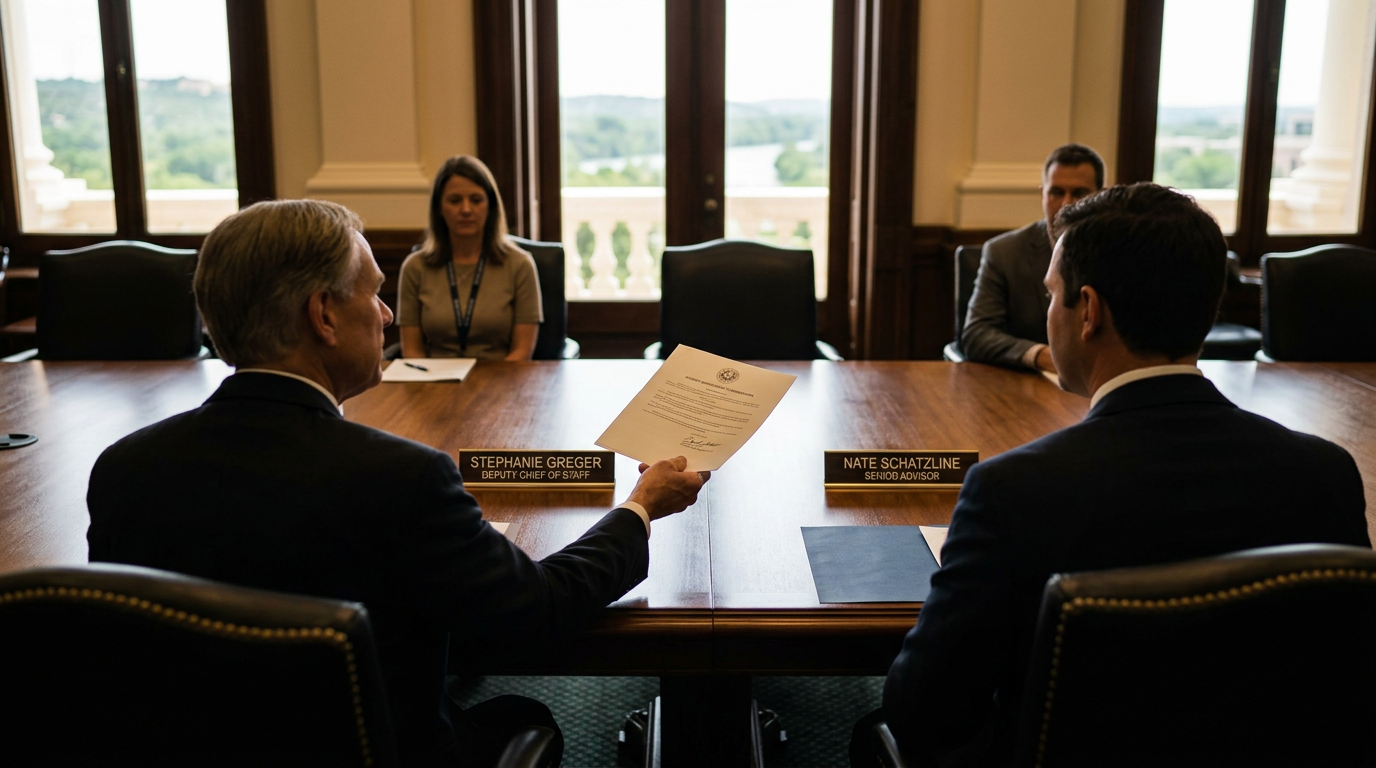
Governor Greg Abbott has refined the steering committee of his executive office with the appointment of two seasoned professionals to his senior staff. Stephanie Greger returns to the Governor's Office to serve as Deputy Chief of Staff, while Nate Schatzline joins as Senior Advisor. These roles are pivotal in navigating the complex regulatory and legislative environment of Texas, ensuring that the Governor's policy objectives are implemented across various state agencies. The office of the governor serves as the central hub for executive decision-making, and these personnel choices reflect a prioritization of legal expertise and strategic policy coordination as the administration looks toward the next legislative cycle. Historically, the Governor of Texas relies on a tight-knit group of advisors to manage the vast bureaucracy of the state. These appointments follow a tradition of tapping individuals with significant experience in both the legal field and the halls of the Texas State Capitol. By bringing individuals who have already navigated the intricacies of state agencies and the legislative process, the administration aims to maintain a high level of operational continuity. These shifts come at a time when Texas is facing significant questions regarding criminal justice, border security, and economic expansion, necessitating a robust leadership team in the capital.
Texas relevance
These staff changes are deeply significant for Texas residents because these individuals will directly influence the implementation of state laws and executive orders. With Stephanie Greger's background at the Texas Department of Criminal Justice (TDCJ), her influence on public safety policy will be felt throughout the state's correctional system and law enforcement infrastructure. The Governor's senior staff acts as the gatekeeper for information and the architects of the administration's agenda, meaning the priorities of Greger and Schatzline will soon translate into tangible outcomes for local communities from El Paso to Beaumont.
The Strategic Importance of the Deputy Chief of Staff
The role of Deputy Chief of Staff in the Texas Governor’s Office is far more than an administrative position; it is a central pillar of the executive branch. This individual is responsible for overseeing the day-to-day operations of the Governor’s agenda, coordinating between various state departments, and ensuring that the Governor’s mandates are being followed. By appointing Stephanie Greger, Abbott is placing a trusted legal mind in a position that requires both political savvy and a deep understanding of state statutes.
Greger’s previous experience as General Counsel for the Texas Department of Criminal Justice provides her with a unique perspective on one of the state's largest and most complex agencies. Managing the legal needs of the TDCJ involves navigating federal regulations, state laws, and public safety concerns. Her return to the Governor’s office marks a homecoming for a staffer who already understands the internal mechanics of Abbott's governing style, likely speeding up the transition periods for new policy initiatives.
Background of Stephanie Greger: From Prosecutor to Policy Advisor
Before her high-level roles in Austin, Stephanie Greger built a reputation as a formidable legal professional in the coastal bend. Her time as a prosecutor with the Nueces County District Attorney’s Office gave her first-hand experience with the criminal justice system from the ground level. This courtroom experience is often cited as a foundational element for those who eventually transition into making state-wide policy, as it provides a practical view of how laws affect public safety.
Her trajectory from local prosecution to the TDCJ and now to the pinnacle of state executive power demonstrates a consistent focus on the intersection of law and governance. The Governor has explicitly highlighted her 'sharp legal mind' as a primary reason for her recruitment. In a state where executive orders and legislative actions are frequently challenged in the courts, having a Deputy Chief of Staff with a profound legal background serves as a strategic defensive and offensive measure for the administration.
Nate Schatzline and the Role of Senior Advisor
The appointment of Nate Schatzline as Senior Advisor to the Governor adds another layer of strategic depth to the administration. A Senior Advisor typically focuses on the long-term vision of the Governor, helping to craft messaging, evaluate political impacts, and liaise with key stakeholders across Texas. While the Deputy Chief of Staff manages the 'how' of government, the Senior Advisor often focuses on the 'why' and the 'when,' ensuring that the Governor's platform remains resonant with his constituents.
This role is particularly important as Texas continues to lead the nation in corporate relocations and population growth. The Senior Advisor must keep a pulse on the changing demographics and economic needs of the state. Schatzline will be expected to provide high-level counsel that balances the immediate needs of the legislative session with the broader goals of the Abbott administration for the years ahead.
Impact on the Texas Department of Criminal Justice
Greger’s departure from her role as General Counsel at the Texas Department of Criminal Justice (TDCJ) leaves a significant vacancy at the top of that agency’s legal division. During her time there, she was the chief legal advisor to both the department and the Texas Board of Criminal Justice. Her vacancy will necessitate a search for a successor who can handle the immense legal pressure that comes with managing the state’s prison infrastructure.
However, her promotion to the Governor’s Office means that the TDCJ now has a close ally in the executive inner circle. This could lead to a more streamlined communication channel between the agency and the Governor, potentially resulting in more focused budget requests or legislative support for correctional reforms and public safety funding. The synergy between the Governor’s office and large agencies is critical for the effective functioning of the Texas government.
Navigating Future Legislative Challenges
With new senior leadership in place, the Governor’s office is positioning itself for the upcoming challenges of the next legislative session. Staffers like Greger and Schatzline are tasked with negotiating with the Texas House and Senate, ensuring that the Governor's priorities—such as property tax relief, border security, and educational freedom—are given priority by lawmakers. Their ability to build bridges between the Governor's mansion and the Capitol building is a key metric of their success.
The arrival of these new leaders often signals a shift in focus or a reinforcement of existing goals. By bolstering his staff with individuals who have deep roots in Texas legal and policy circles, Governor Abbott is signaling that his administration remains focused on a disciplined, legally sound approach to governing. This team will be at the forefront of the most contentious debates in the state, serving as the Governor's primary representatives in high-stakes negotiations.
Executive Branch Stability and Continuity
Personnel changes at the senior level of the Governor’s office are a natural part of any administration, but the selection of internal veterans like Greger provides a sense of stability. It suggests that the Governor is not looking to reinvent his administration but rather to refine and sharpen it. The continuity offered by staffers who have previously served in the office helps prevent the 'brain drain' that can sometimes occur in government after several years in power.
Texas remains one of the most influential states in the union, and the quality of the Governor’s staff has national implications. As these new leaders take their places, they will be responsible for managing a budget larger than many sovereign nations and overseeing a regulatory environment that attracts billions in investment. The eyes of the state will be on the executive team to see how these staffing additions impact the efficiency and direction of the Lone Star State.
Analysis
Opinion: Governor Abbott's decision to bring Stephanie Greger back into the fold suggests a renewed focus on legal integrity and administrative efficiency within the executive branch. Her tenure at the TDCJ suggests she has a firm grasp on the challenges of state-run institutions, which could be a signal that the Governor intends to tackle long-standing issues within the Texas prison system. Furthermore, recruiting Nate Schatzline as a Senior Advisor indicates a desire for fresh strategic perspectives that align with his current political trajectory. This move solidifies a team that is prepared for both the routine functions of the state and the high-profile battles often fought between Austin and Washington D.C.
Source attribution
This story was reported using a public release from the Office of the Governor. Keep TX Red rewrote the coverage independently and links to the official statement for verification.
Frequently Asked Questions
- What does a Deputy Chief of Staff for the Texas Governor do?
- The Deputy Chief of Staff is a high-level executive role responsible for managing the Governor's daily operations, overseeing staff, and ensuring that policy initiatives are successfully implemented across various state agencies. They often act as the primary liaison between the Governor and other government officials.
- Why is Stephanie Greger's background in the TDCJ important?
- Her experience as General Counsel for the Texas Department of Criminal Justice means she has extensive knowledge of the legal and operational challenges facing Texas prisons. This expertise is vital for the Governor's office when drafting public safety legislation and managing the state's legal liabilities.
- Who is Nate Schatzline in the context of the Governor's staff?
- Nate Schatzline is the newly appointed Senior Advisor to Governor Abbott. In this capacity, he will provide strategic counsel on a wide range of policy and political issues, helping to shape the Governor's public message and long-term legislative goals.
Official Sources
Take the next step
Browse the Newsroom →Read more about Keep Texas Red → Our full guide to what Keep Texas Red means and why Texans support it.
Get Texas updates delivered weekly.
Independent Texas reporting on politics, policy, and daily life. One email a week. Unsubscribe anytime.
Keep TX Red Newsroom
The Keep Texas Red Editorial Staff produces nonpartisan explainers, policy breakdowns, and educational resources to help Texans understand how their government works. All content is reviewed for accuracy and updated regularly.
About Keep TX Red →