Governor Abbott Awards 24 Million Dollar Grant for New Farmers Branch Semiconductor Facility
Governor Abbott announces a $24.2 million grant for FormFactor to build a new semiconductor facility in Farmers Branch, creating over 600 jobs in Texas.
Editorial disclaimer: Opinions and analysis on Keep TX Red are editorial content — not statements of fact. See our editorial standards.
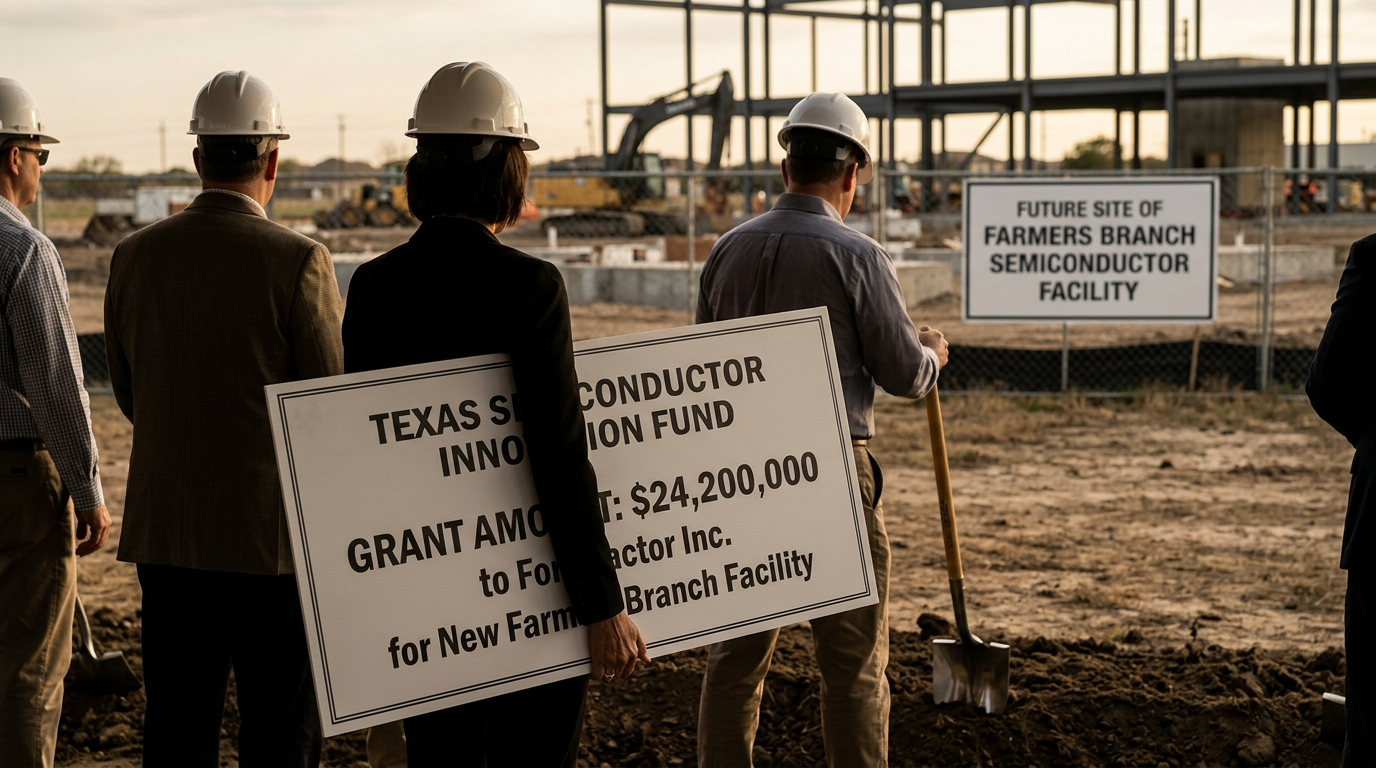
Governor Greg Abbott has confirmed a significant investment in the North Texas technology sector, authorizing a $24.2 million grant from the Texas Semiconductor Innovation Fund (TSIF) to FormFactor Inc. This funding supports the development of a state-of-the-art probe card manufacturing facility located in Farmers Branch. The project is anticipated to generate at least 600 new high-skilled positions and involves an initial capital investment ranging between $140 million and $170 million throughout the year 2026. This move comes as Texas continues to position itself as a global leader in the microchip industry, following a legislative trend of prioritizing domestic electronic production. Historically, Texas has been at the forefront of the technological revolution, dating back to the invention of the integrated circuit in Dallas. The TSIF was specifically designed to ensure the state remains competitive against other global tech hubs. By incentivizing companies like FormFactor to establish roots in the Dallas-Fort Worth metroplex, the state government aims to secure the supply chain for essential electronic components. This grant represents one of the largest distributions from the fund since its inception, signaling a strong commitment to the 'Texas CHIPS Act' objectives which were debated and passed during recent legislative sessions to counteract foreign reliance on critical technology parts.
Texas relevance
This announcement is a major milestone for Farmers Branch and the broader North Texas region, highlighting the area's growing reputation as a hub for advanced manufacturing. By bringing more than 600 high-paying technical jobs to Dallas County, the project strengthens the local tax base and provides new opportunities for the regional workforce. Furthermore, the integration of FormFactor into the local economy enhances the existing semiconductor ecosystem in Texas, which already includes giants like Texas Instruments and Samsung. As the state competes with others like Arizona and Ohio for federal and private investment, this specific grant ensures that the internal Texas supply chain—specifically the testing and measurement phase of chip production—remains locally controlled and robust.
The Role of FormFactor in Global Electronics
FormFactor Inc. serves a vital role in the semiconductor lifecycle, specializing in the electrical and optical testing of chips before they are finalized and integrated into consumer products. Their technology ensures that microchips are functional and meet the rigorous standards required for modern computing. Without the specialized probe cards manufactured by companies like FormFactor, the yield rates for semiconductor fabrication plants would plummet, leading to higher costs for everything from smartphones to automobiles.
By establishing a dedicated facility in Farmers Branch, FormFactor is moving closer to its primary customers and partners within the Texas tech corridor. This proximity reduces logistics costs and allows for faster iteration in the testing phase of development. The company’s move into North Texas is seen as a strategic alignment with the broader trend of diversifying the geographic footprint of the semiconductor industry beyond traditional coastal hubs, favoring states with a lower cost of doing business and a high concentration of engineering talent.
Economic Impact on Farmers Branch
The city of Farmers Branch stands to gain significantly from this development, as the $140 million to $170 million capital investment will likely lead to increased property tax revenues and local spending. A project of this scale often attracts secondary businesses, such as specialized maintenance firms and logistical support providers, which further stimulates the municipal economy. The addition of 600 jobs represents a significant percentage of the local workforce, potentially drawing new residents to the area and boosting the housing market.
Local officials have expressed optimism that this facility will serve as an anchor for a new tech-centric industrial district. As the facility prepares to become operational in 2026, the city may look into further infrastructure improvements to accommodate the influx of daily commuters and freight associated with high-tech manufacturing. The project is not just a win for the Governor’s office, but a localized victory for a community that has worked to reinvent itself as a modern business center within the Dallas-Fort Worth metro area.
Securing the Domestic Chip Supply Chain
One of the primary drivers behind the Texas Semiconductor Innovation Fund is the national security imperative to secure the electronics supply chain. Over the last decade, much of the testing and assembly phase of semiconductor production moved overseas, creating a bottleneck that was exposed during global trade disruptions. By bringing probe card manufacturing to Texas, the state is helping to close one of the most critical gaps in the domestic production cycle.
The facility in Farmers Branch will contribute to a self-sufficient ecosystem where chips can be designed, fabricated, and tested all within the borders of the United States, and specifically within Texas. This initiative aligns with federal goals outlined in the national CHIPS Act, though the Texas-specific fund provides an additional layer of incentive to ensure that these facilities choose the Lone Star State over other domestic competitors. The focus on high-skilled jobs also ensures that the intellectual property and technical expertise associated with chip testing remain inside the state.
Workforce Development and High-Skilled Jobs
The 600 jobs promised by this project are expected to be high-skilled positions, ranging from semiconductor engineers and data analysts to specialized technicians and plant managers. Texas universities, particularly those in the DFW area like UT Dallas and UNT, will likely play a role in feeding the talent pipeline for this new facility. The demand for these roles underscores the importance of STEM education initiatives currently being promoted across the state to prepare the next generation of Texas workers.
These positions typically offer competitive salaries that well exceed the state average, providing a boost to the middle-class economy in North Texas. The technical nature of the work also means that the employees will require ongoing training, potentially leading to partnerships between FormFactor and local community colleges for specialized certification programs. This creates a sustainable model for long-term employment that is less susceptible to the fluctuations of the low-skilled labor market.
Future Outlook for Texas Tech Investment
The grant to FormFactor is likely only the beginning of a series of announcements as the Texas Semiconductor Innovation Fund continues to evaluate applications. With billions of dollars in total potential investment on the horizon, Texas is competing to become the 'Semiconductor Capital of the World.' The success of this facility in Farmers Branch will likely serve as a case study for future candidates seeking TSIF support, demonstrating how state incentives can successfully land large-scale industrial projects.
As we look beyond 2026, the landscape of the Texas economy is clearly shifting toward high-tech manufacturing. While oil and gas remain foundational, the diversification into electronics provides a hedge against commodity price volatility. The Governor’s office has indicated that it will continue to pursue these types of partnerships, leveraging the state's business-friendly environment and specific financial tools to maintain a competitive edge in the global market.
Analysis
OPINION: The decision by Governor Abbott to utilize the Semiconductor Innovation Fund in this manner reflects a strategic shift toward 'reshoring' critical infrastructure. By focusing on a company that specializes in probe cards—essential tools for testing wafers—Texas is identifying and filling a specific vulnerability in the American manufacturing process. Critics of government subsidies might question the use of public funds for private corporations, but proponents argue that in the high-stakes game of global technology, the economic multiplier of 600 jobs and a $170 million investment far outweighs the initial $24 million grant. From a political standpoint, this reinforces the Governor's narrative that Texas is the premier destination for business, contrasting the state's growth with the regulatory hurdles found in competing states like California.
Source attribution
This story was reported using a public release from the Office of the Governor. Keep TX Red rewrote the coverage independently and links to the official statement for verification.
Frequently Asked Questions
- What is the Texas Semiconductor Innovation Fund?
- The Texas Semiconductor Innovation Fund (TSIF) is a state-funded program created to provide financial incentives to companies involved in the semiconductor industry. Its goal is to encourage the expansion of chip manufacturing, design, and testing facilities within Texas, ensuring the state remains a global leader in technology while securing the domestic supply chain.
- What exactly does FormFactor Inc. manufacture?
- FormFactor Inc. is a leading provider of essential tools used in the semiconductor manufacturing process, specifically probe cards. These cards are used to perform electrical and optical tests on semiconductor wafers before they are cut into individual chips. This process is critical for identifying defects and ensuring the final electronic products are reliable.
- How many jobs will the new Farmers Branch facility create?
- The new facility is expected to create more than 600 high-skilled jobs in North Texas. These roles will include engineering, technical, and management positions necessary to operate a high-tech advanced manufacturing plant.
- When is the investment expected to take place?
- The capital investment, which is estimated to be between $140 million and $170 million, is slated to occur over the course of 2026 as the facility is developed and becomes operational.
Official Sources
Take the next step
Browse the Newsroom →Read more about Keep Texas Red → Our full guide to what Keep Texas Red means and why Texans support it.
Get Texas updates delivered weekly.
Independent Texas reporting on politics, policy, and daily life. One email a week. Unsubscribe anytime.
Keep TX Red Newsroom
The Keep Texas Red Editorial Staff produces nonpartisan explainers, policy breakdowns, and educational resources to help Texans understand how their government works. All content is reviewed for accuracy and updated regularly.
About Keep TX Red →