Afghan Special Immigrant Visa Holder Dies While Detained by ICE in Texas
Federal authorities investigate the death of an Afghan ally who worked with the U.S. military before being detained in a Montgomery County facility.
Editorial disclaimer: Opinions and analysis on Keep TX Red are editorial content — not statements of fact. See our editorial standards.
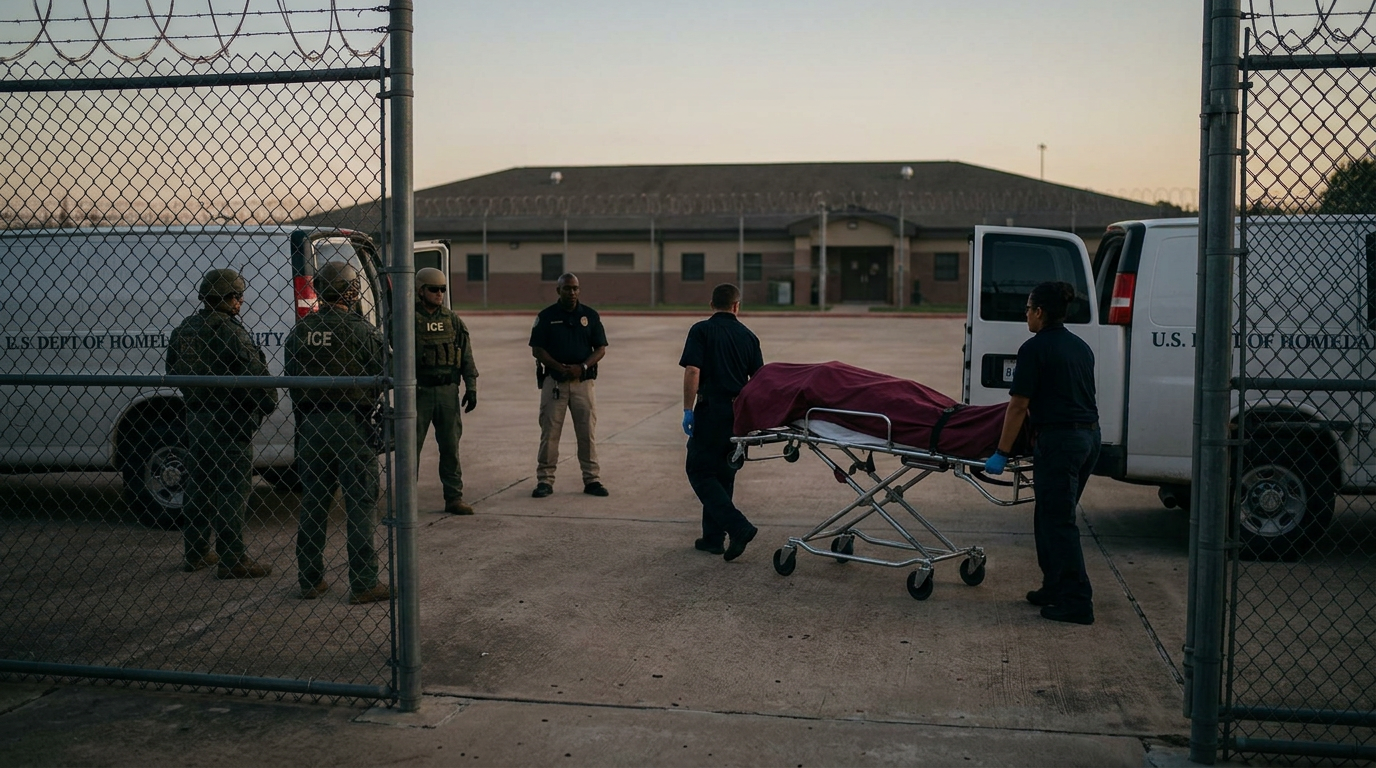
Recent reports have emerged regarding the death of Nazeer Ahmad Paktiawal, an Afghan national who died while in the custody of U.S. Immigration and Customs Enforcement (ICE) in Conroe, Texas. Paktiawal, who had previously assisted the United States military during the conflict in Afghanistan, was reportedly detained upon his arrival in the country despite his history of service to American interests. His death has sparked internal reviews and public scrutiny regarding the medical protocols and administrative decisions governing long-term detention facilities in the Lone Star State. Historically, Texas has been a primary hub for federal immigration processing, and this incident adds to a long timeline of legal disputes and human rights inquiries involving the Joe Evans Detention Facility and similar contract-run centers. This case highlights a complex intersection of national security vetting and the logistical challenges inherent in the mass processing of foreign nationals seeking entry.
Texas relevance
This incident occurred in Conroe, Texas, within the Montgomery County jurisdiction, positioning the state at the center of a federal investigation. As Texas continues to manage the highest volume of immigration-related facilities in the country, the operational integrity of sites like the Joe Evans Detention Center directly impacts local law enforcement coordination and regional public health resources. The state's role as a primary resettlement destination for Afghan allies under the Special Immigrant Visa (SIV) program makes the handling of such cases particularly poignant for the thousands of former military interpreters and support staff now living in Houston, Dallas, and San Antonio.
Service History and Arrival in America
Nazeer Paktiawal was not a standard migrant attempting to cross the southern border without documentation. Instead, he represented a specific class of foreign nationals who served alongside the United States Armed Forces during the decades-long presence in Afghanistan. His role involved providing essential logistical or linguistic support, a position that often carries a high risk of retaliation from extremist groups like the Taliban. Because of this service, many individuals like Paktiawal were promised a pathway to safety through the Special Immigrant Visa program.
Upon arriving in the United States, Paktiawal expected to undergo a standard administrative process. However, according to reports, he was taken into ICE custody shortly after his arrival. The reasons for his continued detention, despite his status as a military collaborator, remain a subject of intense debate. This transition from a war zone to a Texas detention cell represents a jarring shift in circumstances that many advocates argue was avoidable given his history of cooperation with American intelligence and military personnel.
The Circumstances of the Detention
The detention took place at the Joe Evans Detention Center, a facility located in the Greater Houston area. This site is managed under a federal contract and serves as a significant processing center for ICE operations in Southeast Texas. While in the facility, Paktiawal’s health reportedly declined. Family members have raised concerns about the level of medical attention provided during his stay, questioning whether the facility was properly equipped to handle the specific needs of a man who had survived the stresses of active conflict areas.
Documentation indicates that Paktiawal spent several weeks in the facility before his death. During this time, legal representatives and family members attempted to secure his release, citing his valid claims to residency and his service record. The administrative machinery of ICE, however, moves slowly, and the procedural requirements for an SIV holder can often be as rigorous as those for any other immigrant, regardless of their prior contributions to the United States mission abroad.
Medical Reporting and Cause of Death
Preliminary reports regarding Paktiawal's passing suggest he may have suffered from underlying health conditions that were exacerbated by the conditions of his confinement. While ICE has stated that all detainees receive comprehensive medical screenings upon entry, the specifics of Paktiawal's treatment plan have not been fully released to the public. The Montgomery County medical examiner’s office is expected to play a role in the eventual determination of the official cause of death, providing a localized check on federal assertions.
In similar cases across Texas, delays in medical response times have been cited as contributing factors in detainee deaths. The Joe Evans facility has faced scrutiny in the past regarding its healthcare protocols, and this latest incident is likely to prompt a new round of oversight from both the Department of Homeland Security’s Office of Inspector General and private advocacy groups. The lack of transparency in the immediate aftermath of the death has only served to fuel local concerns about the management of federal detainees.
Impact on the Afghan Diaspora in Texas
Texas is home to one of the largest populations of Afghan refugees and SIV holders in the nation. This community is particularly concentrated in the Houston and Fort Worth areas, where local non-profits work to integrate former allies into the Texas economy. The news of Paktiawal’s death has reverberated through these communities, creating a sense of unease among those who are still waiting for their own family members to navigate the complex U.S. immigration bureaucracy.
For many Afghan Texans, Paktiawal is seen as a hero who was failed by the system he helped protect. Local community leaders have expressed that this incident could damage the trust between immigrant communities and law enforcement. They argue that when those who served the U.S. military are detained and die in custody, it sends a troubling message about the value placed on loyalty and service. This cultural friction is a growing concern for Texas policymakers who seek to maintain public order while honoring commitments to vet and settle legal immigrants.
Legislative and Policy Implications
The death of a high-profile ally in a Texas facility often prompts calls for legislative reform at both the state and federal levels. While immigration policy is primarily a federal responsibility, Texas lawmakers frequently debate the standards of care and the financial transparency of private detention centers operating within state lines. This case may serve as a catalyst for new proposals aimed at ensuring that SIV holders receive expedited processing once they reach American soil.
Furthermore, there is a growing push to differentiate between different classes of detainees. Advocates suggest that individuals with a documented history of service to the U.S. military should be prioritized for work authorization and community-based monitoring rather than being held in restrictive detention environments. As Texas continues to deal with the broader border crisis, the distinction between those seeking asylum and those who were recruited by the military becomes a vital point of discussion for ensuring both security and institutional integrity.
Looking Forward: Investigations and Transparency
In the coming months, a series of investigative reports are expected to be released. These will include internal ICE reviews, which are standard for any death in custody, as well as independent audits by third-party organizations. The Paktiawal family has signaled their intent to seek more detailed answers, potentially through legal action if the government does not provide a clear account of the timeline leading up to his death. These legal maneuvers would likely take place in federal courts with significant implications for how ICE managed its Texas-based populations.
The outcome of this case will set a precedent for how the U.S. government handles its remaining obligations to allies in the post-withdrawal era of the Afghanistan conflict. As thousands more potential SIV candidates await processing, the eye of the public remains on Texas. The state's ability to host these facilities without recurring tragedies is under a magnifying glass, and the answers provided by federal officials will determine the future of detention practices in Montgomery County and beyond.
Analysis
Opinion: The tragic outcome for an individual who risked his life for American troops suggests a systemic failure in the tier-based vetting process. While border security remains a paramount concern for Texas residents, the administrative detention of verified allies creates a counterproductive narrative that may discourage future cooperation from foreign nationals in overseas combat zones. This case underscores the necessity for more transparent communication between federal agencies and the families of those in custody, ensuring that those who have sworn loyalty to U.S. efforts are not treated with the same suspicion as high-risk unauthorized entrants.
Source attribution
This story was reported using a public release from the Texas Monthly. Keep TX Red rewrote the coverage independently and links to the official statement for verification.
Frequently Asked Questions
- What is a Special Immigrant Visa (SIV)?
- The SIV program is a specific legal pathway created for Afghan and Iraqi nationals who worked as translators, interpreters, or in other critical roles for the U.S. government. It is intended to provide permanent residency to those who face threats in their home countries due to their service.
- Where in Texas did this incident occur?
- The death took place at the Joe Evans Detention Center, which is located in Conroe, Texas. This facility is part of the ICE network and is situated within Montgomery County, north of Houston.
- Why was a military ally being held in detention?
- While specific reasons for Paktiawal's detention have not been fully disclosed, ICE often detains individuals during the vetting phase of their immigration process if there are administrative discrepancies or if the individual is flagged during the initial entry screening.
- What happens next in the investigation?
- ICE is required to conduct a formal review of any death in their custody. This involves the Office of Professional Responsibility. Additionally, local medical examiners in Texas will provide an autopsy to determine the biological cause of death, which will then be compared to the detention center's medical records.
Official Sources
Take the next step
Browse the Newsroom →Read more about Keep Texas Red → Our full guide to what Keep Texas Red means and why Texans support it.
Get Texas updates delivered weekly.
Independent Texas reporting on politics, policy, and daily life. One email a week. Unsubscribe anytime.
Keep TX Red Newsroom
The Keep Texas Red Editorial Staff produces nonpartisan explainers, policy breakdowns, and educational resources to help Texans understand how their government works. All content is reviewed for accuracy and updated regularly.
About Keep TX Red →