Shift in Texas ICE Enforcement Trends Shows Rise in Non-Criminal Detentions
A new investigation into ICE arrest data across Texas reveals a significant shift from targeting violent criminals to broader immigration enforcement.
Editorial disclaimer: Opinions and analysis on Keep TX Red are editorial content — not statements of fact. See our editorial standards.
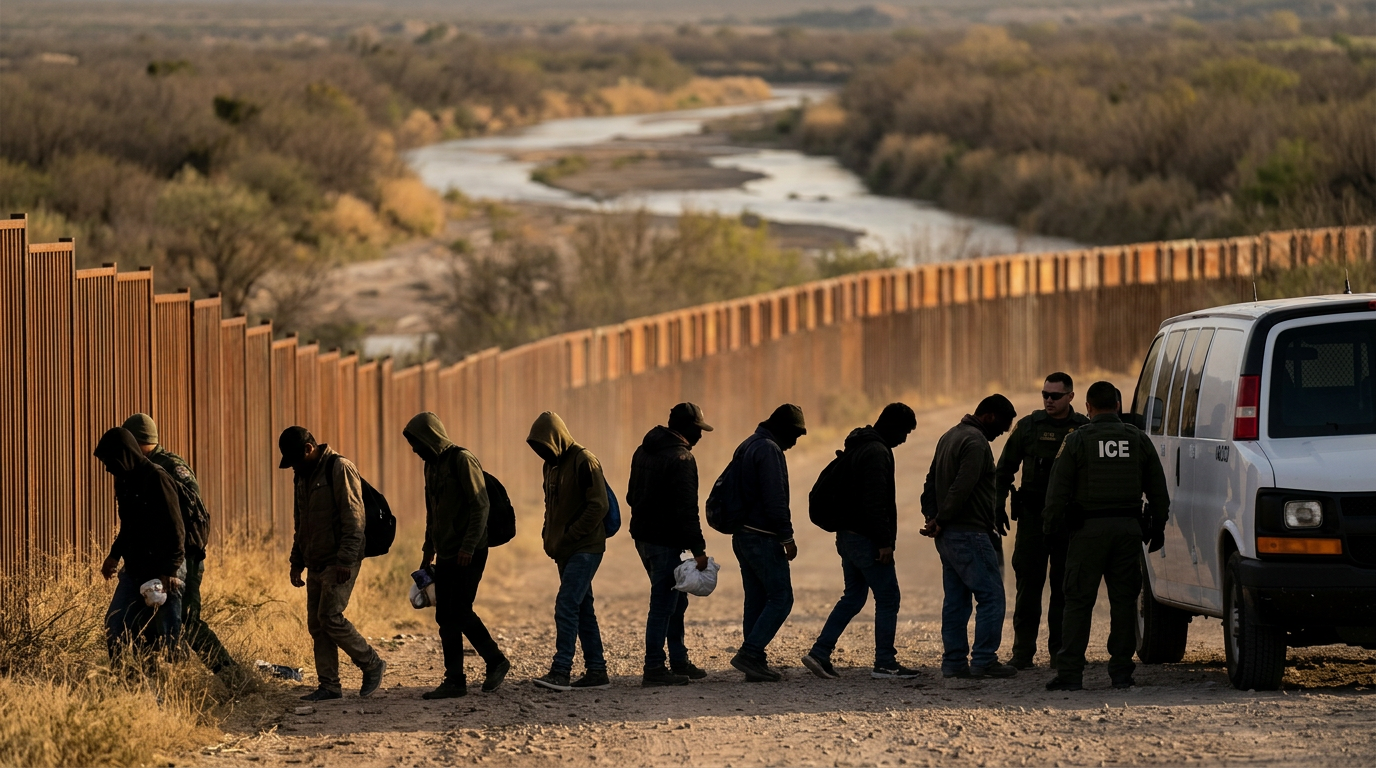
Recent data analysis of federal immigration enforcement actions in Texas reveals a notable transition in how Immigration and Customs Enforcement (ICE) operates within the state. Historically, detention efforts under various federal administrations have prioritized individuals with existing criminal records or pending felony charges. However, a comprehensive review of ICE arrest records indicates that the agency has expanded its scope, increasingly detaining individuals who do not possess a criminal history beyond their immigration status. This shift represents a departure from previous 'priority-based' enforcement models that focused primarily on public safety threats and high-level offenders. In Texas, where the intersection of state and federal law enforcement is a constant point of friction, these changes carry significant weight for local municipalities and social structures. Historically, Texas has been the focal point of the nation's immigration debate, with the state legislature frequently passing measures designed to increase coordination between local police and federal agents. These new findings suggest that the net of enforcement is widening, capturing a demographic that was previously considered a lower priority for removal proceedings. This evolution in tactics comes at a time when Texas is also pursuing its own independent border security initiatives, such as Operation Lone Star, further complicating the jurisdictional landscape for residents and law enforcement alike.
Texas relevance
Texas serves as the primary theater for these enforcement shifts due to its massive border with Mexico and its status as home to some of the largest immigrant populations in the United States, particularly in cities like Houston, Dallas, and San Antonio. The data shows that Texas-based ICE field offices are among the most active in the nation, making the transition toward arresting non-criminal individuals particularly impactful for the state's economy and social fabric. In cities like Houston, where local officials have often navigated a delicate balance between cooperating with federal mandates and maintaining community trust, the increase in non-criminal arrests has created new challenges for local governance. Furthermore, the state's recent legislative efforts to allow state police to arrest those suspected of illegal entry mean that Texas is now operating a dual-track enforcement system that mirrors the broadening scope seen at the federal level.
Statistical Breakdown of Enforcement Changes
In the early months of the current assessment period, ICE data indicated that roughly 60 to 70 percent of all administrative arrests in the Texas region involved individuals with prior criminal convictions or pending charges. These crimes ranged from low-level misdemeanors to serious violent felonies. This gave the appearance of a focused strategy aimed at removing those who posed a direct threat to the safety of Texas residents.
However, more recent quarters have seen those percentages flip. The data now suggests that half or more of those being processed by ICE do not have a criminal record. This indicates that agents are increasingly conducting 'at-large' arrests or picking up individuals during routine check-ins who were previously granted temporary stays or were under supervision. The statistical shift underscores a change in administrative directives that no longer shield non-criminal undocumented residents from active removal efforts.
The implications for Texas jails and holding facilities are substantial. As the federal government ramps up its detention of non-criminal individuals, the demand for bed space in contracted facilities grows. This has led to the expansion of private and public detention centers across the state, creating a localized economic ecosystem centered around the processing and housing of detainees awaiting court dates.
Impact on the Texas Workforce
The shift toward detaining non-criminal individuals has a direct correlation with several key Texas industries, including construction, agriculture, and hospitality. Many of the individuals now being targeted by ICE have been living and working in Texas for years, filling roles that are often difficult for employers to staff. When enforcement actions move from targeting criminals to targeting the general undocumented population, businesses often face sudden labor shortages.
Industry leaders in the Texas Panhandle and the Rio Grande Valley have expressed concerns that aggressive enforcement without a pathway for legal work permits could destabilize the state's agricultural output. While the legal mandate for ICE is clear, the economic reality creates a tension between federal law enforcement goals and the needs of Texas business owners who rely on a steady supply of manual labor.
Moreover, the fear of arrest among non-criminal residents has led to a 'chilled' economic effect in certain neighborhoods. Families are less likely to frequent local businesses, attend public events, or utilize services, leading to a measurable decline in local tax revenue in high-immigrant corridors of North and Southeast Texas.
Jurisdictional Tensions Between State and Federal Power
The expanding scope of ICE arrests is occurring simultaneously with Texas's own efforts to assert control over immigration. Under Governor Greg Abbott, the state has invested billions into its own border security apparatus, which often works in tandem with federal agents but sometimes operates under different legal theories. The increase in federal arrests of non-criminals mirrors the state's desire for a more robust deterrent against illegal entry.
This alignment of interests between the state government and federal enforcement highlights a growing consensus among conservative policymakers that the 'criminal-priority' model was insufficient. By broadening the criteria for arrest, authorities believe they are sending a stronger message that the rule of law will be applied to all who enter without authorization, not just those who commit further crimes once in the country.
However, legal experts warn that this dual-layered enforcement can lead to confusion. If a person is arrested by state authorities under Texas law and then handed over to ICE, the complexity of their legal case increases. This multi-front approach ensures that Texas remains the tip of the spear in the national debate over how to handle the millions of undocumented residents currently living within U.S. borders.
Community Trust and Local Law Enforcement
One of the primary concerns for city police departments in Texas is the erosion of trust within immigrant communities. For decades, many Texas sheriffs have argued that if residents fear that any contact with the police—even to report a crime—will lead to an ICE referral, they will stop cooperating with law enforcement. This can allow actual criminals to operate more freely within those neighborhoods.
The data showing a shift away from criminal-only targets confirms the fears of many local leaders. When ICE arrests people with clean records, the distinction between 'good' and 'bad' actors in the eyes of the law becomes blurred for the community. This makes the job of a local beat officer in a city like Austin or El Paso significantly more difficult, as they must work harder to prove that their primary goal is public safety rather than federal immigration enforcement.
Despite these concerns, several Texas counties have embraced the broader enforcement strategy. These jurisdictions argue that the law should be applied equally and that any presence in the country without legal status is, in itself, a violation that warrants action. This divide between urban and rural Texas law enforcement philosophies continues to shape the state's internal political landscape.
The Role of Technology and Monitoring
Part of the reason ICE has been able to broaden its enforcement scope is the increased use of digital monitoring and data sharing. In Texas, the integration of license plate readers, facial recognition, and shared databases between local motor vehicle departments and federal agencies has made it easier to locate individuals who do not have a criminal record but do have a final order of removal.
This technological edge allows ICE to move beyond 'reactive' policing—where they wait for someone to get arrested for a crime—to 'proactive' policing. By tracking addresses and employment records, agents can execute targeted pickups that were previously considered too resource-intensive. This modernization of the enforcement process is a key driver behind the shifting statistics seen in recent reports.
As these technologies become more prevalent in Texas, the debates over privacy and the extent of government surveillance are likely to intensify. The use of technology to facilitate the arrest of non-criminal individuals raises questions about the balance between efficient law enforcement and the protections afforded to all residents under the constitution.
Analysis
The shift in ICE arrest patterns suggests a move toward a 'zero-tolerance' enforcement philosophy that prioritizes the letter of immigration law over the relative risk profiles of individuals. While proponents of this shift argue that consistent enforcement is necessary to maintain the integrity of the border and deter future illegal crossings, critics point out that targeting non-criminal individuals strains federal resources that might otherwise be used to track down violent offenders. For Texas, this means a higher volume of cases moving through an already backlogged immigration court system. From a policy perspective, the movement away from focusing strictly on criminals may signal a broader federal intent to maximize deportation numbers across the board, regardless of an individual's specific community ties or employment status within the state. This approach aligns with a more rigid interpretation of federal sovereignty but risks alienating the very communities that local law enforcement relies on for tips and cooperation in criminal investigations.
Source attribution
This story was reported using a public release from the Texas Standard. Keep TX Red rewrote the coverage independently and links to the official statement for verification.
Frequently Asked Questions
- Why did ICE change its focus from criminals to non-criminals?
- The shift is largely due to administrative policy changes that removed the 'priority' system, which previously directed agents to focus almost exclusively on individuals with serious criminal records. The current approach prioritizes the enforcement of immigration law for any individual out of status, regardless of their criminal history.
- How does this affect Texas cities specifically?
- Texas cities with large immigrant populations, such as Houston and Dallas, see a higher volume of these arrests. This can lead to increased strain on local community resources, potential labor shortages in key sectors, and a decrease in community cooperation with local police departments.
- Is this shift legal under current immigration law?
- Yes. Federal law permits the arrest and removal of any individual who is in the United States without legal authorization. The prioritized 'hand-off' or 'criminal-only' focus was a matter of administrative discretion and policy, not a change in the underlying law itself.
Official Sources
Take the next step
Browse the Newsroom →Read more about Keep Texas Red → Our full guide to what Keep Texas Red means and why Texans support it.
Get Texas updates delivered weekly.
Independent Texas reporting on politics, policy, and daily life. One email a week. Unsubscribe anytime.
Keep TX Red Newsroom
The Keep Texas Red Editorial Staff produces nonpartisan explainers, policy breakdowns, and educational resources to help Texans understand how their government works. All content is reviewed for accuracy and updated regularly.
About Keep TX Red →