ICE Enforcement Trends Show Shift Toward Non-Criminal Apprehensions Across Texas Operations
Recent data reveals over 38,000 ICE arrests in Texas targeted individuals without criminal convictions between Feb 2025 and Feb 2026.
Editorial disclaimer: Opinions and analysis on Keep TX Red are editorial content — not statements of fact. See our editorial standards.
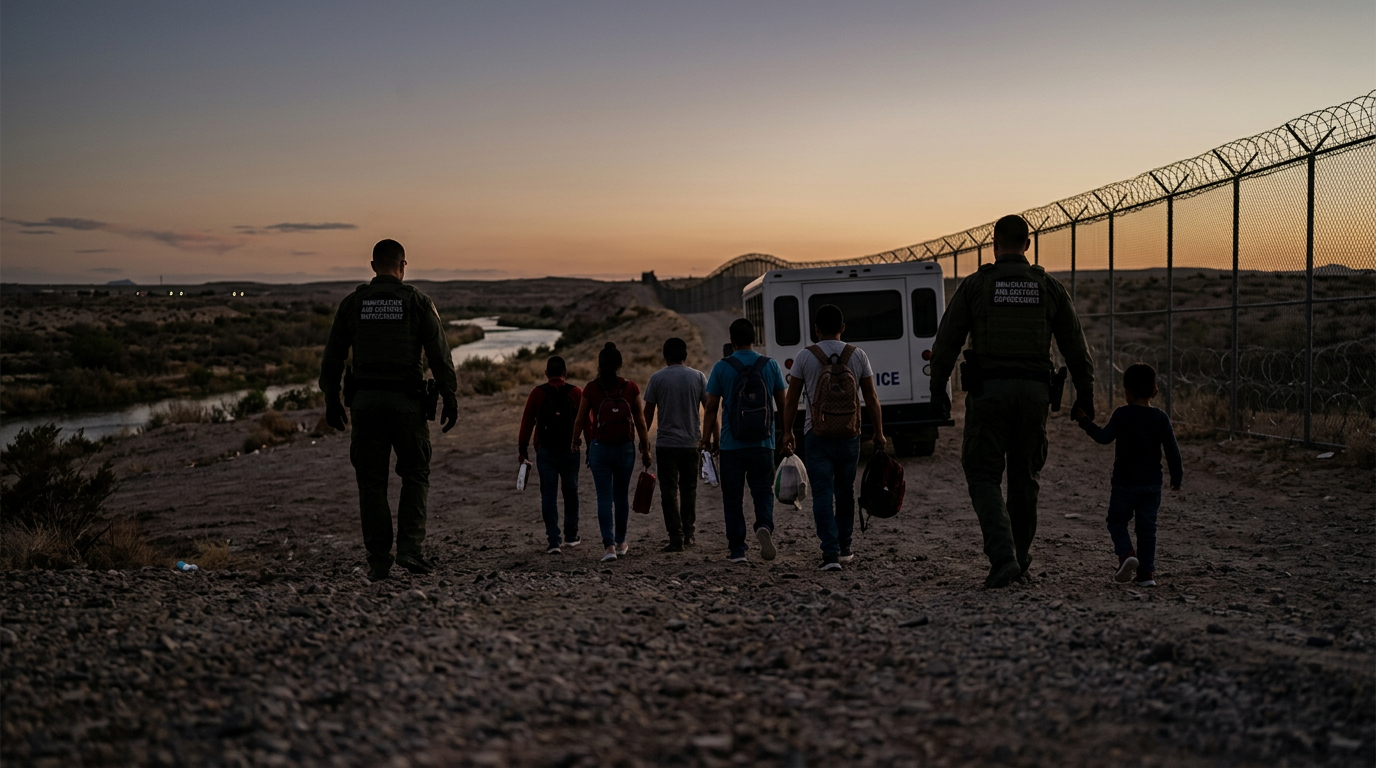
Recent data analysis covering federal immigration activities between February 2025 and February 2026 indicates a significant shift in the demographic of individuals detained by Immigration and Customs Enforcement (ICE) within the state of Texas. During this twelve-month window, federal agents apprehended more than 38,000 residents who possessed neither a prior criminal conviction nor any pending criminal charges. This statistical trend suggests an evolution in enforcement priorities that moves beyond the historical focus on high-threat criminals to encompass a broader spectrum of undocumented residents. Historically, the United States has balanced interior enforcement between prioritizing public safety threats and general administrative removals, but the current volume of non-criminal arrests represents a high-water mark for recent administrative cycles. The surge in these specific types of arrests reflects a broader federal mandate to enforce immigration laws regardless of an individual's specific criminal history. While previous administrations often issued guidance memoranda directing agents to focus primarily on violent offenders or those with significant felony records, the most recent data confirms that administrative violations alone are increasingly sufficient for targeted enforcement actions. This shift has resulted in a wider net being cast over Texas communities, affecting various industries and residential areas where undocumented individuals have lived without incident for years. The data highlights a robust movement toward total enforcement, signaling that the federal government is prioritizing the presence of an individual's legal status over their conduct within the community.
Texas relevance
Texas remains the primary theater for these enforcement shifts due to its extensive border with Mexico and its large population of non-citizens living in major hubs like Houston, Dallas, and San Antonio. The state's unique geography and its status as an economic engine reliant on various labor pools make the activities of ICE particularly impactful on the local landscape. In cities like El Paso and McAllen, where legal and illegal crossings are a daily reality, the increased rate of non-criminal arrests has altered how local law enforcement agencies interact with federal partners. Texas has historically leaned into strong enforcement measures, such as the passage of Senate Bill 4, which aimed to increase state-level participation in immigration enforcement. The current federal data complements the state's own aggressive posture toward border security and interior compliance, making Texas the focal point of the national debate on how immigration laws should be applied to those without a criminal record.
Statistical Breakdown of Texas Apprehensions
The sheer volume of 38,000 arrests in a single year across Texas underscores the logistical scale of current federal operations. When compared to previous years, the ratio of non-criminal to criminal arrests has narrowed, indicating that ICE field offices in regions such as Harlingen and San Antonio are widening their operational scope. These field offices manage some of the busiest jurisdictions in the country, and the data suggests they are moving away from a 'tiered' priority system that once shielded long-term residents with clean records.
The implementation of these enforcement actions frequently occurs during routine administrative checks, workplace audits, or as part of broader community-wide surges. By removing the distinction between criminal and non-criminal status for the purposes of arrest, the federal government is attempting to create a deterrent effect. The goal appears to be communicating that no undocumented individual is exempt from potential removal, regardless of their standing in their local Texas town or their lack of a police record.
Impact on the Texas Labor Market
Texas industries, particularly construction, agriculture, and hospitality, have long relied on a diverse workforce that includes undocumented personnel. The removal of over 38,000 individuals without criminal records can lead to sudden labor shortages in these sectors. Business owners often find themselves caught between federal enforcement actions and the practical need to staff their operations, especially in high-growth areas like Austin and North Texas where the demand for labor remains consistently high.
As enforcement intensifies, these businesses face increased pressure to verify the legal status of all employees through systems like E-Verify. The shift toward arresting non-criminal individuals means that even 'low-risk' employees who have worked for the same company for a decade are now subject to detention. This creates a volatile environment for Texas employers who must navigate the legal complexities of hiring while federal agents increase kanilang activity in common commercial corridors.
The Role of Local Law Enforcement Cooperation
A critical factor in the high number of arrests is the level of cooperation between Texas county sheriffs and ICE. Many Texas counties participate in the 287(g) program, which allows local officers to perform certain federal immigration functions. Even in counties that do not formally participate, the sharing of jail rosters and fingerprints ensures that anyone who comes into contact with the local legal system—even for minor traffic infractions—can be identified by ICE.
While the 38,000 individuals cited in the report do not have criminal convictions, many enter the ICE system through these local interactions. A routine traffic stop that leads to a temporary holding allows ICE to place a 'detainer' on the individual. This hand-off process is a cornerstone of Texas law enforcement's strategy to assist federal authorities in identifying and removing those who are in the country without legal authorization.
Challenges in the Federal Immigration Court System
The influx of tens of thousands of non-criminal detainees has put immense pressure on the immigration court system in Texas. Unlike criminal courts, immigration proceedings are civil matters, and the sheer volume of new cases has led to hearings being scheduled years into the future. This delay often results in individuals remaining in detention centers for extended periods, at a significant cost to the federal taxpayer.
Legal experts note that individuals without criminal records often have more avenues for relief, such as asylum claims or family-based adjustments, which can further complicate and lengthen the legal process. However, the current administration's stance suggests that the priority is the initial arrest and the commencement of removal proceedings, rather than the speed at which those proceedings are finalized. This creates a bottleneck that is most acutely felt in the Texas-based court districts.
Community Response and Public Safety Implications
The shift in enforcement has sparked a debate within Texas communities regarding public safety. Some local leaders argue that when residents fear ICE arrests despite having no criminal record, they are less likely to report crimes or cooperate with police as witnesses. This 'chilling effect' is a concern for metropolitan police departments that rely on community trust to solve local crimes and maintain order in densely populated neighborhoods.
Conversely, proponents of strict enforcement argue that the presence of a large undocumented population is itself a challenge to public order. They contend that the only way to maintain the integrity of the border and the legal immigration system is to demonstrate that laws will be enforced without exception. From this perspective, the 38,000 arrests represent a successful effort to restore the rule of law and discourage future illegal immigration into the Lone Star State.
Future Outlook for Texas Enforcement Policies
Looking ahead, the trend of non-criminal arrests is expected to continue as long as federal policy prioritizes total interior enforcement. For Texas, this means continued expansion of detention facilities and a possible increase in federal funding for agents stationed within the interior of the state. The state government may also seek to pass additional legislation that mirrors or supports these federal efforts, further solidifying Texas as the leader in immigration discipline.
As the 2026 election cycle approaches, the data regarding these arrests will likely become a central talking point for candidates across the political spectrum. The results of these enforcement actions—ranging from economic shifts to changes in community dynamics—will be weighed by Texas voters. For now, the numbers clearly indicate that the era of prioritizing only 'the worst of the worst' for deportation has been replaced by a broader mandate of universal enforcement.
Analysis
From a policy perspective, the increase in non-criminal arrests serves as a clear signal that the rule of law is being applied uniformly, rather than selectively. Proponents of this shift argue that allowing individuals to remain in the country simply because they have not committed 'additional' crimes ignores the initial violation of entering or staying in the country illegally. By targeting all undocumented individuals, ICE is effectively removing the 'amnesty by omission' that existed when only violent criminals were sought. However, this strategy also places a significant burden on the judicial and detention infrastructure within Texas. As thousands of individuals without criminal backgrounds enter the system, the backlog in immigration courts is likely to grow, potentially extending the time individuals spend in detention centers before their cases are resolved. This data suggests that the mission of ICE has returned to a more literal interpretation of its founding mandate: to enforce federal immigration statutes across the board.
Source attribution
This story was reported using a public release from the Texas Standard. Keep TX Red rewrote the coverage independently and links to the official statement for verification.
Frequently Asked Questions
- What qualifies as a 'non-criminal' arrest in this context?
- A non-criminal arrest refers to an individual detained by ICE who does not have a prior criminal conviction and does not currently face any pending criminal charges. These arrests are based solely on administrative violations of federal immigration law.
- How does Texas compare to other states regarding these ICE arrests?
- Texas consistently sees some of the highest numbers of ICE arrests in the nation due to its geography, population size, and the high level of cooperation between state/local law enforcement and federal authorities.
- Why has there been a shift away from only arresting 'criminals'?
- The current federal policy emphasizes that all individuals in the country without legal authorization are subject to enforcement. This removes the 'prioritization' layers that previously prevented agents from arresting those without a criminal record.
- What happens to these individuals after they are arrested?
- Initially, they are processed and often placed in detention centers. They then enter the federal immigration court system to determine if they will be deported or if they qualify for some form of legal relief to stay in the country.
Official Sources
Take the next step
Browse the Newsroom →Read more about Keep Texas Red → Our full guide to what Keep Texas Red means and why Texans support it.
Get Texas updates delivered weekly.
Independent Texas reporting on politics, policy, and daily life. One email a week. Unsubscribe anytime.
Keep TX Red Newsroom
The Keep Texas Red Editorial Staff produces nonpartisan explainers, policy breakdowns, and educational resources to help Texans understand how their government works. All content is reviewed for accuracy and updated regularly.
About Keep TX Red →