Governor Abbott Challenges Rural Expansion of Mega Data Centers to Protect Residential Power and Quality of Life
Governor Abbott proposes new restrictions on data center developments in rural Texas neighborhoods to protect the power grid and local quality of life.
Editorial disclaimer: Opinions and analysis on Keep TX Red are editorial content — not statements of fact. See our editorial standards.
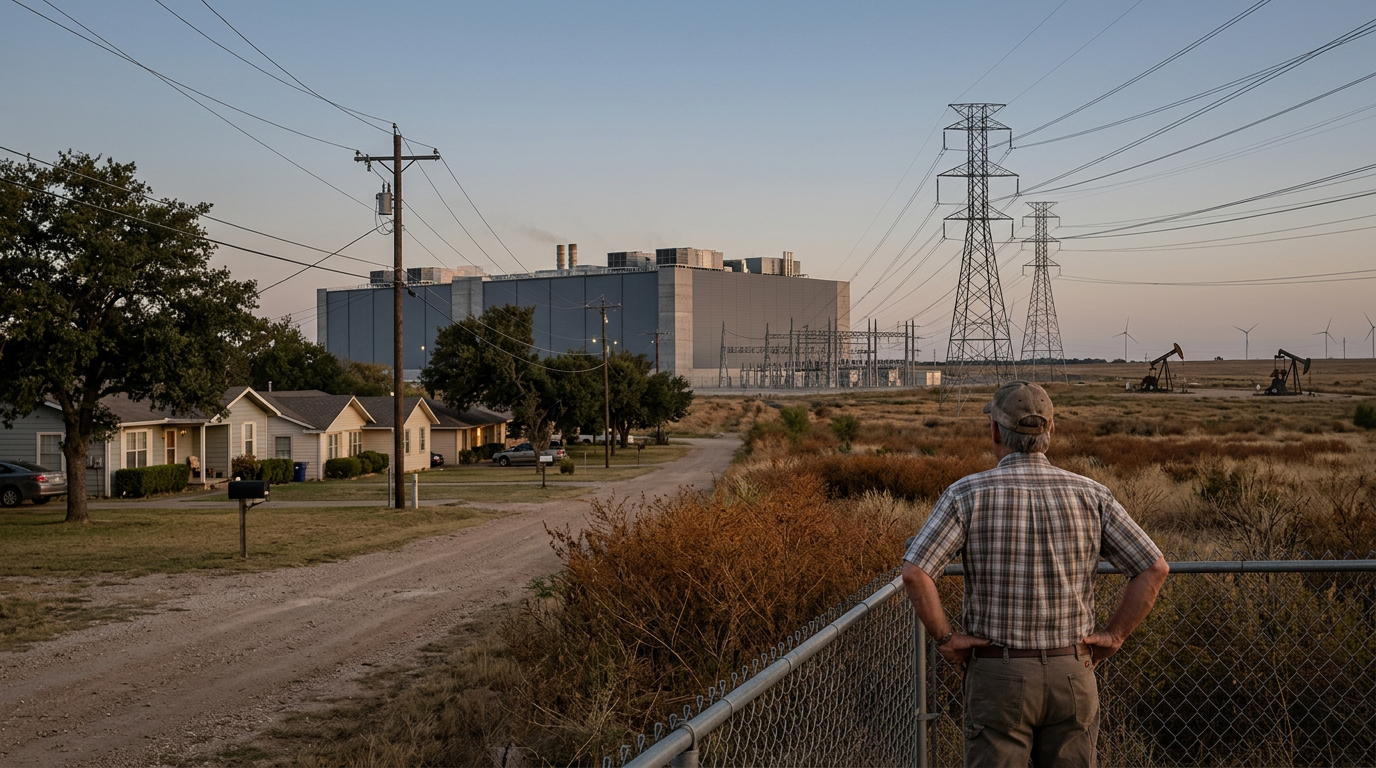
Governor Greg Abbott has publicly signaled a major shift in state policy regarding the expansion of massive data storage facilities within Texas. In a recent directive, the Governor expressed strong opposition to the construction of large-scale data centers in or near established rural residential neighborhoods. Historically, Texas has been a primary destination for these facilities due to favorable tax climates and available land. However, this new stance suggests a pivot toward stricter zoning and regulatory oversight at the state level. The Governor's concerns center on the tension between rapid industrial growth and the preservation of quiet, rural communities that were not designed to accommodate heavy industrial infrastructure. This move follows a period of unprecedented growth in the technology sector across the Lone Star State, where large firms have sought out rural counties to avoid the high costs and congestion of major metropolitan hubs like Austin or Dallas.
Texas relevance
This policy shift is particularly critical for residents in Texas counties surrounding major metros, such as Bastrop, Hays, and Williamson, where rural land is being rapidly converted into industrial sites. Texas remains the energy capital of the world, but the strain that mega-data centers place on the ERCOT grid has become a point of contention during peak summer and winter months. For rural Texans, these developments often mean years of construction noise, increased local traffic, and a permanent change to the visual landscape. By advocating for a ban on these centers in neighborhood-adjacent areas, the Governor is addressing long-standing complaints from local grassroots organizations that feel their voices are often drowned out by large-scale commercial developers. This represents a rare instance where state leadership is considering a curb on industrial activity to protect the sanctity of living spaces in unincorporated areas of the state.
The Energy Demand Crisis
One of the primary drivers behind the Governor's new stance is the sheer volume of electricity consumed by modern data centers. These facilities operate 24 hours a day, utilizing massive cooling systems to prevent server overheating. In a state like Texas, where the ERCOT grid is frequently under scrutiny, the sudden addition of a single data center can consume as much power as tens of thousands of homes.
State leaders are increasingly worried that allowing these facilities to proliferate in rural residential areas adds unnecessary stress to local distribution networks. Unlike urban centers which are built with heavy industrial capacity in mind, rural grids often require expensive upgrades to handle the load of a data center. The Governor appears to be prioritizing the stability of residential electrical service over the rapid expansion of the tech sector's physical footprint.
Protecting the Character of Rural Life
Rural Texas is defined by its open spaces and quiet environment. The introduction of massive warehouse-like structures, complete with continuous humming from cooling fans and perimeter security lighting, significantly alters the character of these communities. Residents moved to these areas specifically to escape the industrial atmosphere of cities, only to find the industry following them to their backyards.
Governor Abbott's proposed ban seeks to establish a buffer zone that protects residential investments. Homeowners in these areas often find their property values fluctuate wildly when a major industrial neighbor moves in. By limiting where these facilities can be built, the state would essentially be creating a statewide zoning standard for tech infrastructure that previously relied on a patchwork of local county regulations.
Legislative Pathways and Regulatory Hurdles
For this ban to take full effect, it will likely require action during the next session of the Texas Legislature. Lawmakers would need to define exactly what constitutes a 'rural neighborhood' and determine the distance requirements for such a ban. This process will be complex, as Texas generally favors local control over land use, but many rural counties currently lack the zoning authority to block these developments on their own.
The Governor's office may also work with the Public Utility Commission of Texas (PUC) to create new rules regarding how data centers connect to the grid. If a facility is deemed to be too close to a residential sector or too demanding on a local substation, the state may have the authority to deny necessary permits or grid connection approvals even before a law is formally passed.
The Economic Trade-off
While the ban protects neighborhoods, it does raise questions about the future of tech investment in Texas. Data centers bring in significant property tax revenue for local school districts and county governments. Rural counties often welcome this revenue as a way to lower the tax burden on individual residents. If the state bans these developments in too many areas, those tax benefits could vanish.
Supporters of the Governor’s move argue that there is still plenty of land in Texas that is not adjacent to neighborhoods. They suggest that data centers should be incentivized to build in strictly industrial zones or far-flung regions where they do not interfere with the lives of Texas families. The goal is not to drive the tech industry out of the state, but to ensure they are 'good neighbors' who respect the boundaries of residential life.
Voices from the Community
Local advocacy groups across the state have been sounding the alarm for years regarding the unregulated growth of 'crypto mines' and data centers. These groups highlight issues ranging from noise pollution to water consumption, as many centers use millions of gallons of water to cool their equipment. The Governor's announcement is seen as a major victory for these grassroots organizers who have felt ignored by local economic development corporations.
Homeowners in areas like Lockhart and Hutto have recently fought against similar projects, citing concerns that their quiet streets would be turned into industrial corridors. The proposed ban provides a legal framework for these residents to protect their way of life. It acknowledges that while Texas is 'open for business,' that invitation does not extend to disrupting the peace and security of Texas neighborhoods.
Analysis
The Governor’s proposal marks a significant moment in the ongoing debate over ‘growth at any cost’ versus ‘smart growth.’ From a conservative perspective, this move balances the defense of private property rights for homeowners against the industrial rights of massive corporations. While data centers provide essential infrastructure for the modern economy, their energy consumption is astronomical, often rivaling that of entire mid-sized cities. By pushing these facilities away from residential pockets, Abbott is essentially asking for a more strategic placement of energy-intensive businesses. If this proposal moves into the legislative phase, it will likely trigger a massive lobbying effort from Silicon Valley tech firms who rely on Texas for cheap land. However, the Governor’s alignment with rural voters on this issue could solidify his support in the regions most impacted by the state's urban sprawl.
Source attribution
This story was reported using a public release from the Governor Abbott — Video Moments (Google News). Keep TX Red rewrote the coverage independently and links to the official statement for verification.
Frequently Asked Questions
- Why is the Governor focusing on data centers specifically?
- Data centers are unique because of their extreme power requirements and the fact that they operate 24/7. Unlike other factories that might have shifts, data centers pull a constant, heavy load from the Texas grid. Additionally, their noise and physical size make them disruptive neighbors in quiet, rural areas.
- Will this ban hurt the Texas economy?
- Proponents argue it will not, as there is still vast amounts of land in Texas designated for industrial use. The goal is to move these facilities to more appropriate locations rather than banning them from the state entirely. The tax revenue would still exist, but it would be generated in areas where the infrastructure can better support it.
- How does this affect current data centers already under construction?
- Typically, new regulations like this include 'grandfather' clauses that allow existing projects to finish. However, the Governor's stance could lead to stricter inspections or permit renewals for facilities that have already caused significant complaints in their local communities.
Official Sources
Take the next step
Browse the Newsroom →Read more about Keep Texas Red → Our full guide to what Keep Texas Red means and why Texans support it.
Get Texas updates delivered weekly.
Independent Texas reporting on politics, policy, and daily life. One email a week. Unsubscribe anytime.
Keep TX Red Newsroom
The Keep Texas Red Editorial Staff produces nonpartisan explainers, policy breakdowns, and educational resources to help Texans understand how their government works. All content is reviewed for accuracy and updated regularly.
About Keep TX Red →