Texas Travel Giant Buc-ee’s Eyes Major National Expansion Strategy
The Texas-born convenience chain Buc-ee's is moving forward with plans to bring its massive travel centers to several new states across the country.
Editorial disclaimer: Opinions and analysis on Keep TX Red are editorial content — not statements of fact. See our editorial standards.
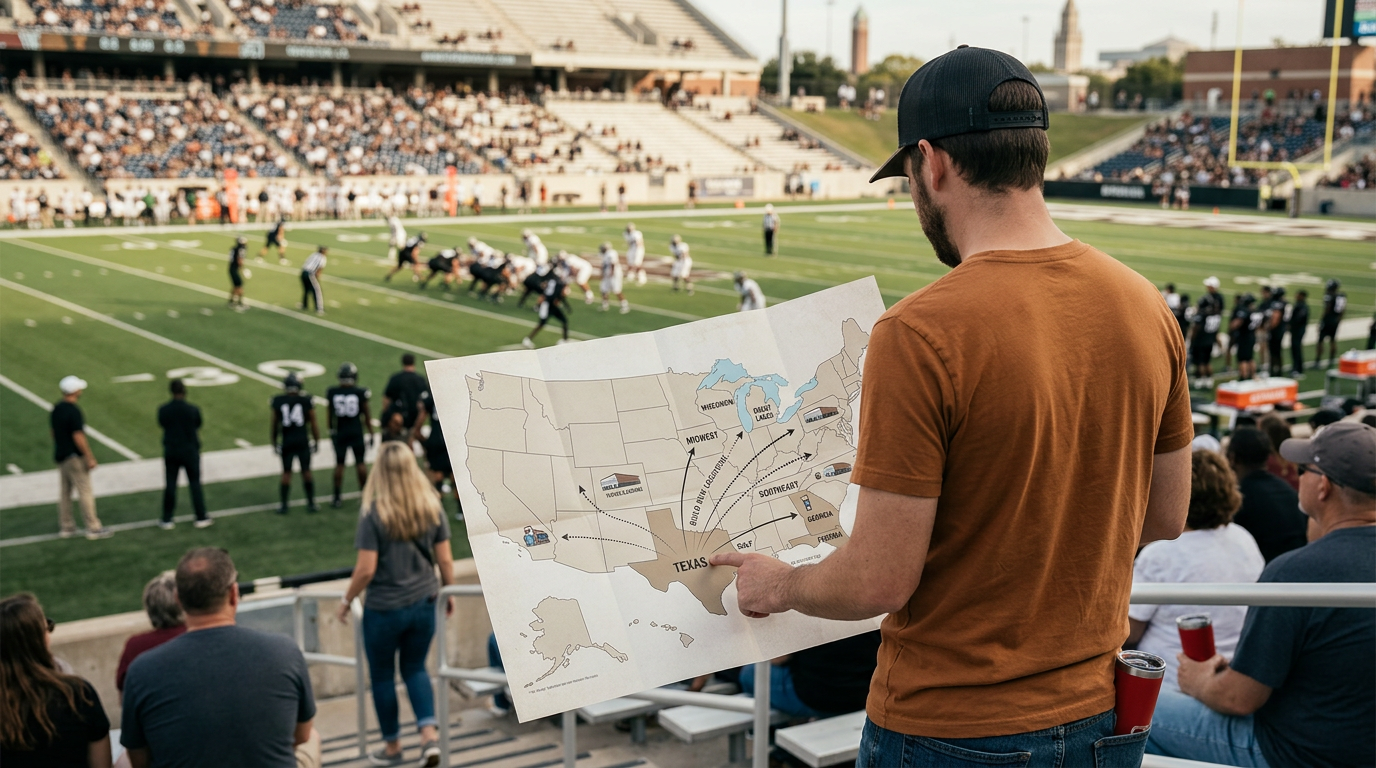
The Texas-based convenience and travel center powerhouse Buc-ee’s is accelerating its growth strategy by targeting several new states for upcoming store locations. Known for its massive footprints and distinctive branding, the company is moving beyond the borders of the Lone Star State to establish a larger national presence. These new developments represent a significant phase in the company's evolution from a regional favorite to a national retail competitor. Historically, Buc-ee's maintained a strictly Texas-focused business model for decades after its founding in Lake Jackson. However, recent corporate shifts have prioritized entering markets in the Midwest and the Southeast to capture high-traffic interstate corridors. This expansion is not just about fuel sales; it is about exporting the 'mega-center' experience that offers everything from apparel to artisanal food. The scale of these centers often exceeds 70,000 square feet, making them more akin to shopping malls for the driving public than traditional roadside stops. By targeting several states simultaneously, the leadership at Buc-ee's is betting that the unique Texas retail culture will resonate with travelers from the Great Lakes to the Gulf Coast. This transition marks the end of Buc-ee's as a 'Texas-only' secret and its emergence as a major player in the $600 billion U.S. convenience store industry.
Texas relevance
As a quintessential Texas brand, the expansion of Buc-ee's serves as a direct export of Texas culture and business philosophy. The company’s success outside of Texas impacts the economic landscape of its home state, where corporate operations and supply chain management remain headquartered. For Texans, the brand is a staple of road-trip culture, and its ability to compete in states like Wisconsin demonstrates the scalability of the Texas-born retail model. This growth ensures that the tax revenue and job creation driven by the company’s administrative sectors continue to benefit the Texas economy even as the storefronts appear in distant regions. Furthermore, the expansion of the brand provides a platform for Texas-made goods—such as jerky and regional snacks—to find shelf space in new markets across the country. The company's origins in Lake Jackson and its flagship status in Freeport are points of pride for local residents, as they watch a local business become a household name from the Carolinas to the Midwest. This success story serves as a case study in how Texas-style deregulation and business-friendly climates empower local startups to eventually dominate their respective sectors on a national scale.
Strategic Growth Beyond the Lone Star State
The current expansion push marks a definitive turning point for Buc-ee's. For much of its history, the chain was a localized secret, known mostly to those traveling between major Texas metropolitan areas like Houston, Dallas, and San Antonio. The transition to a multi-state operator requires massive capital investment and a shift in logistics to manage supply chains far from its Texas roots. The sheer scale of these projects—often costing tens of millions of dollars per site—demonstrates a high level of institutional confidence.
By identifying specific states for new stores, the company is signaling its confidence in the 'super-center' format. These locations are not merely gas stations but are designed as tourism destinations that offer unique merchandise and specialized food service. This model has proven resilient against the rise of e-commerce, as it relies on the physical necessity of travel and food during long-distance commutes. The brand's ability to create a destination out of a routine gas stop is a major disruption to the traditional retail landscape.
The Wisconsin Entry and Midwestern Interests
The inclusion of Wisconsin in the expansion plans highlights a deliberate move into the northern United States. The planned DeForest location represents one of the furthest points north for the company, which has traditionally focused on warmer climates in the Sun Belt. This move tests whether the brand's unique appeal can translate across different regional demographics. Entering the Midwest puts the Texas giant in direct competition with established brands like Kwik Trip and Casey's, though Buc-ee's operates on a much larger scale.
State and local officials in target areas often view the arrival of a new travel center as a major economic win. These centers are known for offering higher-than-average wages for the retail sector and providing significant property and sales tax contributions. The local infrastructure in places like DeForest must be evaluated to accommodate the heavy traffic flow that typically accompanies a new opening. Often, this includes widening roads or redesigning freeway interchanges to prevent local congestion and ensure safety.
Maintaining the Brand Identity During Expansion
One of the primary challenges for any Texas-centric brand moving north is maintaining the specific cultural identity that made it popular. Buc-ee's relies heavily on a reputation for cleanliness and a specific suite of products, such as Beaver Nuggets and house-made brisket. Ensuring that these standards are met at locations thousands of miles from the corporate headquarters is a significant operational hurdle. The brand has built an almost cult-like following based on the reliability of its restrooms and the consistency of its food.
The company has managed this thus far by standardizing store layouts and employee training programs. As more states are added to the roster, the corporate structure will likely need to decentralize some operations while keeping the core brand values intact. This helps prevent the 'watering down' of the experience that often occurs when niche regional brands attempt to go national. If the company can maintain the 'Texas feel' in a Wisconsin setting, it proves that the Buc-ee's brand is culture-agnostic and universally appealing.
Economic Impacts on Local Communities
Each new store brings hundreds of permanent jobs to its respective county. These are not just entry-level positions; the centers require complex management, technical maintenance staff, and large-scale food preparation teams. For many rural or suburban areas near major interstates, the arrival of a travel center of this scale can become the single largest local employer. Many of these jobs offer healthcare benefits and 401k plans, which is unusual for the traditional gas station industry.
In addition to direct employment, the secondary economic effects include increased business for local contractors during the construction phase. Once operational, the high volume of out-of-state travelers stopping at these locations often leads to more spending at other nearby businesses, such as hotels and smaller retail outlets that may benefit from the increased traffic density. The brand often acts as an anchor tenant for larger commercial developments, drawing in other franchises and services to the surrounding land.
Infrastructure and Logistic Requirements
Building a travel center of several thousand square feet requires sophisticated coordination with state transportation departments. Many of the new projects involve significant upgrades to highway off-ramps and the installation of new traffic signals. These negotiations are a critical part of the company's scouting process when targeting new states. Without adequate access, the high density of vehicles—sometimes numbering in the thousands per hour—could overwhelm local traffic patterns.
Logistically, the company must also secure reliable fuel and food supply chains in the new regions. Texas-based suppliers may not always be feasible for northern locations, forcing the company to build new relationships with regional distributors. This helps integrate the company into the local economy of the new states while maintaining the quality standards expected by the brand’s loyal following. The coordination of fresh food deliveries, particularly for the brisket and bakery programs, remains one of the most protected and scrutinized parts of the operation.
The Future of the Travel Center Model
As the automotive industry shifts toward electric vehicles, Buc-ee's is positioned to adapt better than smaller competitors. Their model encourages long dwell times, which fits perfectly with the 20-to-40-minute charging cycles required for EVs. By offering extensive dining and shopping options, they turn a necessary charging delay into a consumer opportunity. This forward-looking approach ensures that the capital invested in new states today will remain viable as the energy landscape changes.
Furthermore, the company's focus on a 'no-trucks' policy for most of its locations differentiates it from traditional truck stops like Love's or Pilot. This appeals specifically to families and leisure travelers who may feel intimidated by the activity at commercial trucking hubs. By carving out this specific niche, Buc-ee's is creating a new category of retail that bridges the gap between a convenience store and a destination amusement center, a trend that is likely to be mimicked by others in the coming decade.
Analysis
The decision to target multiple states simultaneously suggests that Buc-ee's has successfully tested its business model in non-Texas markets and found it to be high-yield. By moving into the Midwest, specifically Wisconsin, the brand is challenging traditional regional convenience players. This aggressive expansion may also be a move to secure prime real estate along major interstates before competitors can adapt to the 'destination retail' format that Buc-ee's pioneered. From a business perspective, the brand is utilizing its high cash flow to out-compete smaller chains that cannot afford the massive infrastructure investments required for 100+ fueling positions and expansive gourmet kitchens. The strategy also hedges against regional economic downturns in the South by diversifying its geographic footprint.
Source attribution
This story was reported using a public release from the Buc-ee's (Google News). Keep TX Red rewrote the coverage independently and links to the official statement for verification.
Frequently Asked Questions
- Where is the new Buc-ee's being built in the Midwest?
- Buc-ee’s has targeted DeForest, Wisconsin, as one of its key expansion locations in the Midwest. This location is part of a broader strategy to establish the brand along major interstate corridors outside of the southern United States, specifically targeting areas with high vacation and commuter traffic.
- How does the expansion affect the company's Texas roots?
- While the storefronts are moving into new states, the company remains a Texas-based entity. Corporate leadership and many administrative functions continue to operate out of Texas, ensuring the state remains the central hub for the brand’s global strategy. The expansion actually strengthens the Texas economy by increasing the scale of the company's home-state headquarters.
- What makes these travel centers different from standard gas stations?
- Buc-ee’s locations are significantly larger than traditional gas stations, often featuring dozens of fuel pumps, massive retail sections, and prepared food service. They are marketed as travel destinations rather than just quick-stop convenience stores, emphasizing cleanliness, variety, and a 'no-commercial-trucks' policy to cater to passenger vehicles.
- What kind of jobs do these new locations create?
- Buc-ee's creates a wide range of positions, including cashiers, food service workers, gift shop associates, and janitorial staff, as well as management roles. They are known for paying significantly above the industry average and offering benefits packages that are competitive with corporate retail standards.
Official Sources
Take the next step
Browse the Newsroom →Read more about Keep Texas Red → Our full guide to what Keep Texas Red means and why Texans support it.
Get Texas updates delivered weekly.
Independent Texas reporting on politics, policy, and daily life. One email a week. Unsubscribe anytime.
Keep TX Red Newsroom
The Keep Texas Red Editorial Staff produces nonpartisan explainers, policy breakdowns, and educational resources to help Texans understand how their government works. All content is reviewed for accuracy and updated regularly.
About Keep TX Red →