Texas Energy Fund Awards $2.3 Million to Bolster Panhandle Electrical Grid Resilience
Governor Abbott announces a $2.3 million grant for Greenbelt Electric Cooperative to upgrade weatherization and reliability in the Texas Panhandle.
Editorial disclaimer: Opinions and analysis on Keep TX Red are editorial content — not statements of fact. See our editorial standards.
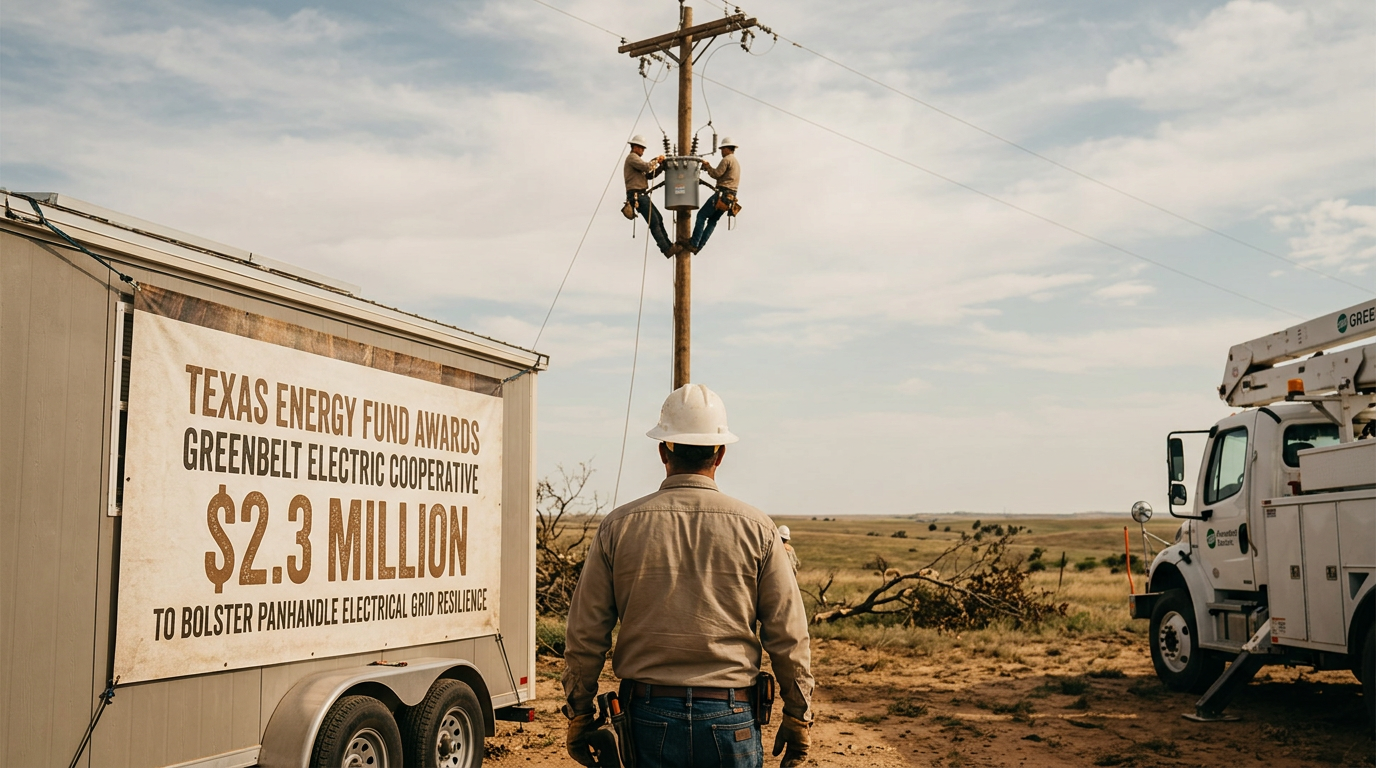
Governor Greg Abbott has authorized a $2.3 million grant from the Texas Energy Fund (TxEF) to enhance the electrical distribution infrastructure in the Panhandle region. This funding is specifically directed toward Greenbelt Electric Cooperative, Inc., a member-owned utility that serves several rural counties. The primary objective of this state-led investment is to implement advanced technology upgrades that will fortify the local grid against extreme weather conditions. By modernizing the distribution lines, the state aims to ensure that residents in these rural sectors maintain consistent access to power even during the severe atmospheric events common to North Texas. This move represents a continuation of the state's efforts to prioritize grid stability following several years of scrutiny regarding the resilience of the Texas electrical network. Historically, the Texas Panhandle has faced unique challenges due to high wind speeds, ice storms, and significant temperature fluctuations that can stress aging utility systems. High-tech weatherization of power lines and substations is a proactive measure intended to mitigate these physical risks. The allocation of these funds highlights a growing trend in Texas governance where the state plays an active role in subsidizing the infrastructure costs of smaller, rural cooperatives that lack the massive capital reserves of major urban providers.
Texas relevance
The Texas Panhandle is the direct beneficiary of this $2.3 million investment, which serves as a critical lifeline for rural communities that often feel ignored by statewide infrastructure debates. This specific geographic region is vital to the state’s agricultural and energy sectors, and any disruption in local power can have compounding effects on the state's economy. Recent legislative sessions in Austin have seen a renewed focus on 'energy independence' within the state, leading to the creation of the Texas Energy Fund as a mechanism to support local reliability without relying on federal oversight. This grant proves that state leadership is looking beyond the ERCOT-heavy discussions of the Dallas and Houston corridors to ensure that the extremities of the state are not left vulnerable.
The Role of the Texas Energy Fund
The Texas Energy Fund (TxEF) was established as a result of constitutional amendments and legislative action aimed at providing a dedicated source of revenue for power projects. Its existence allows the state to bypass traditional loan markets to provide grants and low-interest loans for the maintenance and expansion of the state's electrical capacity. This $2.3 million grant is one of the early disbursements intended to demonstrate the fund's utility in real-time infrastructure crises.
By leveraging these funds, the state of Texas is effectively acting as its own bank for energy security. These resources are often targeted at cooperatives that operate on thin margins but must maintain hundreds of miles of lines across sparsely populated territory. The TxEF is viewed by proponents as a safeguard against the federal government's increasing attempts to regulate state energy markets through environmental or structural mandates.
Upgrading Panhandle Weatherization
Weatherization in the context of this grant refers to more than just wrapping pipes; it involves the installation of high-tech sensors, stronger pole materials, and automated switches that can isolate failures before they cascade. In the Panhandle, where ice accumulation can snap standard lines, these upgrades are essential for preventing long-term outages during the winter season. These updates will also help the grid handle the intense heat waves that have become more frequent in the summer.
Greenbelt Electric Cooperative will be using these funds to deploy technology that allows for better monitoring of distribution lines. This diagnostic capability means that utility crews can identify a break or a sagging line before it causes a fire or a blackout. In the vast stretches of rural North Texas, where a single line segment might serve only a handful of customers across several miles, this efficiency is the difference between a two-hour repair and a two-day ordeal.
Impact on Rural Cooperatives
Rural electric cooperatives (RECs) are distinct from investor-owned utilities because they are owned by the people they serve. While this model empowers local residents, it also means that major capital improvements often result in direct rate hikes for members. State grants like the one announced by Governor Abbott allow these cooperatives to modernize without placing a massive financial burden on the farmers and small-business owners of the Panhandle.
Greenbelt Electric Cooperative serves a vital role in the regional economy, powering irrigation systems, livestock facilities, and residential homes across several counties. Without state intervention, the cost of the proposed weatherization would likely have been unaffordable or delayed for years. This grant ensures that the Panhandle's infrastructure keeps pace with the growing energy demands of the state's industrial and agricultural operations.
Safety and Risk Mitigation
Beyond mere reliability, the upgrades funded by this grant are centered on public safety. Old or brittle power lines pose a significant wildfire risk, especially in the dry, windy climate of the Texas Panhandle. By replacing or retrofitting these distribution lines with modern technology, the cooperative can significantly reduce the chances of sparks causing catastrophic fires that threaten both lives and property.
The Public Utility Commission of Texas has emphasized that 'force multipliers' like advanced distribution technology are necessary to keep utility workers safe. Automated systems reduce the need for manual line checks in hazardous conditions. When the grid is smarter, it is inherently safer for both the technicians who maintain it and the public that lives alongside it.
Texas Leadership in National Energy Policy
Governor Abbott continues to frame these investments as a way for Texas to lead the nation in energy autonomy. By consistently investing in the physical hardware of the grid, the state is making a case for its decentralized, deregulated model. This grant is a small but indicative piece of a larger puzzle that involves billions of dollars in planned improvements across the entire Texas landscape.
As the state's population grows and moves further into rural areas, the pressure on smaller utility providers will only increase. Programs like the Texas Energy Fund are designed to be proactive rather than reactive, though many argue that these investments are long overdue following the 2021 winter storm. Regardless of the timing, the commitment of $2.3 million to the Panhandle signals that the state's strategy for energy security remains focused on hardening existing systems.
Future Outlook for Texas Utilities
The success of this grant program will likely determine how future funds are distributed across the state. If Greenbelt Electric can demonstrate a marked improvement in uptime and a decrease in maintenance costs, other rural cooperatives will almost certainly see similar infusions of capital. The state is currently evaluating dozens of applications for similar weatherization and reliability projects through the TxEF.
In the coming years, the Panhandle may become a testing ground for how rural grids can be integrated with new technologies like battery storage and microgrids. For now, the focus remains on the fundamentals: poles, wires, and weather-resistant hardware. This $2.3 million investment is a foundational step in ensuring that the Panhandle remains a viable and safe place for both industry and residency.
Analysis
The decision to use the Texas Energy Fund for rural cooperatives like Greenbelt Electric highlights a strategic shift in Greg Abbott's administration toward a more localized approach to grid hardening. By focusing on 'distribution line technology' rather than just massive generation projects, the Public Utility Commission of Texas (PUCT) is admitting that the 'last mile' of power delivery is where many failures occur during winter storms. Critics often argue that Texas should integrate more with national grids, but this independent funding model reinforces the state’s commitment to an 'island' style of power management that relies on internal capital and Texas-based decision-making. Promoting safety and reliability in the Panhandle is also a political win, as it addresses the concerns of rural voters who have voiced frustration over rising utility costs and the fragility of local infrastructure during the winter months.
Source attribution
This story was reported using a public release from the Office of the Governor. Keep TX Red rewrote the coverage independently and links to the official statement for verification.
Frequently Asked Questions
- What is the Texas Energy Fund?
- The Texas Energy Fund (TxEF) is a state-managed pool of capital designed to provide grants and loans for projects that improve the reliability and capacity of the Texas electric grid. It was created to support infrastructure outside of federal funding streams.
- Who is Greenbelt Electric Cooperative?
- Greenbelt Electric Cooperative is a member-owned utility provider that serves rural residents and businesses specifically in the Texas Panhandle region. They are responsible for the 'last mile' of power distribution to their members.
- What kind of technology will the grant fund?
- The grant will be used for distribution line technology meant to increase weatherization. This includes hardware and software that can withstand extreme temperatures and wind, as well as sensors that help identify and isolate grid faults.
- Why is the Texas Panhandle getting this money specifically?
- The Panhandle faces extreme weather challenges, including heavy ice and high winds, which can easily damage standard power lines. The region is also critical for Texas agriculture and energy production, making grid stability a high priority for the state.
Official Sources
Take the next step
Browse the Newsroom →Read more about Keep Texas Red → Our full guide to what Keep Texas Red means and why Texans support it.
Get Texas updates delivered weekly.
Independent Texas reporting on politics, policy, and daily life. One email a week. Unsubscribe anytime.
Keep TX Red Newsroom
The Keep Texas Red Editorial Staff produces nonpartisan explainers, policy breakdowns, and educational resources to help Texans understand how their government works. All content is reviewed for accuracy and updated regularly.
About Keep TX Red →