Lamb County Grid Strengthening: Texas Energy Fund Injects $8.8 Million Into South Plains Reliability
Governor Abbott awards $8.8 million in TxEF grants to Lamb County Electric Cooperative for vital grid infrastructure and transmission upgrades.
Editorial disclaimer: Opinions and analysis on Keep TX Red are editorial content — not statements of fact. See our editorial standards.
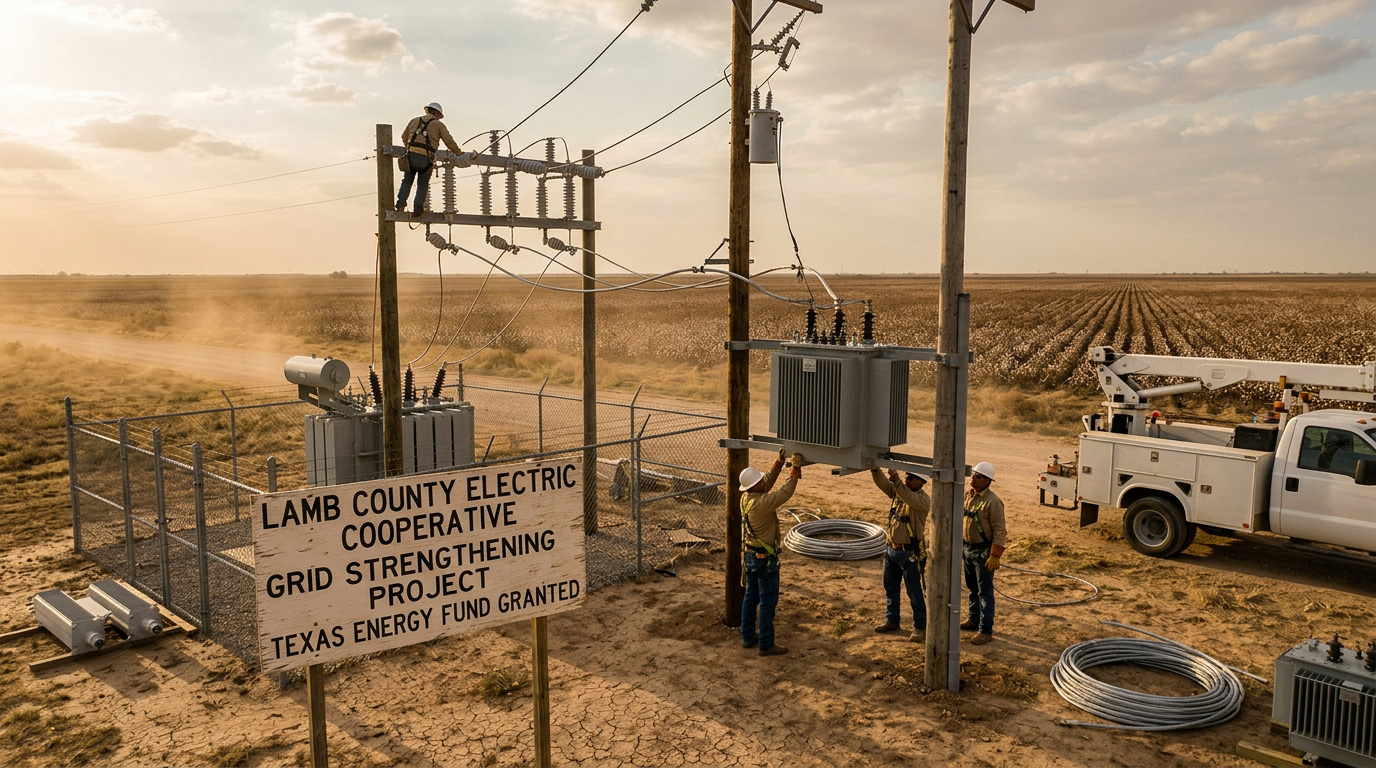
Governor Greg Abbott has authorized a significant financial infusion for the South Plains region, designating more than $8.8 million in state grants to enhance the stability and capacity of the local power grid. These funds, distributed through the Texas Energy Fund (TxEF), are specifically earmarked for the Lamb County Electric Cooperative, Inc. (LCEC). Historically, Texas has managed its own independent power grid, administered by the Electric Reliability Council of Texas (ERCOT), though certain cooperatives in the panhandle and South Plains interface with different regional reliability entities. This new funding represents a proactive effort to fortify infrastructure that serves dozens of small communities and agricultural hubs that form the backbone of the West Texas economy. The grants focus on long-term resilience rather than temporary fixes, targeting the physical hardware that delivers electricity to thousands of residential and commercial meters. This specific package consists of four distinct grants, each designed to tackle a different vulnerability within the LCEC service area. The projects include the complete replacement of high-voltage transmission lines that have reached the end of their operational lifespan, as well as the installation of modern transformers capable of handling increased electrical loads. By modernizing these systems, the state aims to reduce the frequency and duration of outages caused by weather events or equipment failure. The South Plains, known for its extreme weather fluctuations including high winds and ice storms, requires specialized infrastructure that can withstand the unique environmental pressures of West Texas. This investment signifies a strategic shift in state policy toward decentralized grid reinforcement, ensuring that rural cooperatives receive the same level of technological advancement as major metropolitan utility providers.
Texas relevance
Texas residents in the South Plains, particularly those serviced by the Lamb County Electric Cooperative, will see a direct impact on their utility consistency and long-term rate stability as a result of these state-funded upgrades. Texas has a long-standing tradition of fostering energy independence, and the Texas Energy Fund is the latest mechanism used by the state legislature and the Governor's office to ensure that growth in the Permian Basin and surrounding agricultural lands is not throttled by inadequate power supply. For Texans in Lamb, Hale, Hockley, and Castro counties, this means the local cooperative can perform essential maintenance without placing the entire financial burden on the monthly bills of local cooperative members. The state’s intervention provides a buffer against the rising costs of industrial materials and labor required for large-scale electrical engineering projects.
Modernizing the South Plains Backbone
The primary focus of this $8.8 million investment is the physical modernization of transmission assets within the Lamb County Electric Cooperative’s territory. Transmission lines function as the high-capacity highways of the electrical system, moving bulk power from generating sources to local substations. Over time, these lines can degrade due to thermal stress and environmental exposure. The grant funding will facilitate the replacement of aging conductors and support structures, which are essential for maintaining the voltage levels required by modern industrial equipment.
Beyond just replacing what is old, these projects will introduce smarter technology into the South Plains grid. Modern transmission lines often include integrated fiber optics or sensors that allow for real-time monitoring of line health. This allows LCEC to identify potential failure points before they lead to a blackout. In a region where a single downed line can affect hundreds of square miles of agricultural operations, this preventative approach is a game-changer for local businesses and ranchers who rely on consistent power for irrigation and processing.
Expanding Transformer and Substation Capacity
A significant portion of the Texas Energy Fund grants will be directed toward increasing the capacity of transformers within the LCEC network. Transformers are the critical components that step down high-voltage electricity to levels usable by homes and businesses. As the population in the South Plains grows and as agricultural technology becomes more energy-intensive, the existing transformer fleet has faced increasing strain. By expanding this capacity now, the state is future-proofing the region for the next two decades of economic development.
Increased capacity also means better redundancy. In the event that one transformer fails or requires maintenance, a higher-capacity system can often reroute power without triggering service interruptions. This 'n+1' reliability standard is something the state is pushing for across all rural cooperatives. The LCEC upgrades will ensure that even during peak summer heat or extreme winter freezes, the local substations have the overhead needed to serve every customer without the risk of equipment overheating or tripping out of service.
The Strategic Role of the Texas Energy Fund
The Texas Energy Fund (TxEF) was established as a result of legislative action and voter approval, intended specifically to strengthen the state's power grid. While much of the fund is discussed in the context of building new dispatchable gas-fired power plants, these reliability grants represent a different but equally important pillar of the fund’s mission. It acknowledges that generating power is only half the battle; the other half is ensuring that the delivery mechanism—the wires and poles—is resilient enough to withstand Texas's volatile climate.
These grants are competitive and require cooperatives to demonstrate a clear need and a high potential for impact. By awarding Lamb County these funds, the state is validating the cooperative’s long-term planning efforts. The $8.8 million package serves as a pilot for how the TxEF can be used to bridge the gap between rural and urban infrastructure quality. It ensures that rural Texans are not left behind as the state's energy landscape evolves toward more complex and integrated systems.
Impact on Local Agriculture and Industry
Lamb County and its neighbors are centerpieces of Texas's cotton and cattle industries. These sectors are increasingly reliant on automated systems, climate-controlled storage, and high-volume irrigation, all of which demand a steady stream of electricity. A power surge or an unexpected outage at a cotton gin or a dairy facility can result in thousands of dollars in lost revenue and damaged equipment. The LCEC upgrades directly protect the economic output of these vital industries, ensuring that the global supply chain for Texas-grown commodities remains uninterrupted.
Furthermore, reliable power attracts new businesses. When companies look to relocate or expand into West Texas, the first question they ask is whether the local utility can support their load requirements. With $8.8 million in new infrastructure, Lamb County becomes a much more attractive destination for light manufacturing and ag-tech startups. This investment is not just about keeping the lights on tonight; it is about building the industrial foundation for the South Plains' future prosperity.
Timeline and Engineering Expectations
The rollout of these projects is expected to begin immediately, with engineering and procurement phases taking priority. Given the global demand for electrical components like high-voltage transformers, the state’s early commitment of funds allows LCEC to secure necessary materials ahead of other buyers. The construction phase will likely involve specialized crews working across the South Plains to install new poles and string high-tension wires, a process that is often coordinated with local landowners to minimize disruption to farming schedules.
Governor Abbott’s announcement highlights a multi-year vision for these grants. The completion of these four projects will mark a major milestone in the regional energy plan. As these upgrades are finalized, residents can expect to see fewer flickering lights during storms and more stable voltage during the hot afternoon hours when air conditioning demand is at its highest. The state will continue to monitor the progress of these TxEF-funded initiatives to ensure they meet the rigorous reliability standards set forth by the Public Utility Commission of Texas.
Analysis
OPINION: The allocation of over $8.8 million to Lamb County is a clear signal that the Abbott administration is prioritizing rural infrastructure as a matter of statewide security. While large cities often dominate the conversation regarding the Texas grid, the South Plains provides the food and fiber that sustains the state’s economy. By utilizing the Texas Energy Fund for these targeted grants, the state is effectively bypassing the bureaucratic delays often associated with federal energy programs. This move demonstrates a commitment to a 'Texas-first' energy strategy, reinforcing the idea that local cooperatives are the primary line of defense in maintaining a reliable statewide energy footprint. As the state continues to grow, ensuring that the 'last mile' of electrical delivery is robust will be critical in preventing the cascading failures seen in previous decades.
Source attribution
This story was reported using a public release from the Office of the Governor. Keep TX Red rewrote the coverage independently and links to the official statement for verification.
Frequently Asked Questions
- What is the Texas Energy Fund (TxEF)?
- The Texas Energy Fund is a state-managed program established to provide low-interest loans and grants for the construction and maintenance of power generation and delivery infrastructure. It was created to ensure the Texas grid remains reliable and can meet the growing demands of the state's population and industry.
- Which areas will benefit from the LCEC grant?
- The grant specifically benefits the members of the Lamb County Electric Cooperative, which serves residents and businesses in the South Plains region of West Texas, including Lamb County and parts of surrounding counties like Hale, Castro, and Hockley.
- Why was Lamb County chosen for this funding?
- Lamb County was selected through a grant application process where it demonstrated a critical need for infrastructure modernization. The project aims to replace aging transmission lines and increase capacity to prevent future outages in a vital agricultural region.
- How will these upgrades affect my electricity bill?
- By securing state grants, the Lamb County Electric Cooperative can complete these multi-million dollar upgrades without relying solely on member rate increases. In the long term, more efficient and reliable infrastructure typically helps stabilize costs by reducing emergency repair expenses.
Official Sources
Take the next step
Browse the Newsroom →Read more about Keep Texas Red → Our full guide to what Keep Texas Red means and why Texans support it.
Get Texas updates delivered weekly.
Independent Texas reporting on politics, policy, and daily life. One email a week. Unsubscribe anytime.
Keep TX Red Newsroom
The Keep Texas Red Editorial Staff produces nonpartisan explainers, policy breakdowns, and educational resources to help Texans understand how their government works. All content is reviewed for accuracy and updated regularly.
About Keep TX Red →