Governor Abbott Names Key Appointees to Crime Victims Council and Infrastructure Safety Board
Texas Governor Greg Abbott announces new appointments to the Crime Victims' Institute Advisory Council and the One-Call Board of Texas.
Editorial disclaimer: Opinions and analysis on Keep TX Red are editorial content — not statements of fact. See our editorial standards.
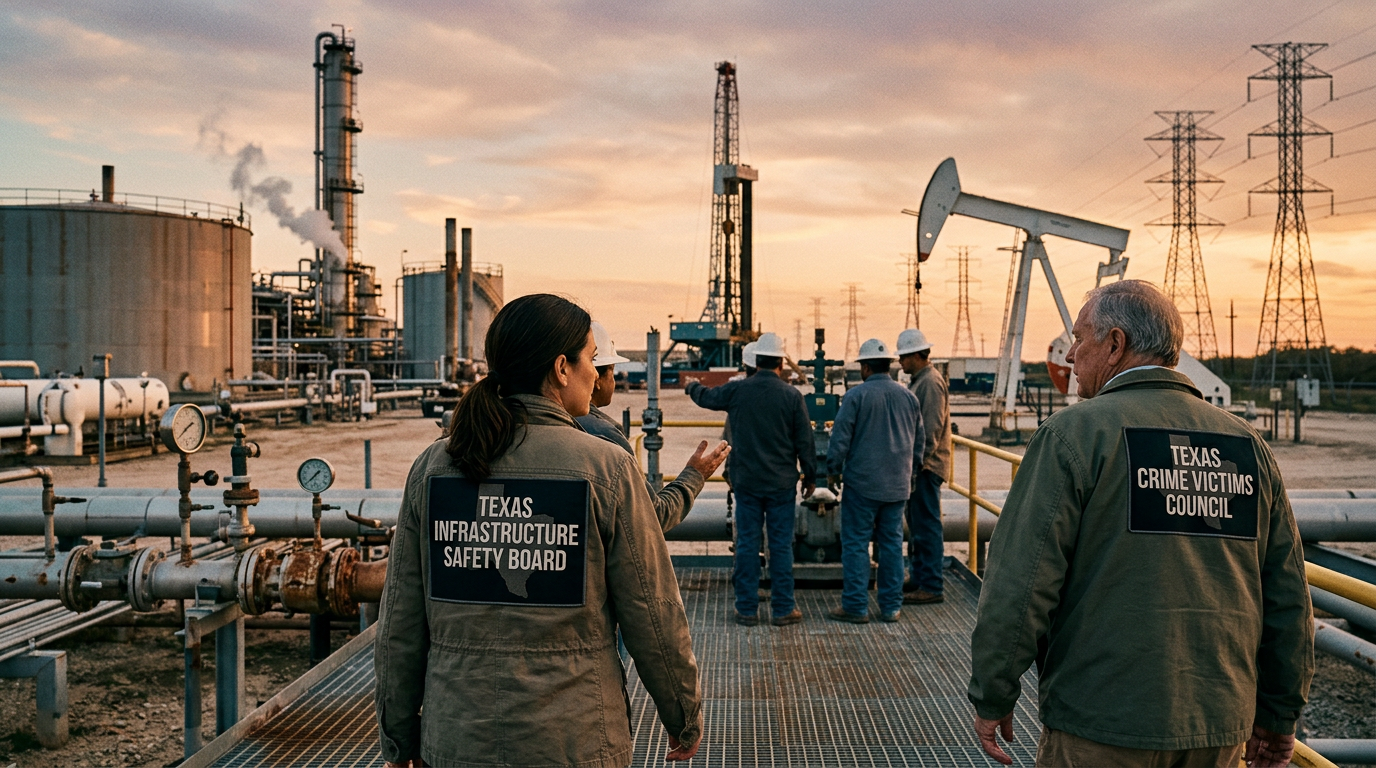
Governor Greg Abbott has finalized a new slate of leadership appointments aimed at reinforcing the state's commitments to public safety and infrastructure integrity. Historically, the process of gubernatorial appointments in Texas serves as a critical mechanism for the executive branch to influence the operational direction of state agencies without direct legislative intervention for every vacancy. This latest round focuses on two distinct but vital areas: the statistical analysis of criminal impact and the physical safety of the state’s massive underground energy and utility network. By placing experienced professionals in these roles, the Governor continues a trend of leveraging specialized expertise to address complex administrative challenges within the Lone Star State. The Crime Victims' Institute Advisory Council sees a major wave of reappointments, ensuring continuity in the longitudinal study of how violence affects Texas families. Meanwhile, the One-Call Board of Texas welcomes new leadership to oversee the vital 'Call Before You Dig' regulations that prevent catastrophic damage to pipelines. These roles, while often operating behind the scenes, are foundational to the legal and physical landscape of Texas, representing the Governor’s broader strategy of maintaining a robust regulatory environment that prioritizes victim rights and local utility security. The individuals selected represent a cross-section of academic, legal, and industrial expertise, reflecting the diverse needs of a state with a rapidly growing population and an expanding industrial footprint.
Texas relevance
These appointments are directly relevant to every resident of Texas, as they oversee systems that touch on daily safety and justice. The Crime Victims' Institute Advisory Council is headquartered within the state and specifically focuses on the unique socio-economic impacts of crime within Texas borders, helping the legislature craft better support systems for Lone Star State residents. Furthermore, the One-Call Board of Texas is essential for the state’s booming construction and energy sectors. As Texas continues to lead the nation in infrastructure development and oil and gas production, the integrity of underground utility lines is a matter of both economic stability and public health for every community from Houston to El Paso.
Analyzing the Impact of Crime on Texas Families
The Crime Victims' Institute Advisory Council plays a multifaceted role in the Texas justice system. Rather than providing direct services, this body is tasked with the 'macro' view of crime. They look at the ripple effects—how a single act of violence impacts not just the immediate victim, but their extended family, their workplace, and the broader societal fabric of Texas. The Council's findings are often used to justify funding for state-run victim compensation funds and to help lawmakers understand where gaps in the legal system may exist.
By reappointing members like Heather Ayala, Melissa Carter, and Hillary England, the Governor is signaling a preference for stability in these analytical pursuits. These individuals bring a wealth of institutional knowledge regarding how the Texas Department of Criminal Justice and other state entities interact with the public. Their work ensures that the voice of the victim is translated into hard data that can be used to influence criminal justice reform and public safety initiatives across the state's 254 counties.
The scope of the Council’s work also extends to the guardians of victims and the relatives of those who have been lost. In a state as large as Texas, the demographic and geographic disparities in crime rates require a nuanced approach that the Council is uniquely positioned to provide. Their research often highlights the specific needs of rural versus urban victim populations, allowing for more targeted state responses and more efficient allocation of taxpayer resources dedicated to victim assistance programs.
The Strategic Importance of the One-Call Board
The One-Call Board of Texas is arguably one of the most important regulatory bodies that the general public rarely considers. It manages the 'Call Before You Dig' system, which is a legal requirement for any excavation project in the state. Whether it is a homeowner installing a new fence or a major contractor breaking ground on a skyscraper in Dallas, the notification system overseen by this board prevents strikes on gas lines, fiber-optic cables, and water mains.
John Mason’s appointment to this board comes at a time when Texas is experiencing an unprecedented construction boom. With thousands of people moving to the state every month, the demand for new housing and commercial development is at an all-time high. This puts immense pressure on the state’s underground infrastructure. The One-Call Board must ensure that the communication between excavators and facility operators is seamless, preventing the kinds of accidents that can lead to neighborhood-wide power outages or dangerous gas leaks.
In addition to public safety, the board plays a role in economic protection. A single severed fiber-optic line can cost businesses millions in lost revenue and disrupt emergency services. Through its oversight, the One-Call Board maintains the reliability of the state’s utility grid, which is a key selling point for businesses looking to relocate to Texas. The regulatory framework managed by this body ensures that infrastructure growth does not come at the expense of existing utility safety.
The Gubernatorial Appointment Process in Texas
In the Texas political system, the Governor has the authority to appoint members to hundreds of state boards and commissions. This power is a primary way the executive branch steers the ship of state. While many of these positions are uncompensated or provide only a small stipend, they carry significant weight in terms of policy-making and regulatory enforcement. This latest slate of appointments is a continuation of Governor Abbott's effort to fill these roles with individuals who align with his vision for a safe and prosperous Texas.
The process for these appointments involves a vetting period where the Governor’s office reviews the professional background and civic contributions of potential candidates. For boards like the Crime Victims' Institute Advisory Council, the Governor often looks for a mix of law enforcement experience, legal expertise, and academic credentials. For infrastructure-focused boards, industry experience is prioritized. This ensures that the boards are not just politically aligned, but also technically capable of handling the specific challenges of their respective sectors.
Once appointed, these individuals serve for fixed terms, though they remain subject to the oversight of the Governor and, in many cases, confirmation by the Texas Senate. This system of checks and balances ensures that the administrative state remains accountable to elected officials. By making these announcements publicly, the Governor’s office provides transparency into who is managing the vital functions of state government, from victim advocacy to the safety of our physical surroundings.
Profiles in Leadership: The Crime Victims Council
The reappointed members of the Crime Victims' Institute Advisory Council bring diverse backgrounds to the table. For example, Matthew L. Ferrara, Ph.D., provides a clinical and psychological perspective that is essential for understanding the long-term trauma associated with violent crime. Forrest Mitchell and Jeffery 'JD' Robertson bring law enforcement and investigative experience, ensuring that the Council's recommendations are grounded in the realities of street-level policing and criminal investigations in Texas.
David Schwartz and the other reappointed members will serve through early 2028, giving them a long runway to conclude ongoing studies and implement new research methodologies. Their work is particularly critical in the context of emerging crimes, such as human trafficking and cyber-crimes, which have unique impacts on victims that differ from traditional physical assaults. The Council must constantly evolve its definitions and study parameters to keep pace with these changing criminal trends.
The continuity of this group also aids in the collaboration between the Council and Texas universities. Much of the research conducted by the Institute is done in partnership with higher education institutions, creating a pipeline of data that informs the next generation of social workers, law enforcement officers, and policy analysts. By keeping the same leadership in place, the Governor is fostering a stable environment for these academic partnerships to flourish and produce actionable intelligence for the state.
Infrastructure Security and Public Responsibility
The appointment of John Mason to the One-Call Board highlights the 'public responsibility' aspect of Texas infrastructure. The board’s primary tool, the 811 system, relies on the cooperation of every Texan who plans to move dirt. The board’s role is to educate the public and enforce the rules that require operators to mark their lines within a specific timeframe. This prevents the state from becoming a patchwork of damaged utilities and ensures that growth is sustainable.
As the term for this appointment runs through late 2026, Mason will be involved in several legislative sessions where utility laws may be updated. The One-Call Board often provides expert testimony to the Texas Legislature regarding the effectiveness of current digging laws and whether penalties for non-compliance need to be adjusted. This makes the board a crucial bridge between the industry stakeholders and the lawmakers who set the rules of the road for the entire state.
The safety of Texas pipelines is another area where the One-Call Board’s influence is felt. With more miles of pipeline than any other state, Texas faces unique risks. The board works to ensure that these pipelines are not accidentally disturbed by third-party excavators, which is one of the leading causes of pipeline incidents nationwide. Through rigorous oversight and clear communication standards, the board protects both the environment and the workers who build the state’s energy future.
Analysis
The decision to reappoint a large block of incumbents to the Crime Victims' Institute Advisory Council suggests that the Abbott administration is satisfied with the current data-driven approach to victimology and crime impact research. By maintaining this specific cohort, the state ensures that long-term studies and policy recommendations will remain consistent, avoiding the disruption that often comes with total board turnover. On the infrastructure side, the appointment to the One-Call Board highlights the ongoing necessity of managing the friction between rapid suburban expansion and existing underground utility networks. This board effectively acts as the first line of defense against accidental utility strikes, which can cause significant property damage or loss of life in a state with as much excavation activity as Texas.
Source attribution
This story was reported using a public release from the Office of the Governor. Keep TX Red rewrote the coverage independently and links to the official statement for verification.
Frequently Asked Questions
- What is the purpose of the Crime Victims' Institute Advisory Council?
- The Council is responsible for conducting comprehensive research and analysis on how crime affects victims and their families in Texas. They study the social, economic, and psychological impacts of various crimes to help the state develop more effective policies and support systems for those affected by violence.
- Why is the One-Call Board of Texas important for homeowners?
- The One-Call Board oversees the 'Call Before You Dig' (811) system. This system is vital for homeowners because it ensures that utility companies mark the location of underground lines before any excavation begins. This prevents accidental damage to gas, water, or electric lines, which can be dangerous and expensive to repair.
- How long do these gubernatorial appointees serve?
- The terms for these specific appointments vary. The members of the Crime Victims' Institute Advisory Council have terms expiring in January 2028, while the new appointee to the One-Call Board of Texas will serve until August 2026.
- Do these boards have the power to change Texas laws?
- While the boards themselves do not pass laws, they provide critical data, expert recommendations, and regulatory oversight that heavily influence the Texas Legislature. They act as advisory bodies that help lawmakers understand the practical impacts of current statutes and where new laws may be needed.
Official Sources
Take the next step
Browse the Newsroom →Read more about Keep Texas Red → Our full guide to what Keep Texas Red means and why Texans support it.
Get Texas updates delivered weekly.
Independent Texas reporting on politics, policy, and daily life. One email a week. Unsubscribe anytime.
Keep TX Red Newsroom
The Keep Texas Red Editorial Staff produces nonpartisan explainers, policy breakdowns, and educational resources to help Texans understand how their government works. All content is reviewed for accuracy and updated regularly.
About Keep TX Red →