Governor Abbott Names AT&T Attorney John Mason to Texas Underground Facility Safety Board
Dallas attorney John Mason joins the One-Call Board of Texas to oversee state excavation safety and utility damage prevention through 2026.
Editorial disclaimer: Opinions and analysis on Keep TX Red are editorial content — not statements of fact. See our editorial standards.
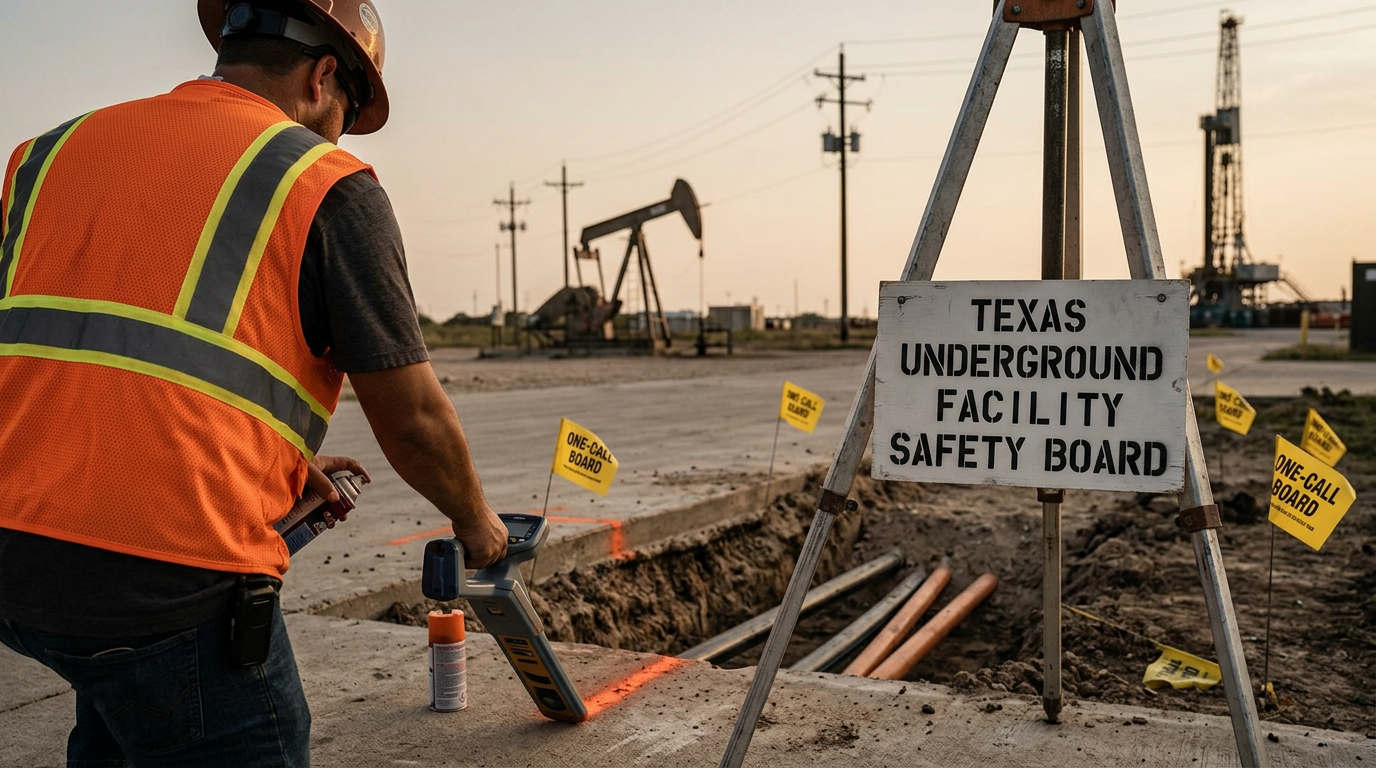
Governor Greg Abbott has officially designated John Mason of Dallas to serve on the One-Call Board of Texas, a critical regulatory body tasked with managing the state’s excavation safety protocols. Mason’s appointment, announced by the Governor’s office, places him on the board for a term scheduled to conclude at the end of August 2026. This move comes as Texas continues to experience significant infrastructure growth, requiring rigorous oversight of underground utility protection systems. Historically, Texas has utilized the One-Call system to bridge the gap between heavy construction activities and the maintenance of vital underground assets like fiber optics, natural gas lines, and water mains. John Mason enters this role with a deep reservoir of experience in both the private and public sectors of Texas law and utility regulation. Currently serving as a senior legal counsel for AT&T, Mason has a professional background that aligns closely with the technological and logistical challenges of modern communication infrastructure. His appointment is seen as a strategic addition of legal expertise to a board that must navigate complex liability issues and safety standards. Previously, Mason served as a managing attorney for the Public Utility Commission of Texas, providing him with firsthand knowledge of the regulatory framework that governs the state’s energy and telecommunications sectors. Under Texas law, the One-Call Board serves as the primary governing authority for the systems that facilitate ‘Call Before You Dig’ notifications. These systems ensure that excavators, ranging from homeowners to large-scale developers, alert facility operators before breaking ground. This process is essential for preventing catastrophic damage to pipelines and other essential utility lines. Mason’s background in government and law, including his education at The University of Texas at Austin and St. Mary’s School of Law, provides a foundation for interpreting the statutory requirements of the Texas Utilities Code as the board updates its safety procedures and enforcement mechanisms.
Texas relevance
This appointment has direct implications for residents and businesses across Texas, particularly in high-growth regions like Dallas-Fort Worth, Houston, and Austin. The One-Call Board’s efficiency determines how quickly construction projects can move forward while ensuring that local neighborhood services are not disrupted by accidental line cuts. In the Dallas area, where Mason is based, the complexity of underground networks—ranging from legacy telecom lines to high-pressure gas mains—requires sophisticated oversight to prevent service outages and physical hazards. By placing a Dallas-based telecom expert on the board, the Governor is ensuring that the specific urban challenges of North Texas are represented in statewide safety discussions.
The Mandate of the One-Call Board
The One-Call Board of Texas operates as a non-profit corporation authorized by state statute to oversee the notification centers that manage excavation requests. Every time an individual or a company plans to move dirt with power-driven equipment, they are legally required to notify the system. The board’s primary duty is to ensure these notification centers operate efficiently and that the information flows seamlessly from the requester to the utility owners who must mark their lines.
Beyond just managing phone lines and digital portals, the board is responsible for public education and the promotion of safety standards. They work to reduce the number of 'hits' on underground facilities, which can cost the Texas economy millions of dollars in repairs and lost productivity every year. By overseeing the implementation of the Texas Underground Facility Damage Prevention and Safety Act, the board plays a silent but essential role in the state's industrial safety infrastructure.
Mason’s Legal and Regulatory Pedigree
John Mason’s career trajectory illustrates a deep commitment to the legal intricacies of Texas governance. As a graduate of the St. Mary’s School of Law, Mason transitioned into roles that required a sharp understanding of administrative law. His time at the Public Utility Commission of Texas (PUC) was instrumental in shaping his perspective on how state agencies must balance the needs of private industry with the safety and reliability requirements demanded by the public.
At AT&T, Mason serves as Assistant Vice President and Senior Legal Counsel, a role that involves navigating one of the most complex regulatory landscapes in the world. This experience provides him with a unique perspective on how one-call requirements impact large-scale utility operators. His ability to view the board’s work through the lens of a major facility operator will likely be invaluable when the board debates technical updates to the notification process.
Impact on Texas Construction and Infrastructure
Texas remains one of the fastest-growing states in the nation, with thousands of miles of new pipelines and broadband cables being laid annually. The One-Call Board is the gatekeeper of this expansion. Without an effective notification system, the risk of hitting a high-pressure line or a high-capacity data trunk increases exponentially. Mason’s appointment comes at a time when the state is pushing for expanded rural broadband access, which will necessitate massive amounts of new digging.
The board must also contend with the rising costs of infrastructure repairs. When a contractor accidentally severs a line because of poor marking or a failure to call, the legal ramifications are extensive. Mason’s expertise in legal counsel will assist the board in refining the protocols used to determine liability and improve the accuracy of line marking, which ultimately protects both the workers on the ground and the residents relying on those services.
Community Involvement and Pro Bono Work
While Mason’s professional accolades are centered on utility law, his community contributions in Dallas are equally noteworthy. He has been an active participant in the Dallas Volunteer Attorney Program, providing pro bono legal services to those who cannot afford representation. This commitment to the legal profession beyond the corporate office suggests a well-rounded approach to his new public service role on the board.
Additionally, his involvement with 'AT&T Believes'—a community engagement initiative—highlights a history of volunteerism. This experience in community-level engagement is beneficial for a board that must often conduct public outreach campaigns to educate small-scale excavators and homeowners about the importance of calling 811 before they begin landscaping or fencing projects.
Future Outlook for the 2026 Term
With a term expiring in 2026, John Mason will be present for several key milestones in Texas infrastructure planning. The middle of this decade is expected to see a surge in energy-related construction and the continued rollout of federally funded internet projects across the state. The One-Call Board will likely face pressure to modernize its digital interfaces and increase the speed of response times for marking requests.
Mason and his colleagues on the board will also need to address the challenges of aging infrastructure. As older pipes and cables become more fragile, the precision of the 'Call Before You Dig' system becomes even more critical. The board’s leadership will be tasked with ensuring that as Texas grows, it does so without sacrificing the safety of the existing networks that power the state's economy.
Analysis
The selection of John Mason reflects a broader trend in Governor Abbott’s appointments, prioritizing individuals with a mix of corporate efficiency and state regulatory experience. By choosing someone currently embedded in AT&T’s legal department, the administration is acknowledging the critical role of telecommunications infrastructure in the excavation safety fold. As Texas continues to attract massive tech investments and data center developments, protecting fiber optic networks is no longer just a secondary concern; it is a vital component of the state's economic security. Mason’s past tenure at the Public Utility Commission also suggests he will be a stickler for regulatory compliance, potentially leading to more rigorous enforcement of penalties for entities that fail to report excavation plans.
Source attribution
This story was reported using a public release from the Office of the Governor. Keep TX Red rewrote the coverage independently and links to the official statement for verification.
Frequently Asked Questions
- What exactly is the One-Call Board of Texas?
- The One-Call Board of Texas is a state-authorized body that governs the notification systems used by excavators to prevent damage to underground utilities. It oversees the procedures that allow contractors and homeowners to have underground lines marked before they start any digging projects.
- Why is the 'Call Before You Dig' system important?
- The system is vital for public safety and infrastructure reliability. It prevents accidental hits on gas pipelines, water mains, and fiber optic cables, which can lead to life-threatening explosions, environmental damage, or widespread service outages.
- What are John Mason's qualifications for this role?
- Mason is a seasoned attorney with deep roots in Texas utility regulation. He has served as a managing attorney for the Public Utility Commission of Texas and currently handles legal affairs for AT&T, giving him expertise in both the regulatory and operational sides of underground infrastructure.
- How long will John Mason serve on the board?
- His current appointment is set for a multi-year term, officially expiring on August 31, 2026.
Official Sources
Take the next step
Browse the Newsroom →Read more about Keep Texas Red → Our full guide to what Keep Texas Red means and why Texans support it.
Get Texas updates delivered weekly.
Independent Texas reporting on politics, policy, and daily life. One email a week. Unsubscribe anytime.
Keep TX Red Newsroom
The Keep Texas Red Editorial Staff produces nonpartisan explainers, policy breakdowns, and educational resources to help Texans understand how their government works. All content is reviewed for accuracy and updated regularly.
About Keep TX Red →