Governor Abbott Allocates $22 Million to Fortify North Texas Panhandle Power Grid
Texas Energy Fund grants will modernize substations and transmission lines for the North Plains Electric Cooperative to ensure long-term grid stability.
Editorial disclaimer: Opinions and analysis on Keep TX Red are editorial content — not statements of fact. See our editorial standards.
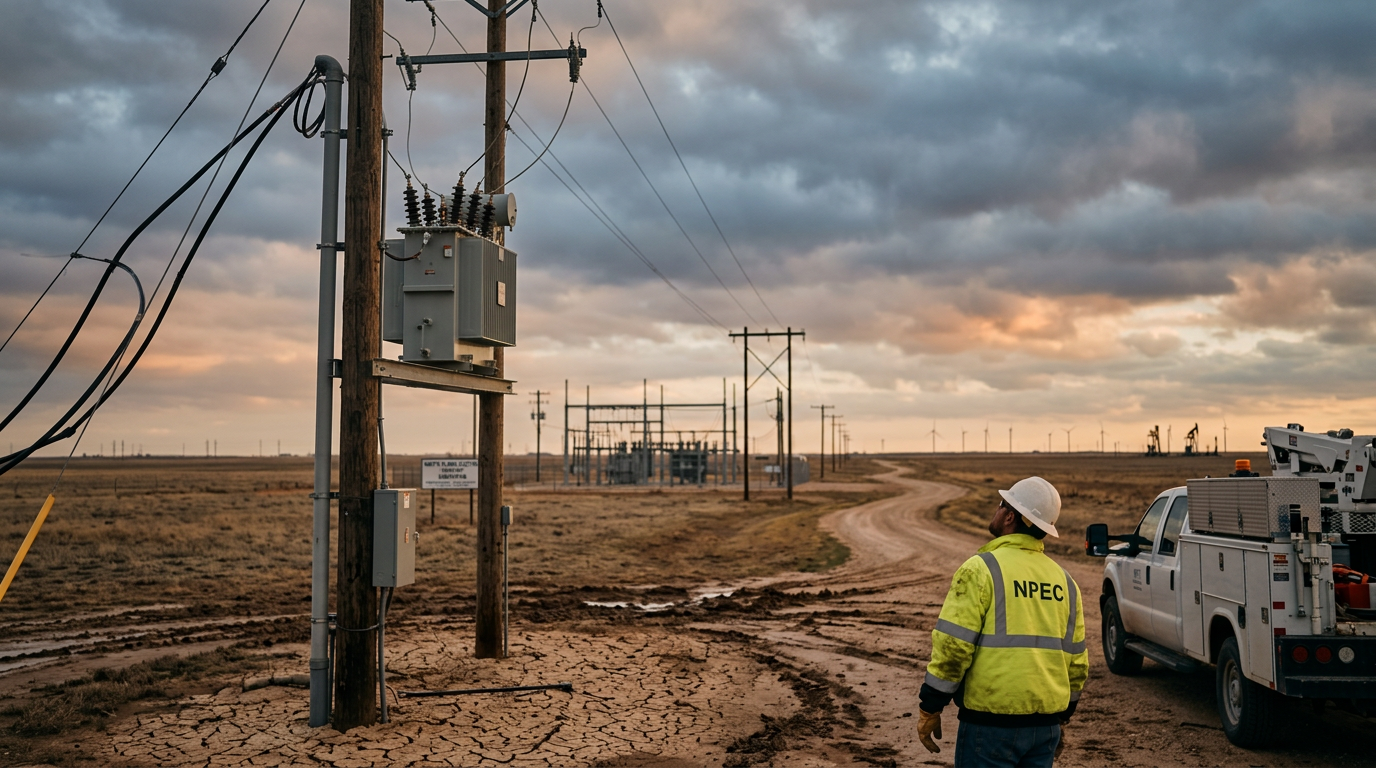
Governor Greg Abbott has authorized over $22 million in state grant funding specifically designated to upgrade electrical infrastructure in the northeastern Texas Panhandle. These funds are sourced directly from the Texas Energy Fund (TxEF), a program created to strengthen the state's independent power delivery systems. The primary recipient of this funding is the North Plains Electric Cooperative (NPEC), which provides essential utilities to a vast rural and industrial landscape in the high plains region. Historically, Texas has prioritized localized electrical improvements through cooperative partnerships, particularly following extreme weather events that highlighted the vulnerability of aging rural line systems. This specific investment focuses on a multi-pronged approach to infrastructure hardening. The capital will be utilized to expand existing substation capacity, modernize transmission technologies, and decrease the time required to restore power following significant weather disruptions. By reinforcing these systems now, the state aims to stay ahead of the increasing demand for electricity caused by both population growth and industrial expansion in Northwest Texas. The TxEF represents a focused effort by the Texas Legislature and the Governor's office to ensure that even the most remote areas of the state maintain access to a reliable, heavy-duty power supply that can withstand the unique environmental pressures of the Panhandle region.
Texas relevance
Texas operates its own semi-independent power grid, making state-level funding for electrical cooperatives vital for regional stability. In the Texas Panhandle, where cattle ranching, wind energy production, and oil and gas operations are economic staples, even brief outages can result in catastrophic financial losses or safety hazards for rural residents. This $22 million injection into the North Plains Electric Cooperative directly impacts citizens in Ochiltree, Lipscomb, Hansford, and surrounding counties. This action follows a decade-long trend in the Lone Star State of moving toward greater decentralized reliability, ensuring that local cooperatives have the modern tools needed to manage load surges without relying on overextended central nodes.
Modernizing Substation Infrastructure
A significant portion of the $22 million grant is earmarked for the expansion of substation capacity across the NPEC service area. Substations serve as the critical link in the electrical chain, stepping down high-voltage power from transmission lines to levels that can be safely distributed to homes and local businesses. As the Panhandle sees an uptick in data centers and industrial farming technology, the existing substations have approached their maximum operational limits.
The upgrades will involve installing newer breakers, transformers, and automated monitoring systems. These components allow for better diagnostic tracking, meaning the cooperative can identify potential failures before they lead to a full blackout. By increasing the physical capacity of these units, the region can support more residents and larger commercial enterprises without the fear of overloading the local grid segment during peak summer or winter usage months.
Enhancing Power Restoration Speed
In the vast stretches of Northwest Texas, locating a line break or a failed component can take hours of manual inspection by linemen during a storm. The new funding will support the implementation of 'smart' technology designed to improve restoration capabilities. These systems allow for remote switching and automatic fault detection, which can reroute power around a damaged area to keep the majority of customers online while repairs are underway.
This technological leap is particularly important for rural cooperatives like NPEC, where service areas span hundreds of miles of difficult terrain. Reducing the time it takes to identify and isolate a problem not only saves the cooperative money in labor and logistics but also provides a vital safety net for residents who rely on electricity for heating during the Panhandle’s severe cold fronts. The goal is to move from a reactive maintenance model to a proactive, automated response system.
Upgrading Transmission and Distribution Lines
The third pillar of this infrastructure project involves the physical replacement and reinforcement of transmission lines. High-voltage lines in the Panhandle are frequently subjected to extreme wind speeds and ice accumulation, which can cause lines to sag or poles to snap. The grant funding will allow for the installation of more durable poles and higher-capacity conductive wiring that is less prone to environmental degradation.
Newer transmission materials are designed to carry higher loads with less heat loss, making the entire system more efficient from a physics standpoint. This means that less energy is wasted as it moves from the generation source to the end-user. For the stakeholders in North Plains Electric, this translates to more stable voltage levels at the plug, which protects sensitive electronics and heavy industrial machinery from the 'brownout' conditions that often precede total outages.
The Role of the Texas Energy Fund
The Texas Energy Fund was established as a result of legislative action and voter approval to provide a dedicated pool of capital for the maintenance and expansion of the state’s energy landscape. Unlike general revenue, these funds are specifically gated for projects that have a direct impact on the reliability of the Texas grid. The $22 million allocated to NPEC is one of several rounds of funding aimed at regional cooperatives across the state.
By focusing on cooperatives, the state is addressing the 'last mile' of energy delivery. While large-scale power plants garner most of the headlines, it is the local distribution networks that determine whether a household actually has power during a crisis. The TxEF acts as a financial bridge, allowing smaller, member-owned cooperatives to undertake massive capital projects that would otherwise require significant rate hikes for local members.
Economic Implications for Northwest Texas
Economic development in the Panhandle is inextricably linked to energy availability. Many of the counties served by North Plains Electric are seeing renewed interest from sectors like crypto-mining, large-scale irrigation for agriculture, and renewable energy storage. None of these industries can operate without a guaranteed, high-capacity power connection. This grant basically acts as a green light for future business investment in the region.
When a region proves it has a modern, reliable grid, it becomes a much more attractive destination for corporate relocation. This investment ensures that Northwest Texas remains competitive with other states and regions. The ripple effect of this $22 million will likely be felt in the local job market, as the construction and maintenance of these new facilities require skilled labor, further boosting the regional economy in the short and long term.
Timeline and Implementation Strategy
The distribution of these funds marks the beginning of a multi-year engineering and construction phase. North Plains Electric Cooperative will now move forward with final designs and procurement for the upgraded components. Because electrical infrastructure projects require specialized parts that often have long lead times, the immediate focus will be on securing the necessary equipment to prevent supply chain delays.
The Governor’s office, in coordination with the Public Utility Commission of Texas, will oversee the progress of these grants to ensure that the projects meet the state's rigorous standards for reliability and fiscal responsibility. Residents can expect to see increased utility work in the area as poles are swapped and substations are expanded, representing a tangible physical manifestation of the state's commitment to Northwest Texas.
Analysis
The decision to utilize the Texas Energy Fund for these specific grants underscores a broader strategic shift in Austin toward prioritizing rural infrastructure alongside urban growth. By targeting the Northeast Panhandle, the Governor is signaling that the 'energy capital of the world' must have a foundation that supports its primary production zones. From a political and economic standpoint, keeping the lights on in the Panhandle is not just about residential comfort; it is about protecting the state’s agricultural and energy output. Furthermore, this move serves as a preemptive strike against future grid critiques, showing a proactive use of voter-approved funds to build out a more resilient, localized network that can operate efficiently under the stress of North Texas winters and high-wind summers.
Source attribution
This story was reported using a public release from the Office of the Governor. Keep TX Red rewrote the coverage independently and links to the official statement for verification.
Frequently Asked Questions
- What is the Texas Energy Fund (TxEF)?
- The Texas Energy Fund is a state-managed program designed to provide grants and loans for the modernization and expansion of the Texas power grid. It was created to ensure that utilities have the capital necessary to improve reliability and meet the growing energy needs of Texas residents.
- Which areas will specifically benefit from this $22 million grant?
- The funding is specifically for the North Plains Electric Cooperative (NPEC). This cooperative serves the northeastern portion of the Texas Panhandle, including rural communities and industrial operations that are vital to the state's agriculture and energy sectors.
- How will these upgrades prevent future blackouts?
- The upgrades add 'redundancy' and 'capacity.' By increasing substation size, the grid can handle more load without failing. By adding automated restoration technology, the cooperative can pinpoint and fix power breaks much faster, often rerouting power so that fewer people are affected by a single line failure.
Official Sources
Take the next step
Browse the Newsroom →Read more about Keep Texas Red → Our full guide to what Keep Texas Red means and why Texans support it.
Get Texas updates delivered weekly.
Independent Texas reporting on politics, policy, and daily life. One email a week. Unsubscribe anytime.
Keep TX Red Newsroom
The Keep Texas Red Editorial Staff produces nonpartisan explainers, policy breakdowns, and educational resources to help Texans understand how their government works. All content is reviewed for accuracy and updated regularly.
About Keep TX Red →