Abbott Greenlights Major West Texas Power Expansion with Texas Energy Fund Loan
Governor Abbott approves the eighth Texas Energy Fund loan for 860 MW of dispatchable power in the Permian Basin to shore up grid reliability.
Editorial disclaimer: Opinions and analysis on Keep TX Red are editorial content — not statements of fact. See our editorial standards.
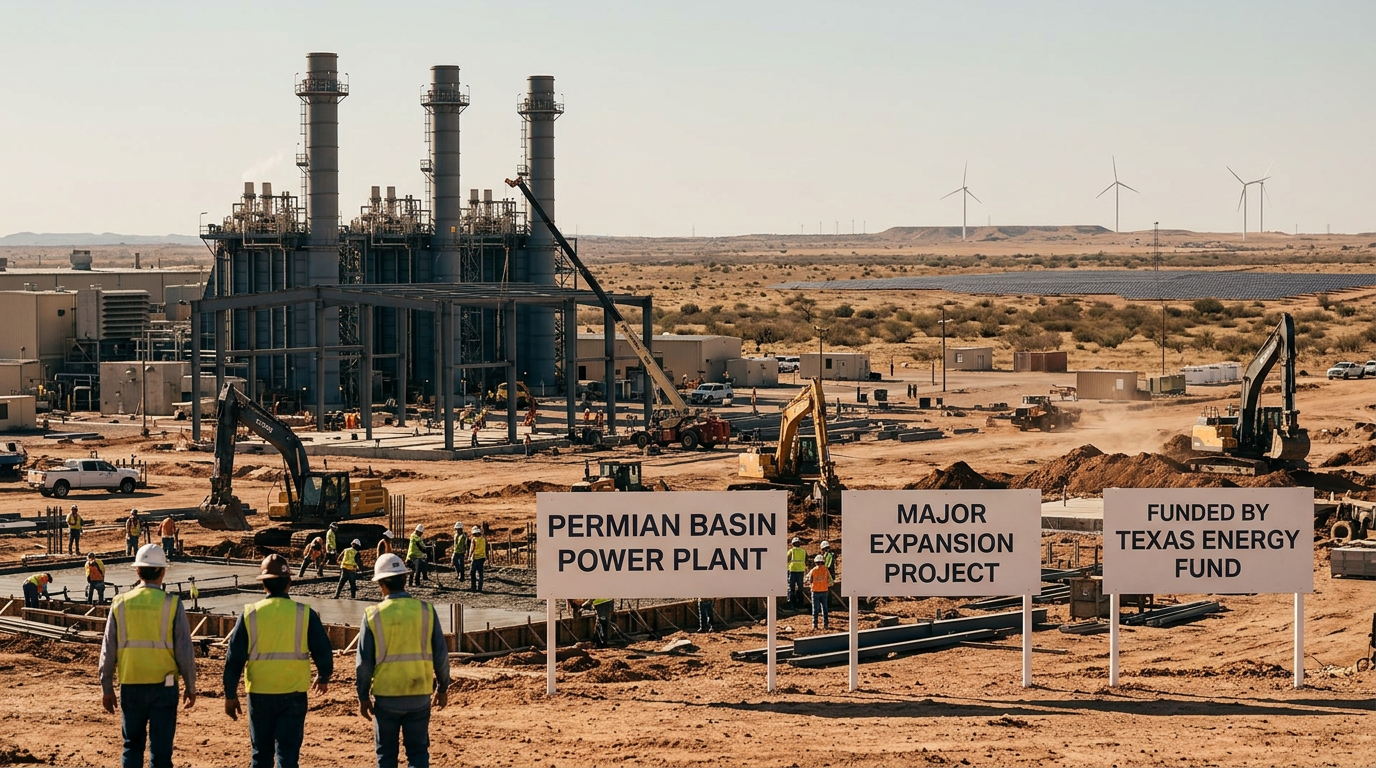
Governor Greg Abbott has announced the approval of the eighth loan from the Texas Energy Fund (TxEF), a move aimed at bolstering the state's internal power production capabilities. The funding will support a major expansion of the Permian Basin Power Plant in Ward County, which is overseen by Vistra. Historically, the Texas energy landscape has undergone a massive transformation over the last decade, transitioning from a heavy reliance on traditional coal to a diverse mix of wind, solar, and natural gas. However, following the challenges of the 2021 winter storm, state leaders recognized an urgent need to incentivize 'firm' or dispatchable power. This new project in West Texas will result in the construction of two sophisticated natural gas units capable of generating 860 megawatts (MW). By nearly tripling the plant's existing output, the state is effectively creating a massive safety net for the regional grid, ensuring that over 215,000 homes can be powered even during times of peak demand or renewable energy scarcity. This allocation is part of a broader bipartisan push to solidify the energy independence of the Lone Star State. The Texas Energy Fund was established after voters approved a constitutional amendment in November 2023, reflecting a clear public mandate to prioritize grid reliability. The funding mechanism allows the state to partner with private utilities like Vistra to lower the financial barriers for capital-intensive thermal power projects. By bringing this additional 860 MW online, Texas is not just addressing today's needs but is preemptively planning for the massive population growth projected for the late 2020s. This specific project represents one of the largest single additions of thermal capacity since the fund's inception, signaling a new era of proactive infrastructure management under the state executive's direction.
Texas relevance
The expansion in Ward County is a critical component of Texas’ broader strategy to protect the 'world’s energy capital' from the volatility of international oil markets and extreme weather patterns. The Permian Basin is the epicenter of the American energy revolution, and ensuring that this region has a steady, uninterrupted flow of electricity is paramount for national security and the state’s GDP. For residents in West Texas and across the ERCOT system, this project means a more stable electricity price and a lower risk of rolling blackouts. The decision to place this capacity in Ward County serves to stabilize the local transmission nodes that feed the intense industrial demands of the oil and gas fields, which are increasingly requiring more electricity for operations such as electric hydraulic fracturing and automated drilling rigs.
The Strategic Importance of Dispatchable Generation
In the context of the Electric Reliability Council of Texas (ERCOT), 'dispatchable' power is the gold standard for reliability. Unlike wind turbines or solar panels, which depend on weather conditions that are outside human control, natural gas units can be fired up or dialed back at the command of a grid operator. This flexibility is essential for maintaining the delicate frequency balance required to keep the statewide grid from failing. The addition of 860 MW of this flexible power at the Permian Basin Power Plant ensures that when the wind fails to blow during a sweltering August afternoon, Texas has the mechanical muscle to keep air conditioners running.
Furthermore, natural gas units provide 'black start' capabilities and essential inertia to the grid. These technical benefits are often overlooked by the general public but are critical for engineering a stable power system. By investing specifically in these types of units, the Texas Energy Fund is focusing on the 'quality' of power, not just the quantity. This ensures that the state's move toward a more modern grid does not sacrifice the fundamental stability that has historically defined the Texas industrial landscape.
Vistra’s Role and Industrial Partnership
Vistra has emerged as a key partner in the state’s efforts to modernize its energy portfolio. As a major player in the Texas market, Vistra’s decision to pursue this expansion in Ward County indicates a high level of confidence in the regulatory and financial climate of the state. The company’s expertise in operating large-scale thermal plants means that the two new units will likely be integrated into the existing infrastructure with minimal disruption. This existing footprint at the Permian Basin Power Plant allows for a faster construction timeline compared to 'greenfield' projects that require entirely new land acquisitions and environmental assessments.
This partnership also highlights the success of the Texas Energy Fund's loan program. By providing low-interest capital, the state makes it economically feasible for companies like Vistra to choose Texas for their long-term investments. This symbiotic relationship between the state government and private energy producers is a cornerstone of the Texas economic model. It allows the state to direct development toward critical infrastructure needs while leaving the operation and technical management to seasoned industry professionals.
Economic Impact on the Permian Basin
The economic implications of this 860 MW expansion extend far beyond the perimeter fence of the power plant. For the people of Ward County and the surrounding Permian Basin, this project represents a massive influx of local investment. During the construction phase, the project is expected to create hundreds of high-paying jobs for specialized contractors, engineers, and laborers. This temporary boost in activity will likely trickle down to local small businesses, from hotels and restaurants to service providers in neighboring towns like Monahans and Pecos.
In the long term, the increased power capacity will act as a magnet for further industrial development. Industries ranging from data centers to manufacturing plants require high-density, reliable power before they will consider breaking ground on new facilities. By tripling the capacity at this site, Ward County becomes a much more attractive destination for these heavy-industry players. This creates a virtuous cycle of economic growth, where reliable energy leads to more business investment, which in turn grows the local tax base to fund schools and public services.
The Evolution of the Texas Energy Fund
The Texas Energy Fund was not created in a vacuum; it was a direct response to the systemic vulnerabilities exposed in recent years. With a total initial allocation of $5 billion, the fund is intended to kickstart the construction of up to 10,000 MW of new dispatchable generation. The announcement of this eighth loan shows that the program is moving at an aggressive pace to meet its goals. The Texas Legislature’s foresight in creating this fund allows the state to bypass the slow and often bureaucratic federal funding processes, maintaining true Texas independence over its power grid.
As more loans are finalized and projects move into the construction phase, the cumulative impact on the ERCOT grid will be substantial. Lawmakers are already discussing the potential for expanding the fund in future legislative sessions if the current project pipeline proves successful. The Ward County expansion serves as a blueprint for how these funds should be utilized: expanding existing sites to maximize efficiency and localized impact. This strategy minimizes the environmental footprint while maximizing the reliability gains for the Texas people.
Technological Advancements in Natural Gas
The two new units being built at the Permian Basin Power Plant are not the inefficient gas plants of the mid-20th century. These modern units utilize advanced turbine technology designed to operate with high efficiency and lower emissions compared to older thermal plants. They are designed for rapid start-up times, allowing them to swing from zero to full capacity in a matter of minutes. This technology is precisely what a modern grid needs to complement the variable output of the state’s massive wind and solar fleets.
Moreover, by locating these units in the heart of the Permian Basin, the project reduces the need for long-distance gas transport, as the fuel source is literally right beneath the ground. This geographic advantage reduces the overhead costs of generation and keeps the supply chain entirely within the state borders. It is a textbook example of utilizing Texas resources to solve Texas problems, ensuring that the state remains the master of its own energy destiny.
Looking Ahead: The Timeline for Completion
While the loan approval is a major milestone, the work of building 860 MW of capacity is a complex undertaking. The coming months will involve detailed engineering, equipment procurement, and the mobilization of construction crews. Because this is an expansion of an existing facility, many of the 'pre-work' requirements are already satisfied, which should help streamline the process. Texans can expect to see significant activity at the Ward County site as Vistra moves toward the target date for power generation.
Once completed, the integration of these units into the ERCOT market will provide an immediate boost to the state's reserve margins. This buffer is what prevents price spikes during heatwaves and ensures that even if several other plants go offline for maintenance, the grid remains stable. The successful completion of this project will likely serve as a benchmark for the remaining Texas Energy Fund applicants, proving that the state’s strategy for energy security is both viable and necessary for the 21st century.
Analysis
The strategic utilization of the Texas Energy Fund to subsidize natural gas units serves as a direct rebuttal to federal pressure to decarbonize the grid purely through intermittent renewables. The Abbott administration is demonstrating a commitment to an 'all of the above' energy strategy, but with a firm thumb on the scale for dispatchable gas generation. This approach seeks to solve the reliability gap that has plagued other states with high renewable penetration. By focusing on Ward County, the state is also rewarding the region that generates the vast majority of its Rainy Day Fund revenue. Politically, this move secures the Governor's position as a defender of the fossil fuel industry while simultaneously delivering the infrastructure improvements that urban voters demand. The long-term impact will likely be a more resilient ERCOT grid that can withstand the dual pressures of summer heatwaves and winter freezes.
Source attribution
This story was reported using a public release from the Office of the Governor. Keep TX Red rewrote the coverage independently and links to the official statement for verification.
Frequently Asked Questions
- What is the primary benefit of the Ward County power expansion?
- The primary benefit is a significant increase in 'dispatchable' power. This means the 860 MW can be generated on-demand, providing a crucial backup to the grid when renewable sources like wind and solar are not producing enough energy. This helps prevent blackouts during extreme weather.
- How does the Texas Energy Fund obtain its money?
- The fund was established by the Texas Legislature and approved by voters as a constitutional amendment in 2023. It utilizes state surplus funds to provide low-interest loans specifically for the construction and maintenance of reliable power plants within the ERCOT grid.
- Who owns and operates the new power units?
- The units will be owned and operated by Vistra, a leading Texas-based energy company. While the state provides the financing via a loan, the project is a private-sector operation that contributes to the competitive ERCOT wholesale electricity market.
- How long will it take for this new power to be available?
- While specific end-dates depend on construction variables, adding units to an existing plant is generally faster than building a new one. The project is expected to move rapidly into the construction phase to meet the growing electricity demands of the Permian Basin.
Official Sources
Take the next step
Browse the Newsroom →Read more about Keep Texas Red → Our full guide to what Keep Texas Red means and why Texans support it.
Get Texas updates delivered weekly.
Independent Texas reporting on politics, policy, and daily life. One email a week. Unsubscribe anytime.
Keep TX Red Newsroom
The Keep Texas Red Editorial Staff produces nonpartisan explainers, policy breakdowns, and educational resources to help Texans understand how their government works. All content is reviewed for accuracy and updated regularly.
About Keep TX Red →