Texas Education Board Evaluates Comprehensive Social Studies Reforms and Required Reading Standards
The Texas State Board of Education is reviewing major updates to social studies curriculum and new mandatory reading requirements for public schools.
Editorial disclaimer: Opinions and analysis on Keep TX Red are editorial content — not statements of fact. See our editorial standards.
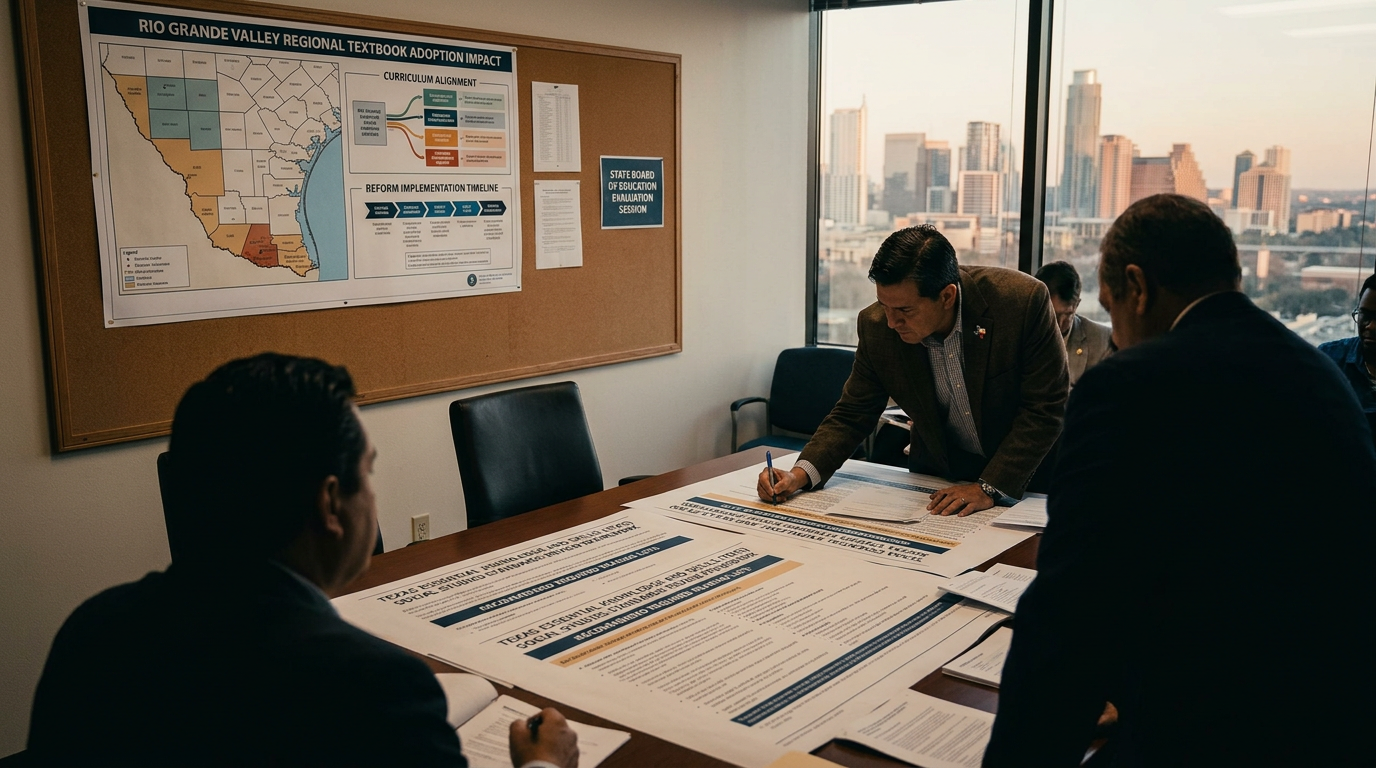
The Texas State Board of Education (SBOE) has entered a critical phase of evaluating the framework that governs how history and social studies are taught to millions of students across the state. This move involves not only a structural review of the Texas Essential Knowledge and Skills (TEKS) but also the potential implementation of standardized reading lists. Historically, Texas has been a foundational battleground for educational content, as the state’s massive textbook market often influences national publishing trends. This current cycle of review follows years of legislative debate regarding how sensitive historical topics and civic duties are presented to the next generation of Texans. Historically, the SBOE updates these standards every decade to ensure that information remains current and reflects the priorities of the state's leadership and the public. In previous cycles, the board has navigated intense public scrutiny regarding the portrayal of the Alamo, the civil rights movement, and the specific roles of various historical figures. The latest proceedings aim to refine several grade levels of instruction, ensuring that the curriculum provides a rigorous and fact-based foundation while adhering to recent state laws governing classroom discourse. These sessions often involve hundreds of hours of testimony from parents, educators, and policy experts who seek to shape the narrative taught in Texas classrooms.
Texas relevance
As the second-largest school system in the United States, Texas exerts significant influence over the educational landscape. Any decision made by the SBOE in Austin has an immediate ripple effect across the state's 1,200 school districts, impacting nearly 5.5 million students. For local school boards and teachers, these changes dictate lesson plans, resource allocation, and the selection of materials for the upcoming academic years. Furthermore, the inclusion of mandatory reading lists marks a shift in how much autonomy local districts might retain versus the centralized guidance provided by the state board. This centralized oversight is designed to ensure consistency in educational quality from the Rio Grande Valley to the Panhandle.
The Evolution of Social Studies Standards
The social studies curriculum in Texas has undergone several transformations over the last twenty years. Previously, the standards were criticized for being too broad, leading to a sprawling set of requirements that teachers found difficult to cover within a single school year. The SBOE is now looking to streamline these standards while ensuring that key historical events are not diluted. The goal is to provide a comprehensive look at both world and American history that prepares students for the complexities of modern citizenship.
A major component of this evolution is the integration of more primary source documents. Board members have expressed a desire for students to engage directly with the texts that shaped the nation, such as the Federalist Papers and the Texas Constitution. This approach is intended to foster critical thinking skills by allowing students to analyze historical context rather than simply memorizing dates and names from a secondary source. The board believes this will improve student engagement with the material.
Implementation of Mandatory Reading Lists
One of the more innovative facets of the current proposal is the introduction of state-mandated reading lists. In the past, specific book choices were largely left to the discretion of individual school districts or even individual classroom teachers. The new proposal suggests a shift toward a more uniform selection of literature that would be required for students at various grade levels. This ensures that every student, regardless of their zip code, is exposed to the same foundational literature deemed essential by the state.
Supporters of the mandatory lists argue that it provides a necessary safety net for quality control. They contend that in an era of polarized educational content, a state-approved list guarantees that students are reading high-quality, age-appropriate, and historically significant works. However, the selection process for these books is expected to be a point of intense negotiation, as board members must agree on which authors and titles represent the values and educational goals of the entire state of Texas.
Public Testimony and Stakeholder Input
The SBOE is unique in how much public access it provides during these decision-making processes. During recent hearings, the board has heard from a diverse array of stakeholders, including military veterans, civil rights advocates, and groups representing various religious and ethnic backgrounds. This feedback loop is essential for the board to gauge the public's appetite for specific curricular changes. Many parents have used this platform to advocate for a curriculum that emphasizes American exceptionalism and the benefits of a free-market economy.
Educators have also weighed in, focusing on the practical implications of a changing curriculum. Many teachers have expressed concerns regarding the 'pacing' of new requirements and the need for adequate professional development to transition to new standards. The SBOE must balance these practical classroom realities with the high-level policy goals set by the board and the Texas Legislature. The result of these discussions will likely be a compromise that seeks to satisfy both pedagogical needs and public expectations.
Legislative Compliance and New Laws
The current curriculum review is taking place under the shadow of several new state laws passed by the Texas Legislature in recent sessions. These laws place specific restrictions on how certain sensitive topics, including race and gender, are discussed in the classroom. The SBOE's task is to translate these broad legislative mandates into specific, actionable standards for teachers. This requires careful wording to ensure that the curriculum remains academically rigorous while staying within the legal boundaries established by state lawmakers.
The board is also tasked with ensuring that the social studies framework encourages 'civic virtue' as defined by the state. This includes a robust understanding of how government functions at the local, state, and federal levels. By aligning the curriculum with recent legislative priorities, the SBOE is aiming to create a cohesive educational policy that reflects the collective will of the Texas government. This alignment is seen as a way to reduce friction between state leadership and local school administration.
Economic Impact of Textbook Selections
The financial stakes of the SBOE's decisions are immense. When Texas approves a new social studies curriculum, it triggers a massive purchasing cycle for textbooks and digital learning materials. Because Texas is one of the largest purchasers of educational materials in the country, the standards set in Austin often dictate what publishers include in versions of books sold to other states. This gives Texas an outsized influence on the national curriculum landscape, as publishers are loath to create entirely different editions for every state.
For Texas taxpayers, the adoption of new materials represents a significant investment of state and local funds. The board must ensure that the materials chosen are not only accurate and compliant with standards but also cost-effective and durable. As school districts move toward more digital-first learning environments, the SBOE is also evaluating how these social studies standards will be delivered through online platforms and interactive media, ensuring that the technology used in Texas schools is as advanced as the content it delivers.
Future Outlook for Texas Students
The ultimate goal of these reforms is to produce graduates who are well-versed in the history of their state and nation. The SBOE members have frequently stated that a strong grounding in social studies is essential for maintaining a functional democracy. By raising the bar for what is expected in the classroom, the board hopes to improve overall student performance on standardized tests and prepare students for the rigors of higher education and the workforce. The emphasis on reading and historical analysis is seen as a way to bolster literacy across all subjects.
As the board moves toward a final vote on these standards, the eyes of the nation will be on Texas. The decisions made in the coming months will set the course for Texas education for the next decade. Parents and educators alike are encouraged to stay involved in the process, as the final curriculum will shape the worldview of the millions of children currently enrolled in the Texas public school system. The SBOE remains committed to a process that is transparent, thorough, and reflective of the Texas spirit.
Analysis
The push for mandatory reading lists and more structured social studies curriculum reflects a broader movement within Texas to emphasize traditional academic foundations and historical literacy. By standardizing the 'canon' of literature and history, the SBOE is attempting to create a more unified cultural and educational experience for Texas students. Critics often argue that such moves restrict local control, whereas proponents suggest that a standardized list prevents ideologically driven gaps in student knowledge. The board's focus on these updates during a period of intense public engagement suggests that education remains a top-tier priority for Texas voters who want to see a curriculum that aligns with traditional values and academic excellence.
Source attribution
This story was reported using a public release from the Texas History Stories (Google News). Keep TX Red rewrote the coverage independently and links to the official statement for verification.
Frequently Asked Questions
- What is the role of the State Board of Education (SBOE) in this process?
- The SBOE is responsible for setting the Texas Essential Knowledge and Skills (TEKS), which are the state standards for what students should know and be able to do at each grade level. They review and update these standards periodically to ensure they remain relevant and meet legislative requirements.
- How can the public participate in the curriculum review?
- The SBOE holds public hearings where individuals can sign up to give testimony. They also provide periods for written public comment, allowing parents, teachers, and concerned citizens to express their views on proposed changes before a final vote is taken.
- Why are mandatory reading lists being considered now?
- The move toward mandatory lists is intended to create a more consistent educational experience across the state. It aims to ensure that all students are exposed to high-quality literature and historical documents that align with the state's educational priorities.
- Will these changes affect all grades?
- The current review covers a broad range of grade levels in the social studies category, from elementary school through high school. The goal is to create a scaffolded learning experience where concepts are introduced early and built upon in subsequent years.
Official Sources
Take the next step
Browse the Newsroom →Read more about Keep Texas Red → Our full guide to what Keep Texas Red means and why Texans support it.
Get Texas updates delivered weekly.
Independent Texas reporting on politics, policy, and daily life. One email a week. Unsubscribe anytime.
Keep TX Red Newsroom
The Keep Texas Red Editorial Staff produces nonpartisan explainers, policy breakdowns, and educational resources to help Texans understand how their government works. All content is reviewed for accuracy and updated regularly.
About Keep TX Red →