State Board of Education Considers Significant Curriculum Overhaul Featuring Biblical Literacy
Texas SBOE moves toward a final vote on the Bluebonnet Learning Framework, integrating biblical narratives into elementary literacy materials.
Editorial disclaimer: Opinions and analysis on Keep TX Red are editorial content — not statements of fact. See our editorial standards.
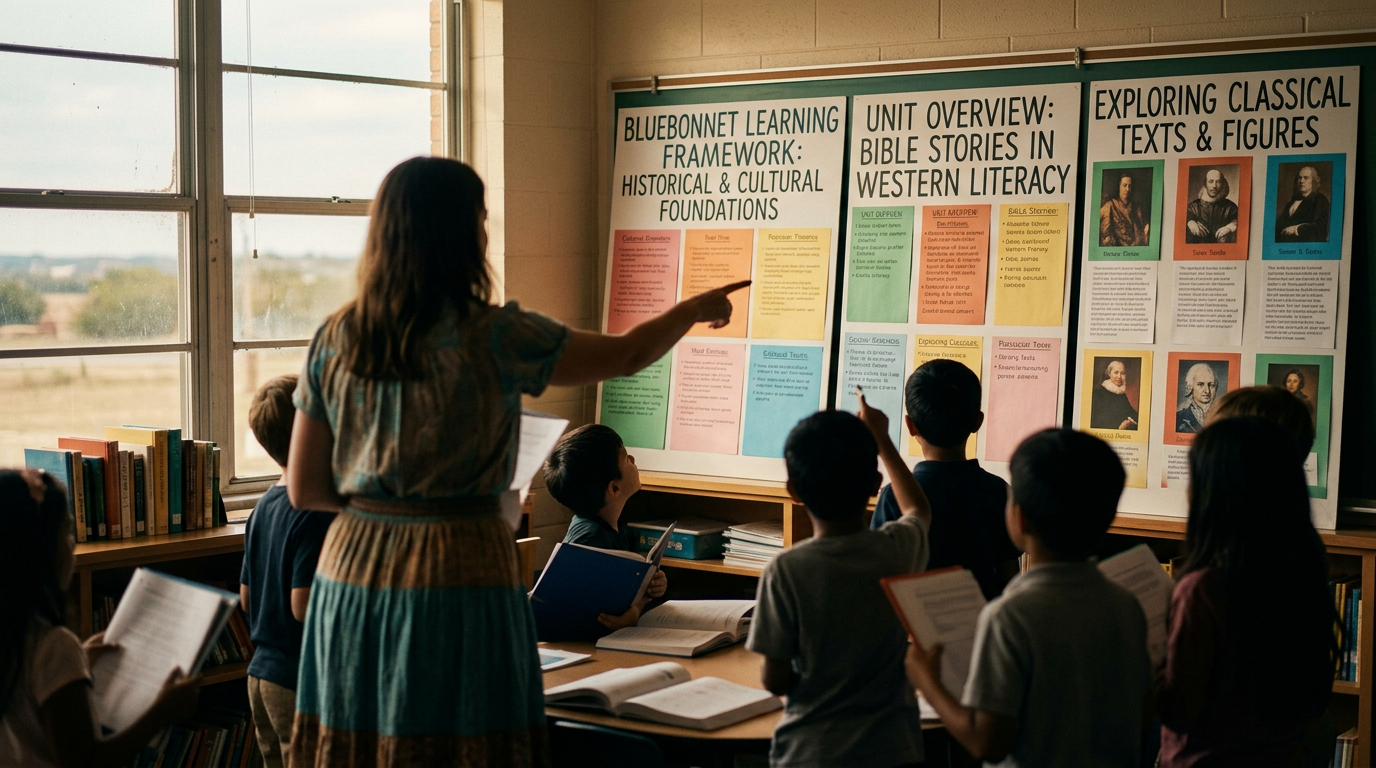
The Texas State Board of Education (SBOE) is entering a decisive phase regarding the adoption of a new elementary school curriculum that shifts the focus of literacy education toward classical and historical foundations. Known as the Bluebonnet Learning Framework, the proposed materials include instructional units that reference stories and figures from the Christian Bible, presenting them as fundamental elements of Western cultural and historical literacy. This initiative follows the passage of House Bill 1605 during the 88th Legislative Session, which tasked the Texas Education Agency with developing state-owned instructional materials that meet rigorous academic standards while remaining accessible to all districts. Historically, Texas has frequently been a battleground for the intersection of public education and religious literacy, with the TEA asserting that these changes are designed to bridge the gap between reading mechanics and contextual knowledge. The current proposal represents one of the most significant shifts in state-level curriculum design in recent decades, aiming to create a standardized baseline for high-quality instruction across the state’s thousands of elementary classrooms.
Texas relevance
As the second-largest school system in the United States, Texas often sets the standard for instructional materials nationwide. The SBOE’s decision directly impacts more than 5.5 million students across the Lone Star State. Specifically, local districts in North Texas, including Dallas and Fort Worth, are monitoring these developments to determine how to integrate the state-approved materials into their unique campus environments. The Texas precedent for curriculum reform often influences textbook publishers’ offerings for other states, making this decision a local issue with massive national downstream consequences. Furthermore, the financial incentives linked to adopting these materials mean that even small rural districts in West and East Texas must weigh the fiscal benefits of state-supplied resources against the localized concerns of their constituent parents and school boards.
The Origin of the Bluebonnet Framework
The development of the Bluebonnet Learning Framework began under the directive of the Texas Legislature to create high-quality, Open Education Resources (OER). The goal was to provide teachers with a comprehensive 'script' or guide that reduces the time spent on lesson planning while ensuring that every child in Texas receives a consistent level of instruction regardless of their zip code.
The Texas Education Agency (TEA) spent months refining these materials, incorporating feedback from various stakeholders. The curriculum covers Kindergarten through 5th grade, with a specific focus on reading and language arts. By controlling the content at the state level, proponents argue that Texas can ensure that instructional materials are free from fringe ideologies and grounded in foundational academic concepts.
Biblical Context in the Classroom
The most debated aspect of the new curriculum involves the inclusion of religious stories, such as the Good Samaritan, the Golden Rule, and the life of Moses. The SBOE has clarified that these stories are taught within a historical and literary context rather than as theological truths. The curriculum designers argue that these narratives are woven into the fabric of English literature and civil law, making them essential for a well-rounded education.
Despite these justifications, the proposal has faced opposition from organizations advocating for the separation of church and state. Witnesses at recent board meetings have expressed concerns that the materials might inadvertently proselytize or make students from non-Christian backgrounds feel excluded. The board has responded by making some revisions to the language, but the core inclusion of biblical themes remains central to the framework.
Legislative Mandates and Fiscal Incentives
House Bill 1605 provided a significant financial carrot for districts that choose to adopt the SBOE-approved materials. Districts that utilize the state-developed curriculum are eligible for additional funding per student, which can help offset the costs of professional development and printing. This move is seen as a way to streamline education across the state's 1,200 school districts.
Critics of the funding model argue that it creates a two-tiered system where wealthier districts can afford to reject the state's curriculum, while underfunded districts are practically forced to adopt it for the supplemental cash. This economic reality has made the SBOE vote a high-stakes moment for school administrators who are already struggling with inflationary pressures and static state funding levels.
Public Testimony and Board Deliberations
The lead-up to the vote featured hours of public testimony in Austin. Parents, teachers, and religious leaders from across Texas arrived to voice their opinions. Supporters praised the curriculum for its rigor and its emphasis on moral foundations, while opponents delivered petitions calling for the removal of religious content entirely.
Inside the board, the 15-member body has shown signs of internal debate. While a conservative majority generally supports the move toward more traditional content, individual members have raised questions about how these materials will be implemented in diverse urban settings. The final vote will reflect the board’s attempt to balance these competing interests while satisfying the mandates set by the Texas Legislature.
The Role of the Texas Education Agency
Commissioner Mike Morath and the TEA have been vocal defenders of the Bluebonnet Framework. The agency maintains that the curriculum was vetted by experts to ensure it aligns with the Texas Essential Knowledge and Skills (TEKS) standards. According to the TEA, the move toward knowledge-rich content is backed by cognitive science, which suggests that background knowledge is the single most important factor in reading comprehension.
The TEA has also highlighted that the curriculum includes references to other religions and cultures, though the biblical content is undeniably more prominent. This disparity is defended as being reflective of the historical context of the United States. The agency’s role in managing these materials represents a consolidation of educational influence within the executive branch of the state government.
Implementation and Next Steps for Districts
If the SBOE grants final approval, school districts will have the option to begin implementing the Bluebonnet materials as early as the next academic year. This process will involve extensive teacher training, as the framework requires a different approach to classroom management and delivery than many current 'balanced literacy' models.
Districts will not be mandated to use the curriculum, but the combination of free access and per-pupil incentives will likely lead to widespread adoption. Monitoring the rollout will be a priority for both the TEA and various advocacy groups, who will be looking for any signs of how the religious content affects classroom dynamics and student performance on standardized tests.
Analysis
From a policy perspective, the Bluebonnet initiative represents a return to a 'knowledge-based' instructional model, which proponents argue is essential for long-term comprehension. By moving away from abstract skill-building and toward a curriculum rich in historical and cultural references, the state is betting that students will develop a more robust intellectual framework. However, the inclusion of biblical text remains the primary point of friction. Critics suggest it tests the boundaries of the Establishment Clause, while supporters maintain that a student cannot truly understand Western literature, art, or history without an awareness of biblical themes. The economic angle is also key; by providing these materials for free, the state is effectively pressuring districts to align with Austin’s vision of education, as the costs of independent curriculum development continue to rise.
Source attribution
This story was reported using a public release from the Texas History Stories (Google News). Keep TX Red rewrote the coverage independently and links to the official statement for verification.
Frequently Asked Questions
- Will Texas students be required to study the Bible?
- Under the proposed Bluebonnet Learning Framework, students in Kindergarten through 5th grade will encounter stories from the Bible as part of their reading and language arts curriculum. However, the state maintains these are taught as historical and cultural references rather than religious doctrine. Additionally, local school districts have the final say on whether to adopt these specific materials.
- What is the financial incentive for school districts?
- Texas districts that choose to use the SBOE-approved Open Education Resources are eligible for supplemental funding—approximately $40 per student. This funding is designed to help schools implement the new standards and covers the costs associated with the transition away from previous curriculum providers.
- Can parents opt their children out of these lessons?
- Texas law generally allows parents to review instructional materials and, in some cases, request alternative assignments if they have a religious or moral objection. However, since these narratives are integrated into the core literacy curriculum rather than being a separate 'Bible class,' the logistics of opting out may vary by district and could be more complex to manage.
Official Sources
Take the next step
Browse the Newsroom →Read more about Keep Texas Red → Our full guide to what Keep Texas Red means and why Texans support it.
Get Texas updates delivered weekly.
Independent Texas reporting on politics, policy, and daily life. One email a week. Unsubscribe anytime.
Keep TX Red Newsroom
The Keep Texas Red Editorial Staff produces nonpartisan explainers, policy breakdowns, and educational resources to help Texans understand how their government works. All content is reviewed for accuracy and updated regularly.
About Keep TX Red →