Redistricting Disputes Intensify as Texas Congressional Representation Faces Population Count Challenges
Texas leaders respond to claims that census counting methods and redistricting strategies could shift the state's political map in the coming cycle.
Editorial disclaimer: Opinions and analysis on Keep TX Red are editorial content — not statements of fact. See our editorial standards.
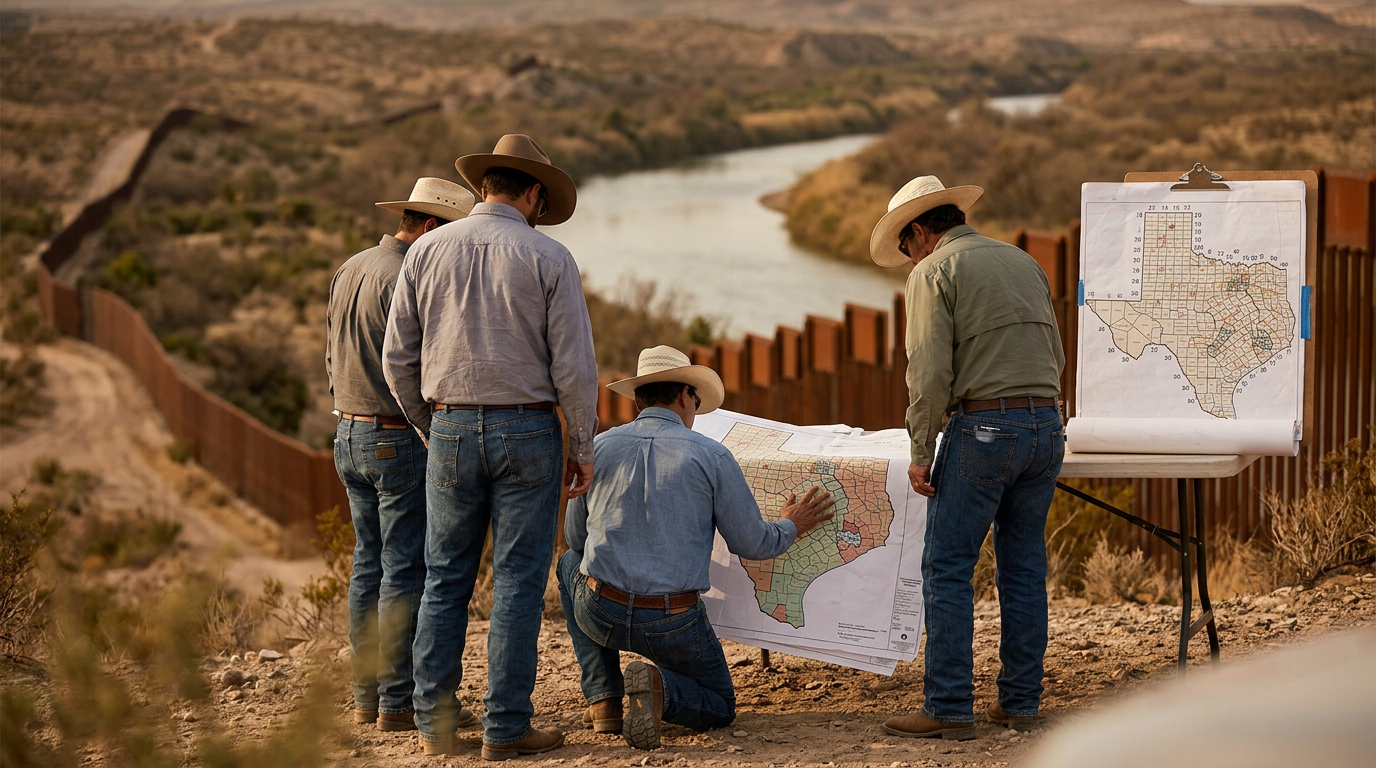
The political landscape of Texas is once again at the center of a national debate over how congressional districts are drawn and how population counts are conducted. Texas, which gained two congressional seats following the 2020 Census, remains the focal point for shifts in federal representation due to its massive population growth. Recently, members of the Texas congressional delegation have raised concerns regarding how future redistricting cycles will account for non-citizens and the potential impact of excluding certain demographics from the apportionment process. This debate touches on the fundamental principles of the U.S. Census, which historically counts every person residing in a state to determine how many seats that state receives in the U.S. House of Representatives. Historically, Texas has seen its influence in Washington, D.C., grow steadily as residents from other states and countries move to the Lone Star State. Following the 2020 redistricting cycle, the Texas Legislature approved maps that solidified incumbent positions and created new opportunities in fast-growing suburban areas. However, critics argue that these maps do not accurately reflect the state's diversifying electorate, while proponents maintain that the boundaries comply with the law and protect the interests of Texas voters. The current friction stems from proposals that would change how the total population is calculated for the purpose of drawing these lines, potentially favoring certain geographic regions over others.
Texas relevance
Texas is uniquely positioned in this debate because it is the state most affected by shifts in population-based apportionment. With 38 congressional districts, the way lines are drawn impacts everything from federal funding for Texas highways to the state's influence on national energy policy. As a border state with a significant non-citizen population, any change to how individuals are counted during the census or redistricting could result in Texas losing seats or seeing a massive internal shift of political power from urban centers like Houston and Dallas to more rural or suburban districts.
The Evolution of Texas Redistricting Laws
Texas has a long and complex history with redistricting, often requiring federal oversight under the Voting Rights Act until the Supreme Court's decision in Shelby County v. Holder. In previous decades, the state was required to obtain 'preclearance' before changing its district boundaries to ensure that minority voting power was not diluted. Without that requirement today, the Texas Legislature has more autonomy to draw lines based on current demographic trends and partisan priorities, leading to the current disputes in the 2020s.
The process of drawing these lines begins in Austin, where lawmakers analyze data provided by the U.S. Census Bureau. Because Texas grew by nearly 4 million people between 2010 and 2020, the task of balancing district populations has become increasingly difficult. Each congressional district in Texas must now contain roughly 766,000 people. When these lines are shifted even slightly, it can move hundreds of thousands of voters into new jurisdictions, often changing the political leaning of a district overnight.
The Citizenship Question Debate
At the heart of the recent controversy is the proposal to include a citizenship question on the census or to use citizenship data when drawing state-level maps. Supporters argue that congressional representation should be based on the number of people eligible to vote, rather than the total number of inhabitants. They contend that including non-citizens in the count artificially inflates the power of urban areas where many non-citizens reside, effectively giving those areas more weight in the Electoral College and the House of Representatives.
Conversely, opponents argue that the U.S. Constitution requires a count of 'persons,' not just citizens. In Texas, where the Hispanic population is a major driver of growth, this distinction is critical. Many of the fastest-growing areas in South Texas and the Rio Grande Valley have significant non-citizen populations. Excluding these individuals from the redistricting count would likely result in fewer districts for these regions, a move that critics say would silence the voices of entire communities who still contribute to the state's economy and infrastructure.
Impact on Urban vs. Rural Power Dynamics
The divide in Texas politics is increasingly defined by the gap between urban centers and rural counties. Cities like Austin, San Antonio, and Dallas are becoming more reliably Democratic, while the vast majority of Texas's 254 counties remain deep red. Redistricting is the primary tool used to manage this tension. By 'cracking' urban cores or 'packing' them into a few highly concentrated districts, the majority party can ensure that rural and suburban interests maintain a dominant voice in the state's federal delegation.
If the push to change redistricting criteria succeeds, the biggest losers would likely be the large metropolitan areas. These cities require significant federal investment for transit, housing, and social services. A reduction in their congressional representation would mean less pull in the House Appropriations Committee. For rural Texans, however, such a shift would be seen as a correction, ensuring that the voters who are most invested in the state's long-term legislative outcomes are the ones determining its representatives.
Legislative Maneuvers in Austin
During the last legislative session, Texas lawmakers spent considerable time defending the maps they drew. The maps were designed to withstand legal challenges by focusing on 'communities of interest' and following existing county lines where possible. However, the rapid growth in areas like Collin and Denton counties forced significant changes to the North Texas map. The resulting boundaries have been described by some as a firewall that protects the Republican majority against the blue wave that Democrats have been predicting for over a decade.
State leaders, including Governor Greg Abbott, have consistently maintained that the redistricting process in Texas is transparent and follows all constitutional mandates. They argue that the focus should remain on the state’s economic success, which is what draws people to Texas in the first place. From their perspective, the complaints from the Democratic delegation are merely a reaction to their inability to win over voters in the vast middle ground of the Texas electorate.
The Role of the Judicial System
Redistricting in Texas almost always ends up in the courts. Over the years, federal judges have frequently been asked to redraw lines that were found to be discriminatory. However, the current legal climate has shifted. With a more conservative federal judiciary, including the Fifth Circuit Court of Appeals and the U.S. Supreme Court, the bar for proving that a map is unconstitutional has become higher. Plaintiffs must now provide overwhelming evidence of intentional discrimination rather than just showing a disparate impact on certain groups.
As we approach the 2026 and 2028 election cycles, the legal battles over these maps will continue to play out. These cases are not just about the next election; they are about setting the precedent for the 2030 Census. If Texas successfully defends its current redistricting methods, it will serve as a blueprint for other states looking to protect their conservative majorities through the end of the decade.
Economic Implications of District Boundaries
Beyond politics, the drawing of congressional lines has profound economic consequences for Texas. Congressional representatives are the primary advocates for federal projects, such as the deepening of Texas ports or the expansion of military bases like Fort Cavazos. When a district is reorganized, the business community in that area must build new relationships with representatives who may not be familiar with their specific needs.
Furthermore, the allocation of federal dollars often follows the census count. If certain populations are undercounted or excluded from the redistricting logic, Texas could miss out on billions of dollars in federal grants. This creates a strange paradox where the state leadership wants to ensure maximum federal funding by counting everyone, while simultaneously wanting to draw districts that favor a specific voting demographic. Balancing these two competing interests is the primary challenge for Texas policymakers.
Future Outlook for Texas Voters
For the average Texas voter, the redistricting process can feel distant and overly technical. However, its effects are felt every time they head to the ballot box. The current disputes suggest that the 2030s will see even more radical proposals for how we define a 'constituent.' Whether the state moves toward a voter-based apportionment or sticks to a total-population model will determine if Texas remains a solid red state or shifts toward a more competitive 'purple' status.
In the meantime, the Texas congressional delegation will remain split. The Republican members will continue to advocate for policies that they believe reflect the values of the majority of Texans, while the Democratic members will keep sounding the alarm on what they view as an erosion of fair representation. This friction is a sign of a healthy, if heated, democracy in a state that is undergoing the most rapid demographic transformation in the country.
Analysis
OPINION: The ongoing struggle over redistricting is less about 'fairness' and more about the inevitable reality of Texas's growth. While Democrats claim that current efforts are meant to disenfranchise blue voters, the reality is that the Texas Legislature is tasked with reflecting the actual census data provided. If the federal government moves toward a model that prioritizes citizen-only population counts for apportionment, Texas would likely maintain its conservative stronghold, as rural and suburban areas often have higher concentrations of registered voters compared to dense urban cores with high non-citizen populations. This is a battle for the long-term identity of the Texas delegation in Washington.
Source attribution
This story was reported using a public release from the Texas Congressional Delegation (Google News). Keep TX Red rewrote the coverage independently and links to the official statement for verification.
Frequently Asked Questions
- How often does Texas redraw its congressional districts?
- Texas redraws its districts every ten years following the release of the U.S. Census data. This process ensures each district has roughly the same number of people, though the legislature can also call special sessions to address court-ordered changes or other adjustments between decades.
- Why does the citizenship question matter for Texas?
- Because Texas has a large population of non-citizens, including legal residents who cannot yet vote, counting only citizens for redistricting would reduce the number of representatives in areas like the border and large cities, likely shifting political power to more rural areas with higher citizenship rates.
- Can the federal government block Texas's redistricting maps?
- Under current law, the federal government or private groups can sue in federal court to challenge Texas maps if they believe the maps violate the Constitution or the remains of the Voting Rights Act. However, the state no longer needs to get 'pre-approval' from the DOJ before the maps take effect.
Official Sources
Take the next step
Browse the Newsroom →Read more about Keep Texas Red → Our full guide to what Keep Texas Red means and why Texans support it.
Get Texas updates delivered weekly.
Independent Texas reporting on politics, policy, and daily life. One email a week. Unsubscribe anytime.
Keep TX Red Newsroom
The Keep Texas Red Editorial Staff produces nonpartisan explainers, policy breakdowns, and educational resources to help Texans understand how their government works. All content is reviewed for accuracy and updated regularly.
About Keep TX Red →