Houston Texans Update Roster with Key Transactions After June OTAs
The Houston Texans announce roster changes following early June practices as the team prepares for training camp and the 2026 NFL season.
Editorial disclaimer: Opinions and analysis on Keep TX Red are editorial content — not statements of fact. See our editorial standards.
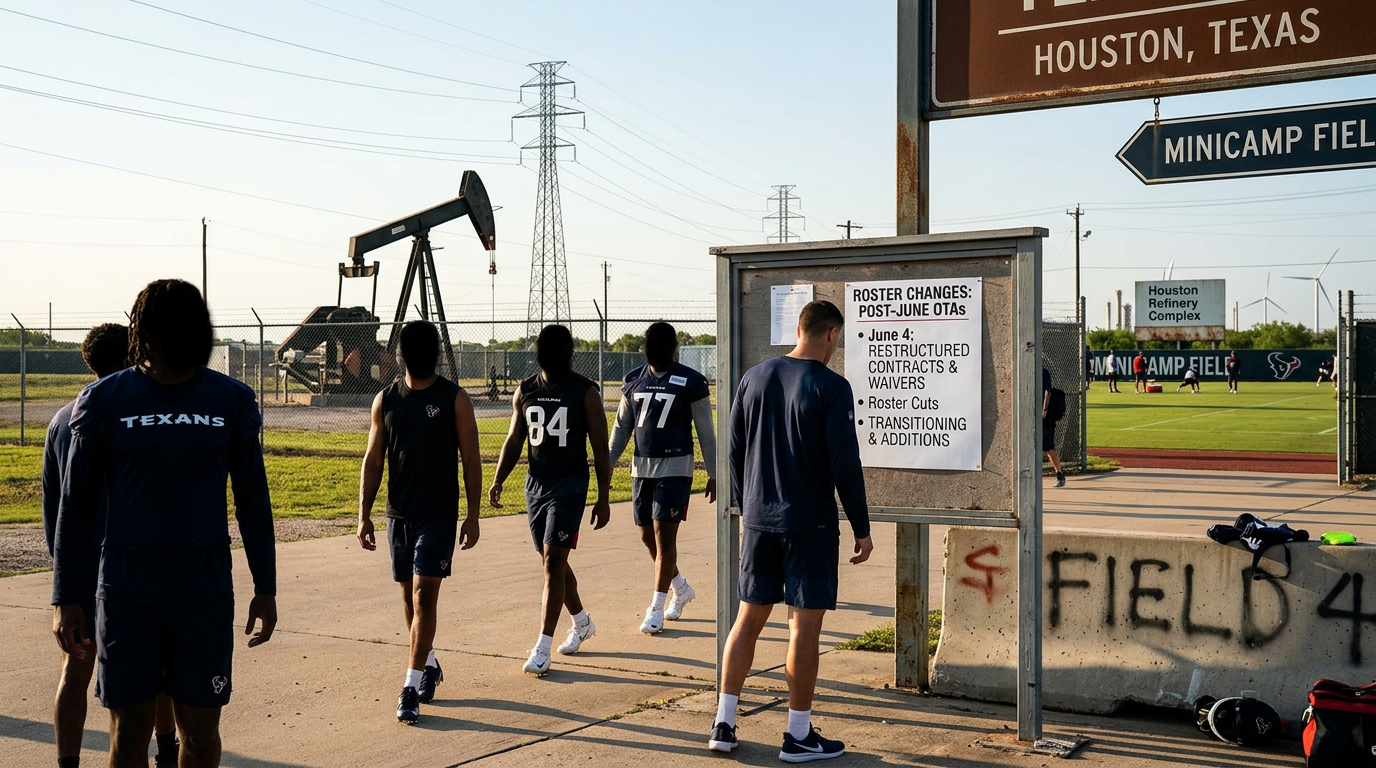
The Houston Texans front office, led by General Manager Nick Caserio, announced a series of strategic roster adjustments on June 4, 2026. These moves come at a critical juncture in the NFL calendar, as teams transition from Organized Team Activities (OTAs) toward the mandatory minicamp phase. Historically, June is a month defined by refinement rather than wholesale changes, as coaching staffs evaluate the developmental progress of undrafted free agents against veteran incumbents. By making these moves now, the Texans are optimizing their 90-man roster limit to ensure that every practice rep is utilized by players with the highest potential to contribute during the upcoming season. The team has a well-documented history of utilizing these early summer windows to churn the bottom of the roster, often looking for specific physical profiles that match DeMeco Ryans’ defensive scheme or Bobby Slowik’s offensive philosophy. Since the arrival of DeMeco Ryans, the Texans have prioritized depth and internal competition, a strategy that helped propel them from the bottom of the AFC South to a perennial playoff contender. The transaction wire reflects the ongoing effort to find 'gems' among the available free agent pool who can contribute on special teams or provide reliable backup minutes. This specific set of moves addresses immediate depth concerns while acknowledging the health status of players who may have suffered setbacks during the initial spring drills. It is a calculated process that involves the scouting department and the medical staff working in tandem to ensure the roster is at peak performance before the high-intensity heat of a Texas July hits the practice fields at the Houston Methodist Training Center.
Texas relevance
These transactions are centrally relevant to the Greater Houston area and fans across Texas, as the Texans represent one of the state's premier professional sports franchises. Managing the roster effectively in June directly impacts the product on the field at NRG Stadium come September. For local fans, these moves represent the evolution of a team that has become a symbol of Houston’s competitive spirit. The economic and cultural impact of the Texans in Harris County is immense, with home games driving significant revenue for local businesses and tourism. Furthermore, the selection and retention of players often involve those with ties to Texas collegiate programs, maintaining a pipeline of local talent that keeps the regional football community engaged and invested in the team's success.
The Evolution of June Roster Management
In the modern NFL, the month of June serves as more than just a bridge to summer vacation. It is the final opportunity for the personnel department to fix mistakes made during the draft or the initial free agency wave. For the Houston Texans, this period is about fine-tuning the vision that DeMeco Ryans has for a fast, physical, and versatile roster. The players released or added during this window are often those on the 'bubble,' meaning their performance over the next few weeks will determine if they make the trip to training camp.
The timing of these transactions also coincides with the post-June 1st designation rules regarding the salary cap. This allows teams to spread out the dead money hits from released players over two years instead of one, effectively freeing up 'spending power' for the current season. While the Texans have been fiscally responsible, these incremental moves provide the breathing room needed to potentially sign a veteran cap casualty from another team who might suddenly become available. It is a chess match played with both talent and spreadsheets.
Furthermore, the heat of Houston plays a factor in how these rosters are constructed. Conditioning becomes a primary concern as the humidity rises, and the Texans often look for players who are already acclimated to the Southern climate or possess the stamina to withstand grueling outdoor sessions. The staff uses the June data to determine who can handle the workload, making these transactions a direct result of the physical feedback gathered during the hottest parts of the afternoon practices.
Positional Depth and Special Teams Impact
A significant portion of the roster churn during this cycle is dedicated to the 'core four' special teams units. While the stars generate the headlines, the bottom third of the roster must be able to fly down the field on kickoffs and provide reliable blocking on punt returns. The Texans' move to swap out specific players suggests that they are looking for more speed or better tackling technique in these specific phases of the game. Coordinator Frank Ross is known for having high standards, and these moves align with his history of seeking relentless effort.
On the offensive side, the Texans are continuing to build a wall around their franchise quarterback. Any changes to the offensive line depth, even at the bottom of the chart, are intended to ensure that practice periods run smoothly. If a second-string guard is struggling to keep up with the tempo, the team will not hesitate to bring in a fresh set of legs to maintain the integrity of the drill. This competitive atmosphere is what the front office believes will ultimately lead to a more cohesive unit when the real games begin.
Defensively, the Texans operate a system that relies heavily on a rotation of defensive linemen to keep players fresh. Consequently, many of the summer transactions involve adding 'camp bodies' who can eat up snaps during the preseason, allowing the starters to avoid unnecessary wear and tear. This long-term view of player health is a hallmark of the current administration’s approach to roster building, prioritizing longevity over short-term continuity in the developmental tiers.
The Role of the Houston Methodist Training Center
The environment in which these players compete is second to none. The Houston Methodist Training Center provides the backdrop for these evaluations, where every movement is filmed and analyzed by a small army of analysts. When a player is waived in June, it is because the film has shown a consistent inability to execute the specific techniques required by the scheme. Conversely, new additions are often players who have traits—such as wingspan, 40-yard dash time, or bench press reps—that the scouting department believes can be coached into a functional role.
The proximity to NRG Stadium also serves as a constant reminder of the goal. Players who are brought in during this window are often given a very short runway to prove their worth. They are expected to learn a complex playbook in a matter of days and execute it under the watchful eye of a coaching staff that has no room for mental errors. This high-pressure environment is designed to weed out those who cannot handle the rigors of the NFL, ensuring only the most resilient athletes remain by the time the squad heads to the preseason opener.
For the community, the training center is a hub of activity. While these moves happen behind closed doors, they ripple through the local economy as players move into the city or prepare to depart. The Texans' ability to manage this transition smoothly reflects the professional standards of the organization, which has worked tirelessly to regain its status as a top-tier destination for free agents and draft picks alike.
Looking Ahead: Mandatory Minicamp and Training Camp
These transactions set the stage for the upcoming mandatory minicamp, which is the final milestone before the team breaks for the summer. This camp is where the intensity ramps up, and the coaching staff expects the roster to be largely stabilized. The players added today will have the opportunity to showcase their skills in front of the entire coaching staff, including those who may have been scouting other regions during the earlier OTA phases. It is the last chance to make a lasting impression before the six-week hiatus.
Once training camp begins in late July, the competition will reach a fever pitch. The moves made today are essentially the opening moves of a much larger battle for roster spots. The Texans have shown a willingness to carry extra players at certain positions if they believe those units require more competition, and today’s news is a continuation of that philosophy. Fans can expect to see several more of these 'minor' transactions over the next few weeks as the front office continues to scour the waiver wire for upgrades.
In the grand scheme of an NFL season, a Wednesday transaction in June might seem insignificant, but for the Houston Texans, it is a vital part of the process. Every player on the roster represents an investment of time and resources, and Nick Caserio’s reputation for thoroughness suggests that these decisions were made with immense data to back them up. As the team moves toward the 2026 campaign, these moves provide the foundation for what they hope will be a championship-winning effort.
The Impact on Team Chemistry and Culture
Beyond the stats and the physical attributes, roster moves affect the chemistry of the locker room. DeMeco Ryans has often spoken about the 'SWARM' mentality (Special Work Ethic And Relentless Mindset), and new additions are vetted for their character as much as their talent. Bringing in new faces in June keeps the veteran leaders on their toes and provides an opportunity for leadership to emerge within the different position groups. It forces the team to bond quickly and integrate new personalities into the fabric of the organization.
For the players who are arriving, this is a life-changing opportunity. The Texans have a history of undrafted players or late-summer additions making the final 53-man roster and contributing in significant ways. This 'open door' policy for talent ensures that the Texans are never stagnant. For those departing, the NFL is a business of cold realities, but the Texans have generally been praised for the professional manner in which they handle these transitions, often wishing departing players well as they seek opportunities elsewhere.
Ultimately, the goal is to build a cohesive unit that can withstand the adversity of a 17-game schedule. By addressing the roster now, the Texans are proactively building the resilience needed for the long haul. The fans in Houston and across the state of Texas can take solace in the fact that the front office is working year-round to ensure that the team is in the best possible position to win. Whether it is a blockbuster trade or a subtle June waiver claim, every move is a piece of the puzzle being assembled in the quest for a Lombardi Trophy.
Analysis
From a strategic perspective, these moves likely indicate a desire to bolster specific positional units that the coaching staff felt were underperforming during the first two weeks of OTAs. In the NFL, the difference between a division title and a missed postseason can often be traced back to the quality of the 45th through 53rd men on the roster. By rotating players at this stage, Houston is showing a commitment to constant improvement. It also sends a message to the locker room that no spot is guaranteed, maintaining a high level of intensity during non-contact drills. Observers should note that these late-spring transactions often precede larger veteran signings that occur after the June 1st salary cap designations take full effect, providing the Texans with more financial flexibility to navigate the market.
Source attribution
This story was reported using a public release from the Houston Texans. Keep TX Red rewrote the coverage independently and links to the official statement for verification.
Frequently Asked Questions
- Why do the Texans make roster moves in the middle of June?
- June moves are typically made to optimize the roster for the final phase of spring practices and to react to performance data gathered during OTAs. It also allows the team to take advantage of salary cap changes that occur after June 1st.
- How many players are allowed on the Texans' roster right now?
- During the offseason, NFL teams are permitted to carry up to 90 players. This number must be trimmed down to 53 by the end of the preseason in late August.
- Where can fans see these new players in action?
- The Texans typically host several open practice sessions for fans during training camp in July at the Houston Methodist Training Center located near NRG Stadium.
- Does a roster move in June mean the team is in trouble at a certain position?
- Not necessarily. Often, it simply means the team found a player who fits their physical requirements better than someone currently on the roster, or they are replacing a player who is dealing with a minor injury.
Official Sources
Take the next step
Browse the Newsroom →Read more about Keep Texas Red → Our full guide to what Keep Texas Red means and why Texans support it.
Get Texas updates delivered weekly.
Independent Texas reporting on politics, policy, and daily life. One email a week. Unsubscribe anytime.
Keep TX Red Newsroom
The Keep Texas Red Editorial Staff produces nonpartisan explainers, policy breakdowns, and educational resources to help Texans understand how their government works. All content is reviewed for accuracy and updated regularly.
About Keep TX Red →