Shift in Houston Leadership: New Direction for Texas 9th Congressional District Following Runoff
A significant change in representation as the primary runoff concludes for the 9th Congressional District in Houston, signaling a generational shift.
Editorial disclaimer: Opinions and analysis on Keep TX Red are editorial content — not statements of fact. See our editorial standards.
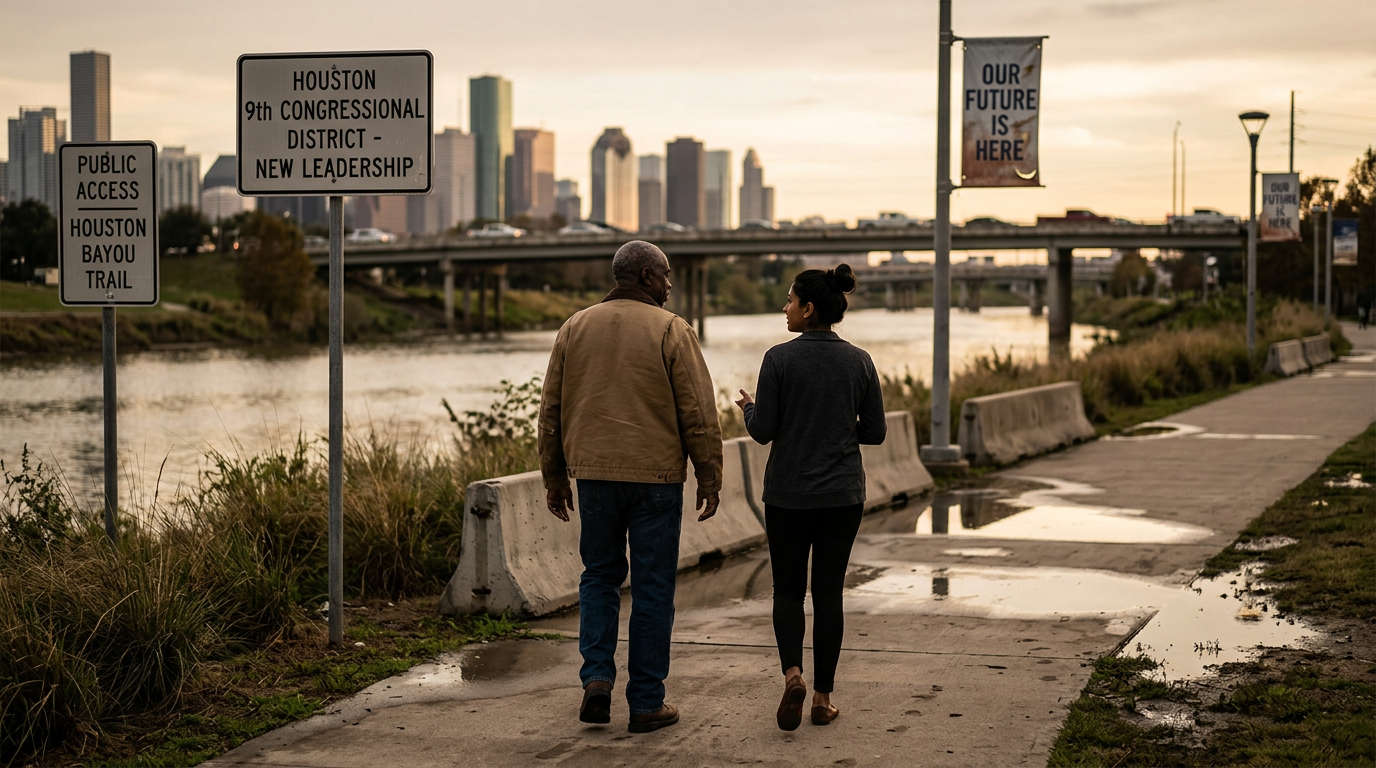
The political landscape of Southeast Texas is undergoing a fundamental transformation following the results of the recent primary runoff election for the 9th Congressional District. This contest served as a culmination of months of intense campaigning and a strategic focus on how shifting district boundaries influenced voter demographics. The election resulted in the selection of a new representative who aims to address the evolving needs of a diverse constituency that spans across portions of Harris and Fort Bend counties. Historically, this seat has been characterized by consistent leadership, but the recent redistricting cycle introduced new variables that fundamentally altered the competitive nature of the race. Historically, Texas has seen several high-profile primary challenges when redistricting maps are finalized every decade. These maps often split established neighborhoods or combine previously separate voting blocs, forcing incumbents to introduce themselves to thousands of new residents. In the case of this district, the realignment created an opening for a younger generation of leadership to present a platform focused on modernization and direct community engagement. The transition represents more than just a change in personnel; it reflects a broader trend within the state's urban centers where the electorate is increasingly looking for proactive policy approaches to regional infrastructure and economic development.
Texas relevance
Texas residents in the greater Houston area are directly impacted by this shift in federal representation. As the 9th District covers vital economic zones and residential hubs in Fort Bend and Harris counties, the new representative will be responsible for advocating for federal funding related to flood mitigation, transportation grants, and healthcare access. Furthermore, the outcome of this specific runoff provides a blueprint for how Texas political campaigns are likely to function in a post-redistricting environment. It highlights the importance of localized grassroots organizing over traditional incumbency advantages, a lesson that will likely be applied in future Texas legislative and congressional cycles.
The Impact of Redistricting on Houston Voting Power
The redrawing of Texas's congressional maps following the most recent census played a pivotal role in creating the conditions for this election's outcome. When boundaries are shifted, the historical relationship between an elected official and their base is often fractured. In the 9th District, the inclusion of new demographic groups and geographical areas meant that traditional voting patterns were no longer guaranteed. This forced candidates to work harder to build brand awareness in areas where they were previously unknown, leveling the playing field for challengers.
Redistricting also changes the priority list for a congressional office. New areas may bring unique challenges, such as specific drainage issues in suburban neighborhoods or different infrastructure needs in commercial corridors. The candidates in this runoff had to demonstrate a deep understanding of these nuanced geographic changes to win over a skeptical electorate. In Texas, where growth is rapid, these map changes are often the single most influential factor in determining the longevity of a political career, as seen in this latest cycle.
Generational Shifts in the Texas Delegation
Texas is currently witnessing a transition of power as long-serving members of the congressional delegation retire or face successful challenges from younger opponents. This runoff is a prime example of the 'generational baton' being passed in real-time. Younger candidates are often bringing a different set of priorities to the table, including a heavier focus on tech-based economic growth, climate resilience in the face of Gulf Coast storms, and modernizing the delivery of government services through digital platforms.
The shift also reflects the changing nature of the Texas workforce. As more people move to the state's metropolitan areas for jobs in the energy, medical, and technology sectors, their expectations for political representation are evolving. They are looking for representatives who are not just present in Washington, but who are actively visible and accessible via social media and local community events. This runoff proved that the 'retail politics' of the past must now be combined with a sophisticated digital presence to be successful in modern Texas.
Infrastructure and Flood Mitigation Priorities
One of the most pressing issues for any representative in the Houston region is the management of federal resources for flood control. Following major storms like Hurricane Harvey, the expectations for federal intervention have never been higher. The successful candidate in this runoff made these issues a centerpiece of their platform, promising to streamline the process for securing Army Corps of Engineers funding and ensuring that local levee improvement districts receive the attention they deserve from the federal government.
Beyond water management, the 9th District faces significant transportation hurdles. As the population in Fort Bend County continues to swell, the pressure on regional highways and public transit systems increases daily. The new representation will be tasked with working across the aisle in Washington to ensure that Texas receives its fair share of federal infrastructure dollars, particularly for projects that reduce commute times and improve the safety of heavy freight corridors that are essential to the regional economy.
Economic Development in the 9th District
The economic diversity of the 9th District requires a representative who can navigate both the corporate interests of Houston's business districts and the needs of small business owners in residential neighborhoods. During the campaign, a significant amount of discussion focused on how to foster job growth in the wake of shifting global energy markets. With Texas serving as a leader in both traditional oil and gas and emerging renewables, the district stands at a crossroads of the energy transition.
Federal policy regarding local business incentives, small business loans, and workforce development grants is critical for the stability of this region. The runoff highlighted a divide in how these economic goals should be pursued, with the eventual winner emphasizing a bottom-up approach to community wealth building. This includes supporting local entrepreneurship and ensuring that federal contracts for regional projects are accessible to local Texas-based firms, rather than just large national corporations.
Community Outreach and Voter Engagement Strategies
The success of the campaign relied heavily on a revamped approach to voter engagement that moved beyond traditional mailers and television ads. In a state as large as Texas, reaching voters effectively requires a multi-pronged strategy. The runoff candidates utilized data-driven canvassing and localized community events to reach voters who had historically felt overlooked by the political process. This was particularly important in the newly added sections of the district where name recognition was low for both candidates initially.
Moreover, the campaign served as a testing ground for how to mobilize voters during a runoff, which typically sees much lower turnout than a general election. By focusing on specific local issues—such as neighborhood safety and the quality of local clinics—the candidates were able to drive interest in a race that might otherwise have been ignored. The high stakes of the redistricting impact meant that every vote carried more weight, a fact that both campaigns used to motivate their respective bases.
Looking Ahead to the General Election
With the primary runoff concluded, the focus now shifts to the general election and the broader implications for the Texas delegation. While the district remains a stronghold for the party that held the primary, the change in leadership will undoubtedly alter the dynamics of the Texas caucus in the U.S. House. The new representative will need to build alliances with other Texas members from both parties to effectively advocate for the state's interests, particularly on issues where the state has a unified front, such as energy exports and border security infrastructure.
The transition period will involve setting up new district offices and hiring staff who are familiar with the specific needs of these Texas communities. This phase is critical for ensuring that constituent services—ranging from passport assistance to help with veterans' benefits—do not suffer during the handoff. As one of the most populous and economically active states in the union, Texas cannot afford a lapse in effective federal representation, making this transition a high-priority event for local leaders and residents alike.
Analysis
The outcome of this primary runoff suggests a growing appetite for change within safe urban districts in Texas. For years, incumbency was a nearly impenetrable shield in the state's congressional delegation, but the combination of census-driven map changes and a more mobile, younger population is eroding that status quo. This race specifically demonstrated that candidates who can bridge the gap between long-term residents and newly arrived professionals are gaining the upper hand. While the ideological shift may be subtle, the stylistic difference in how these representatives communicate with the Texas public is marked, favoring digital transparency and frequent town-hall style interactions over older methods of constituent service.
Source attribution
This story was reported using a public release from the Texas Congressional Delegation (Google News). Keep TX Red rewrote the coverage independently and links to the official statement for verification.
Frequently Asked Questions
- What parts of Texas are included in the 9th Congressional District?
- The 9th Congressional District is located in Southeast Texas and includes parts of south Houston in Harris County, as well as portions of eastern Fort Bend County, including cities like Missouri City.
- Why was this specific runoff election so significant for Texas?
- This runoff was significant because it featured a long-standing incumbent facing a challenger in a district that was recently redrawn. It serves as a indicator of how redistricting can displace established political leaders in Texas's fast-growing urban areas.
- How does redistricting happen in Texas?
- In Texas, the state legislature is responsible for redrawing congressional and state legislative boundaries every ten years following the federal census. This process is intended to ensure that districts have roughly equal populations as people move within the state.
- What are the primary responsibilities of a U.S. Representative for this district?
- A U.S. Representative for the 9th District advocates for their constituents in Washington D.C., votes on federal legislation, and helps secure federal funding for local Texas projects like highway improvements and emergency management. They also provide direct assistance to residents dealing with federal agencies.
Official Sources
Take the next step
Browse the Newsroom →Read more about Keep Texas Red → Our full guide to what Keep Texas Red means and why Texans support it.
Get Texas updates delivered weekly.
Independent Texas reporting on politics, policy, and daily life. One email a week. Unsubscribe anytime.
Keep TX Red Newsroom
The Keep Texas Red Editorial Staff produces nonpartisan explainers, policy breakdowns, and educational resources to help Texans understand how their government works. All content is reviewed for accuracy and updated regularly.
About Keep TX Red →