A Decisive Transition in the Lone Star State as Longtime Representative Al Green Prepares to Exit Congress
After twenty years representing Houston's 9th District, Al Green is retiring from the U.S. House of Representatives by January.
Editorial disclaimer: Opinions and analysis on Keep TX Red are editorial content — not statements of fact. See our editorial standards.
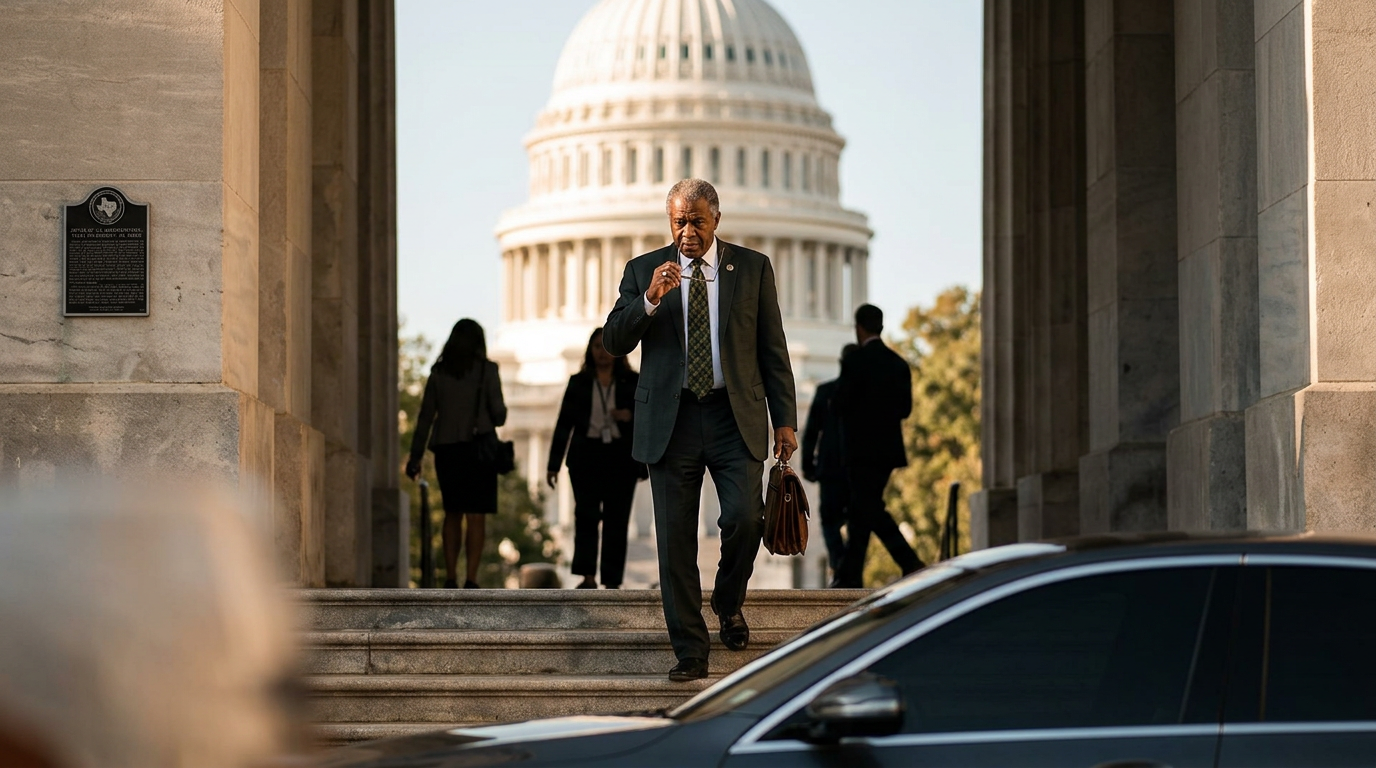
Representative Al Green, a foundational figure in Houston's political landscape for two decades, has announced his intention to vacate his seat in the United States House of Representatives this coming January. Representing Texas's 9th Congressional District, Green has been a fixture in the federal legislature since 2005. His departure marks the end of an era for a district that covers significant portions of southwestern Houston and southeastern Fort Bend County. This transition comes at a time of broader shifts within the Texas delegation, as several long-serving members evaluate their futures in a rapidly changing national political climate. Throughout his tenure, Green became known for his persistent advocacy on social justice issues and his willingness to break ranks to highlight constitutional concerns. His career began in the legal field, serving as a Justice of the Peace for Harris County for 26 years before making the leap to federal office. This background in the judiciary heavily influenced his approach to congressional oversight and legislative priorities. As he prepares to step down, the focus in Texas shifts toward the vacuum left in one of the state's most diverse congressional districts, which boasts a unique blend of African American, Hispanic, and Asian American constituencies.
Texas relevance
The retirement of Al Green is of paramount importance to the Greater Houston area and Texas at large because it triggers a significant change in federal representation for the 9th District. As one of the most senior members of the Texas Democratic delegation, Green held substantial institutional knowledge that benefited his constituents in Harris and Fort Bend Counties. Historically, Texas has seen its influence in D.C. fluctuate based on the seniority of its members on powerful committees. Green's exit represents a loss of that specific seniority, requiring a new representative to climb the ladder of influence from the bottom rung. This shift also opens the door for a high-stakes primary and general election process that will define the political voice of Southwest Houston for the next decade.
The Evolution of Texas's 9th District
The 9th Congressional District of Texas has undergone several transformations since Al Green first took office. Originally drawn to encapsulate the growing diversity of the Houston suburbs, the district has become a microcosm of the changing demographics of the Lone Star State. It includes heavily urbanized areas of Houston as well as the rapidly developing residential neighborhoods in Missouri City and Pearland.
Under Green’s representation, the district focused heavily on housing affordability and civil rights. As the population in Fort Bend County exploded over the last two decades, Green had to balance the needs of longtime urban residents with those of new suburbanites. The next representative will inherit a district that is significantly wealthier and more educated than it was in 2005, yet one that still faces deep-seated issues regarding infrastructure and flood mitigation.
Legislative Legacy and Constitutional Advocacy
Green’s legacy in the U.S. House is perhaps most defined by his unwavering focus on the 'conscience of the Congress.' He frequently used the floor of the House to address matters that he felt were being ignored by the mainstream political establishment. This included a decades-long commitment to establishing a federal department focused specifically on reconciliation and civil rights oversight.
His work on the Financial Services Committee allowed him to influence national policy regarding fair lending and consumer protection. For his Texas constituents, this meant advocacy for programs that helped local homeowners navigate the complexities of the 2008 financial crisis and subsequent local economic downturns. His departure leaves a significant gap in the committee-level representation for the Houston business community.
The Race for Succession and Local Impact
With a vacancy now official, the political maneuvering within Harris and Fort Bend Counties has intensified. Aspiring candidates from the Texas State Legislature and local city councils are expected to eye the seat, given that it is a rare open-seat opportunity in a safe district. The primary election will likely serve as the true contest for the seat, determining whether the district maintains a focus on traditional civil rights issues or moves toward a more modern progressive platform.
The impact on local municipal leadership cannot be understated. Green acted as a bridge between the federal government and local officials like the Mayor of Houston and the Fort Bend County Judge. A new representative will need to quickly establish these relationships to ensure that federal funding for local projects—ranging from transportation to community health centers—continues to flow without interruption during the transition period.
Seniority and the Texas Delegation Power Shift
The Texas delegation in Washington is one of the largest and most influential in the country. However, that influence is built on the backs of members who remain in office long enough to chair committees or lead subcommittees. Green’s departure, following the exits of other long-term Texas lawmakers in recent cycles, creates a 'seniority deficit' that the state must overcome.
This trend of retirement among senior members creates a more junior delegation, which can sometimes struggle to secure prime earmarks or steer national policy toward Texas-specific needs. While new energy can revitalize a delegation, the practical loss of Green’s two decades of networking and procedural expertise will be felt across the aisle by his colleagues who relied on his historical perspective.
Reflecting on Two Decades of Houston Leadership
To understand Al Green’s impact, one must look at the specific community projects he championed in Houston. From the expansion of veterans' services to the support of local HBCUs like Texas Southern University, his fingerprints are on many of the city's vital institutions. He was a frequent visitor to local churches and community centers, maintaining a visibility that is often lost by representatives who spend too much time in the capital.
As January approaches, local leaders are planning retrospectives on his career, highlighting his transition from a local judge to a national figure. His retirement is not just a change in a roster; it is the closing of a chapter on a specific style of constituent-focused, principled Southern leadership that has defined the 9th District for a generation.
What Lies Ahead for the 9th District
The immediate future for voters in the 9th District involves a series of town halls and candidate forums. The focus will likely be on who can best replicate Green's accessibility while addressing new challenges like the rising cost of living in the Houston metro area and the ongoing debate over border security and its indirect effects on interior Texas cities.
Furthermore, the national Democratic party will be watching this seat closely. While safe, the margin of victory and the type of candidate who wins will provide a window into the current mood of the Texas Democratic base. This election will be a litmus test for whether the 'Blue Ridge' in urban Texas is trending toward moderate pragmatism or a more aggressive form of advocacy.
Analysis
The departure of Al Green is more than just a retirement; it is a signal of a generational handoff within the Texas Democratic Party. Green often operated as a moral compass for his caucus, famously pushing for impeachment proceedings early in the previous administration despite pushback from his own leadership. His retirement suggests he believes his specific brand of legislative activism has reached its natural conclusion. For the GOP, this vacancy represents a theoretical opportunity, though the 9th District remains heavily drawn in favor of Democrats. For the Democratic party, the challenge will be finding a successor who can maintain Green's coalition of diverse voters while navigating a Texas political environment that is becoming increasingly polarized at the state level.
Source attribution
This story was reported using a public release from the Texas Congressional Delegation (Google News). Keep TX Red rewrote the coverage independently and links to the official statement for verification.
Frequently Asked Questions
- When exactly will Al Green leave office?
- He is scheduled to complete his current term and vacate his seat in January, coinciding with the seating of the new Congress.
- Which areas of Texas are in the 9th Congressional District?
- The district primarily includes southwestern portions of Houston in Harris County and expands into parts of Fort Bend County, including Missouri City.
- Who is eligible to run for his seat?
- Any individual who meets the constitutional requirements for the U.S. House—at least 25 years old, a U.S. citizen for seven years, and a resident of Texas at the time of the election—can run for the position.
- What will happen to Green’s committee assignments?
- Because he is retiring at the end of his term, his committee seats will be reassigned to other members of Congress by the party leadership when the next legislative session begins.
Official Sources
Take the next step
Browse the Newsroom →Read more about Keep Texas Red → Our full guide to what Keep Texas Red means and why Texans support it.
Get Texas updates delivered weekly.
Independent Texas reporting on politics, policy, and daily life. One email a week. Unsubscribe anytime.
Keep TX Red Newsroom
The Keep Texas Red Editorial Staff produces nonpartisan explainers, policy breakdowns, and educational resources to help Texans understand how their government works. All content is reviewed for accuracy and updated regularly.
About Keep TX Red →