Donald Trump Backs Ken Paxton Over John Cornyn in Pivotal Texas Senate Runoff
Former President Donald Trump has officially endorsed Ken Paxton as early voting begins in the Texas Republican primary runoff for U.S. Senate.
Editorial disclaimer: Opinions and analysis on Keep TX Red are editorial content — not statements of fact. See our editorial standards.
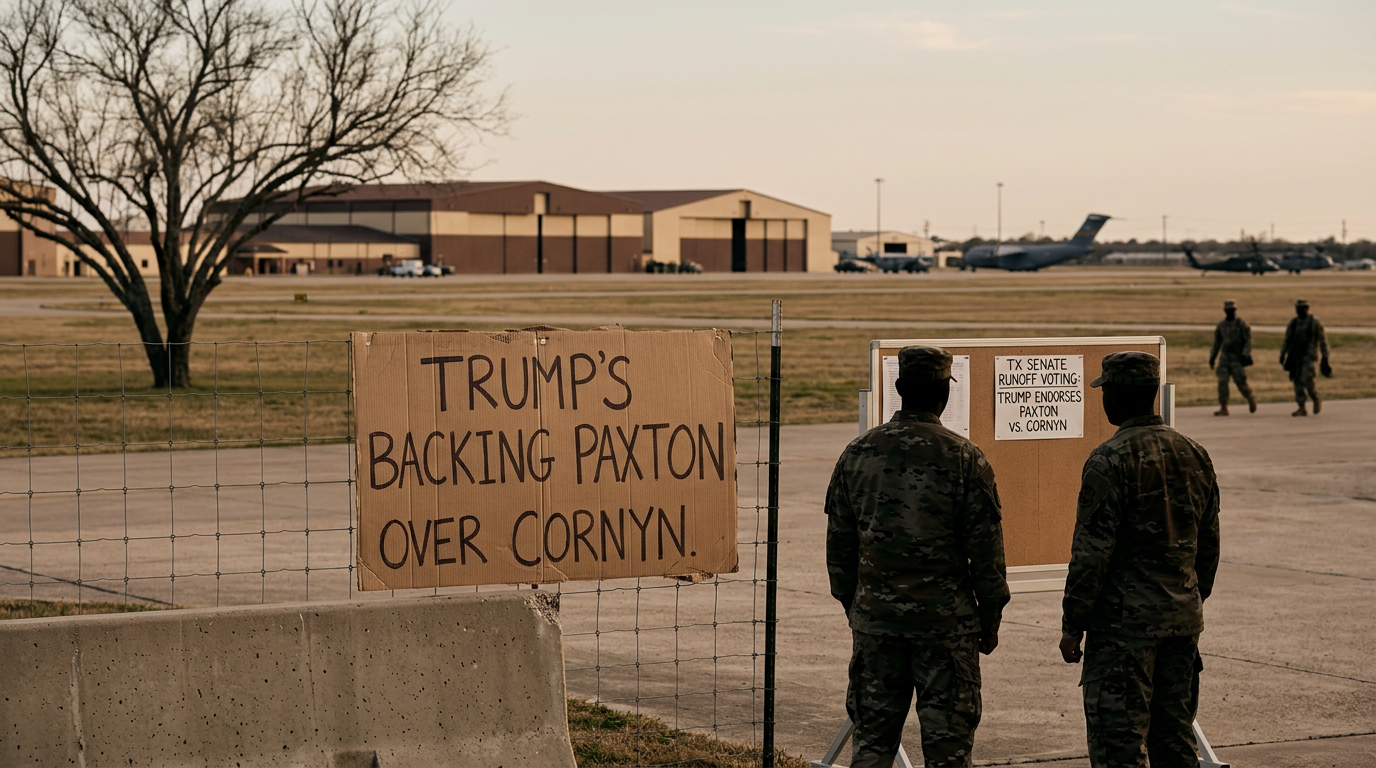
Former President Donald Trump has officially announced his support for Texas Attorney General Ken Paxton in the ongoing Republican primary runoff for the United States Senate. This high-stakes endorsement comes at a critical juncture as early voting is currently underway across the state of Texas. By backing Paxton, Trump has sided against the long-serving incumbent Senator John Cornyn, setting the stage for a dramatic conclusion to one of the most watched internal party contests in recent Texas history. The move highlights a significant divide within the state’s political landscape as two prominent figures vie for the chance to represent the GOP in the general election. In Texas, political shifts are often signaled by major endorsements from national figures, and this specific intervention by the former president serves as a definitive marker in the 2026 election cycle. Historically, Texas runoffs see lower turnout than general elections, making late-stage endorsements and mobilized voting blocs crucial for victory. The competition between Paxton and Cornyn represents a broader debate over the direction of the Republican platform within the Lone Star State. As the runoff period progresses, this development provides clarity on which candidates have secured the backing of the party's national figurehead, potentially swaying undecided voters who are heading to the polls this week.
Texas relevance
This contest is entirely centered on Texas and its representation in the United States Senate. The outcome will determine which Republican candidate will appear on the November ballot, affecting the legislative priorities that Texas sends to Washington D.C. for the next six years. Because early voting has already commenced, the timing of this announcement directly impacts Texas residents who are participating in the democratic process right now. Traditionally, the Texas Attorney General’s office and the U.S. Senate seats are the two most powerful roles a Texan can hold, and seeing the holders of these offices compete against one another creates a unique political tension that is specific to the Texas GOP infrastructure.
The Strategic Timing of the Endorsement
The announcement from Trump arrived just as the doors opened for early voting sites across Texas’s 254 counties. In a state as geographically vast as Texas, winning a runoff requires precise timing to capture the attention of a voter base that might otherwise experience election fatigue following the initial primary rounds. By waiting until the runoff was active, the endorsement acts as a fresh catalyst for the Paxton campaign, aiming to convert the momentum into actual ballots cast during the early window.
Furthermore, this timing prevents the opposing camp from developing a long-term counter-narrative before the majority of votes are likely to be recorded. In modern Texas politics, the bulk of non-general election ballots are cast during the early voting period rather than on the actual election day. Therefore, providing a major endorsement during this specific week is a calculated move to maximize influence over the results.
Cornyn vs. Paxton: A Contrast in Styles
Senator John Cornyn has served in the U.S. Senate since 2002, building a reputation as a reliable vote for the Republican leadership and often working within the committee structures of Washington to advance Texas interests. His approach has traditionally mirrored the old-guard Texas GOP, focusing on judicial appointments and federal policy stability. However, this long tenure has also made him a target for those within the party who desire a more aggressive stance against the federal government.
Ken Paxton, conversely, has utilized his position as Texas Attorney General to launch numerous legal challenges against federal mandates, positioning himself as a front-line defender of state sovereignty. His political brand is built on direct confrontation and legal activism. Trump’s choice signals a preference for Paxton’s brand of politics, which prioritizes using the legal system and public rhetoric to fight partisan battles, a style that resonates deeply with the current primary electorate in Texas.
The Role of Early Voting in Texas Runoffs
Texas runoff elections are notoriously unpredictable due to the requirement that a candidate must win a majority of the vote. When no candidate reaches the 50% threshold in the initial primary, the top two finishers must face off in this second round. Historically, these contests see a significant drop-off in participation compared to the March primary. This makes every endorsement and every day of early voting exponentially more important for the candidates involved.
For residents in major hubs like Houston, Dallas, and Austin, as well as the rapidly growing suburban corridors, the early voting period offers a convenient way to participate before the heat of late May and the potential for long lines on the final Tuesday. The Paxton campaign likely hopes that the Trump endorsement will serve as a 'get out the vote' signal to those who might otherwise stay home during a runoff cycle.
Potential Impact on the National Landscape
While this is a Texas-specific race, the implications extend to the halls of Congress. A win for Paxton would likely shift the Texas delegation toward a more populist alignment, potentially changing how Texas interacts with GOP leadership in the Senate. John Cornyn has previously been considered for top leadership roles in the Senate, and a loss in a primary runoff would be a seismic shift for the Republican caucus at the national level.
The result will also serve as a barometer for Donald Trump's continued influence over the Republican base in 2026. If his endorsed candidate triumphs over a long-term incumbent like Cornyn, it reinforces the idea that the former president remains the ultimate kingmaker in conservative politics. Conversely, a Cornyn victory would suggest that Texas Republicans still value the seniority and institutional knowledge of their veteran representatives.
Looking Toward the General Election
Whoever emerges from this runoff will quickly need to pivot toward the general election. Texas has become a more competitive environment in recent years, though Republicans still maintain a strong hold on statewide offices. The internal fight between Paxton and Cornyn could either energize the base for November or leave the party fractured, depending on how the remaining weeks of the campaign are handled.
Democratic challengers will undoubtedly be watching the fallout of this endorsement. An aggressive primary typically leads to a large amount of opposition research being made public, which the eventual winner will have to defend in the fall. The Republican nominee will need to consolidate both the 'America First' wing and the traditionalist wing of the party to ensure the seat remains in GOP hands as they face a nationalized political environment.
Analysis
OPINION: The decision by Donald Trump to favor Ken Paxton over John Cornyn is a strategic play that emphasizes loyalty to those who have actively defended his past legal and political challenges. By choosing Paxton, Trump is effectively challenging the more traditional, institutional wing of the Texas Republican Party that Cornyn has long represented. This endorsement suggests that the internal 'America First' movement within Texas remains the dominant force in primary politics, even when facing a well-funded multi-term incumbent. It forces Texas voters to choose between the established seniority of Cornyn and the combative, populist style that Paxton has cultivated during his tenure as Attorney General.
Source attribution
This story was reported using a public release from the Texas Congressional Delegation (Google News). Keep TX Red rewrote the coverage independently and links to the official statement for verification.
Frequently Asked Questions
- When does the Texas Senate primary runoff take place?
- The runoff election is the final stage of the primary process for candidates who did not receive an absolute majority in the March primary. While early voting is currently underway, the final day to cast a ballot is Tuesday, May 26, 2026.
- Why did Donald Trump choose Ken Paxton over John Cornyn?
- While the former president's specific statements vary, the endorsement aligns with his history of supporting candidates who have been vocal allies in his legal and political efforts. Ken Paxton has consistently used his office as Texas Attorney General to support Trump-aligned policies and legal challenges.
- Can any Texan vote in this Republican runoff?
- In Texas, you can vote in a party's runoff if you voted in that same party's primary in March, or if you did not vote in any primary at all. If you voted in the Democratic primary in March, you are not eligible to vote in the Republican runoff.
Official Sources
Take the next step
Browse the Newsroom →Read more about Keep Texas Red → Our full guide to what Keep Texas Red means and why Texans support it.
Get Texas updates delivered weekly.
Independent Texas reporting on politics, policy, and daily life. One email a week. Unsubscribe anytime.
Keep TX Red Newsroom
The Keep Texas Red Editorial Staff produces nonpartisan explainers, policy breakdowns, and educational resources to help Texans understand how their government works. All content is reviewed for accuracy and updated regularly.
About Keep TX Red →