Forgotten Commander of the Texas Revolution: The Legacy of Henry Millard at San Jacinto
Discover the pivotal role of Henry Millard, the infantry commander who helped secure Texas independence during the decisive victory at San Jacinto.
Editorial disclaimer: Opinions and analysis on Keep TX Red are editorial content — not statements of fact. See our editorial standards.
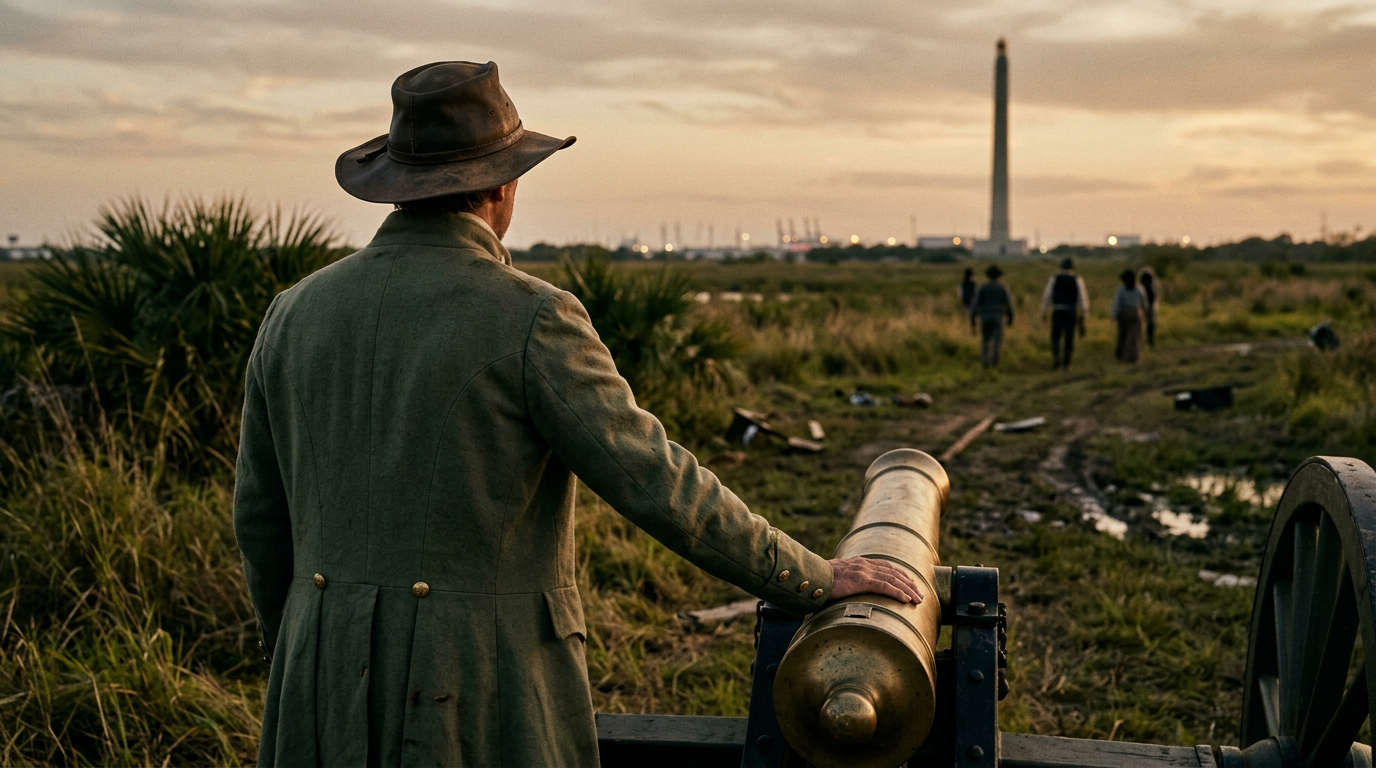
While the names of Sam Houston and Stephen F. Austin are synonymous with the birth of the Lone Star State, many secondary figures played indispensable roles in the victory against Santa Anna. Among these was Henry Millard, a man whose military leadership during the Battle of San Jacinto helped ensure the success of the Texian infantry. On April 21, 1836, the trajectory of North American history shifted in a swampy field near present-day Houston, and Millard stood at the center of the action as a lieutenant colonel. His contributions extend beyond the battlefield, as he was also a founding father of one of the state's most vital coastal cities. Historically, the Texas Revolution was defined by a series of desperate retreats known as the Runaway Scrape, which culminated in the surprise attack at San Jacinto. Millard commanded the Regular Infantry, a group often overshadowed by the heroic volunteer companies, yet essential for the cohesive military structure Sam Houston sought to maintain. Before his military service, Millard was an entrepreneur and developer, illustrating the multifaceted nature of early Texian pioneers who were forced to trade their ledgers for muskets to defend their vision of a self-governed republic.
Texas relevance
Henry Millard is a figure of immense importance to Southeast Texas, specifically the city of Beaumont. As one of the original townsite promoters, his legacy is literally etched into the map of the Golden Triangle area. For modern Texans, Millard represents the civic-soldier ideal—a citizen who builds a community and kemudian defends it with his life. The heritage of the Texas Revolution is not just a collection of dates but a lineage of leadership that explains why Texas maintains a distinct cultural and political identity today.
From Mississippi to the Mexican Frontier
Henry Millard was born in Mississippi around 1796 and spent his early adult years in the commercial hubs of New Orleans and St. Louis. Like many ambitious men of the early 19th century, he viewed the vast Mexican territory of Tejas as a land of renewal and opportunity. By 1835, Millard had relocated to the area near the Neches River, where he quickly became involved in local governance and land development.
His civilian life was cut short by the escalating tensions between the Texian settlers and the centralist government of Mexico. Millard was not merely a passive observer; he was an active participant in the political conventions that preceded the war. He served as a delegate to the Consultation of 1835 at San Felipe de Austin, where he helped draft the declaration that justified the Texian uprising. This political foundation ensured that when he took the field, he was fighting for a legal framework he helped create.
Commanding the Regulars at San Jacinto
As the Texas army organized in late 1835, Millard was appointed as a lieutenant colonel in the newly formed regular army. During the April 1836 campaign, his command consisted of two companies of regular infantry. While volunteer units provided the passion and raw numbers for the revolution, the regulars provided the discipline necessary to execute Sam Houston’s tactical plans during the chaotic retreat across East Texas.
At the Battle of San Jacinto, Millard’s infantry occupied the center of the Texian line. When the order was given to advance across the open prairie toward the sleeping Mexican camp, Millard led his men with a steady hand. The infantry’s charge, supported by the 'Twin Sisters' cannons, prevented the Mexican line from organizing a counter-offensive. Millard’s ability to keep his men moving forward under fire was a critical component of the eighteen-minute victory that ended the war.
The Founding of Beaumont
Following the victory at San Jacinto, Millard did not retire into obscurity. Instead, he returned to his interests in land and commerce. In 1835, prior to the heaviest fighting, he had already entered into a partnership to develop a townsite on the Neches River. He famously named the new settlement 'Beaumont,' allegedly in honor of his late wife’s family name, though historical accounts on the naming origin vary slightly.
Millard’s vision for Beaumont was one of a thriving port and commercial hub. He donated land for public buildings and schools, establishing the infrastructure that would eventually support the region's 20th-century oil boom. HIS transition from a battlefield commander to a town planner highlights the dual nature of Texas pioneers who were tasked with both destroying an old regime and constructing a new society simultaneously.
Conflict and Controversy in the Republic
Life in the Republic of Texas was rarely peaceful, even after the guns fell silent. Millard found himself entangled in the fractious politics of the new nation. At one point, he was involved in a heated dispute regarding the displacement of the Republic's archives and the location of the capital. Like many of his contemporaries, he faced accusations and political rivalry, demonstrating the volatile nature of early Texas governance.
Despite these political skirmishes, Millard remained a respected military figure. He continued to serve the Republic in various capacities, including as a customs collector. His willingness to serve in administrative roles after holding a high military rank shows a dedication to the survival of the Republic that surpassed personal ego or desire for permanent military glory.
A Legacy Preserved in Southeast Texas
Henry Millard passed away in 1844 in Galveston, but his impact remains visible across the Texas landscape. Every time a resident of Beaumont walks through the historic districts or visits the local museums, they are interacting with the legacy of a man who saw potential in the marshy banks of the Neches. He was one of the few who saw the entire revolution through, from the early political debates to the final musket shots.
For modern students of history, Millard serves as a bridge between the heroic myths of the frontier and the reality of nation-building. He was a father, a widower, a businessman, and a soldier. By remembering 'little-known' heroes like Millard, Texans can gain a more complete understanding of the diverse motivations and sacrifices that led to the independence of the Lone Star State.
Analysis
Opinion: In the modern era, there is a recurring tendency to simplify historical narratives to a handful of central figures. However, Henry Millard’s career suggests that the success of the Texas Revolution was a collective effort of middle-management leaders who could execute complex maneuvers under fire. His life also reminds us that the fight for Texas was as much about commercial potential and property rights as it was about abstract liberty. By honoring Millard, we recognize the full scope of the men who transitioned from building sleepy river towns to commanding battalions in what was arguably the most decisive battle in the Western Hemisphere.
Source attribution
This story was reported using a public release from the Texas History Stories (Google News). Keep TX Red rewrote the coverage independently and links to the official statement for verification.
Frequently Asked Questions
- What role did Henry Millard play in the Battle of San Jacinto?
- He served as a lieutenant colonel and commanded the Regular Infantry. His troops were positioned in the center of the battle line during the decisive 1836 attack against General Santa Anna's forces.
- Is Henry Millard responsible for naming Beaumont, Texas?
- Yes, Millard was one of the original townsite promoters. He is widely credited with naming the city 'Beaumont,' which many historians believe was a tribute to his wife's maiden name or her family connections.
- What happened to Henry Millard after the Texas Revolution?
- He continued to be active in the Republic of Texas, serving in various governmental and civic roles, including as a customs officer. He lived in Galveston until his death in 1844.
Official Sources
Take the next step
Browse the Newsroom →Read more about Keep Texas Red → Our full guide to what Keep Texas Red means and why Texans support it.
Get Texas updates delivered weekly.
Independent Texas reporting on politics, policy, and daily life. One email a week. Unsubscribe anytime.
Keep TX Red Newsroom
The Keep Texas Red Editorial Staff produces nonpartisan explainers, policy breakdowns, and educational resources to help Texans understand how their government works. All content is reviewed for accuracy and updated regularly.
About Keep TX Red →