Texas Representative Tony Gonzales Resigns Following Misconduct Claims Prompting Impending Special Election
GOP Congressman Tony Gonzales announces resignation after misconduct allegations surfaces, triggering a special election process for District 23.
Editorial disclaimer: Opinions and analysis on Keep TX Red are editorial content — not statements of fact. See our editorial standards.
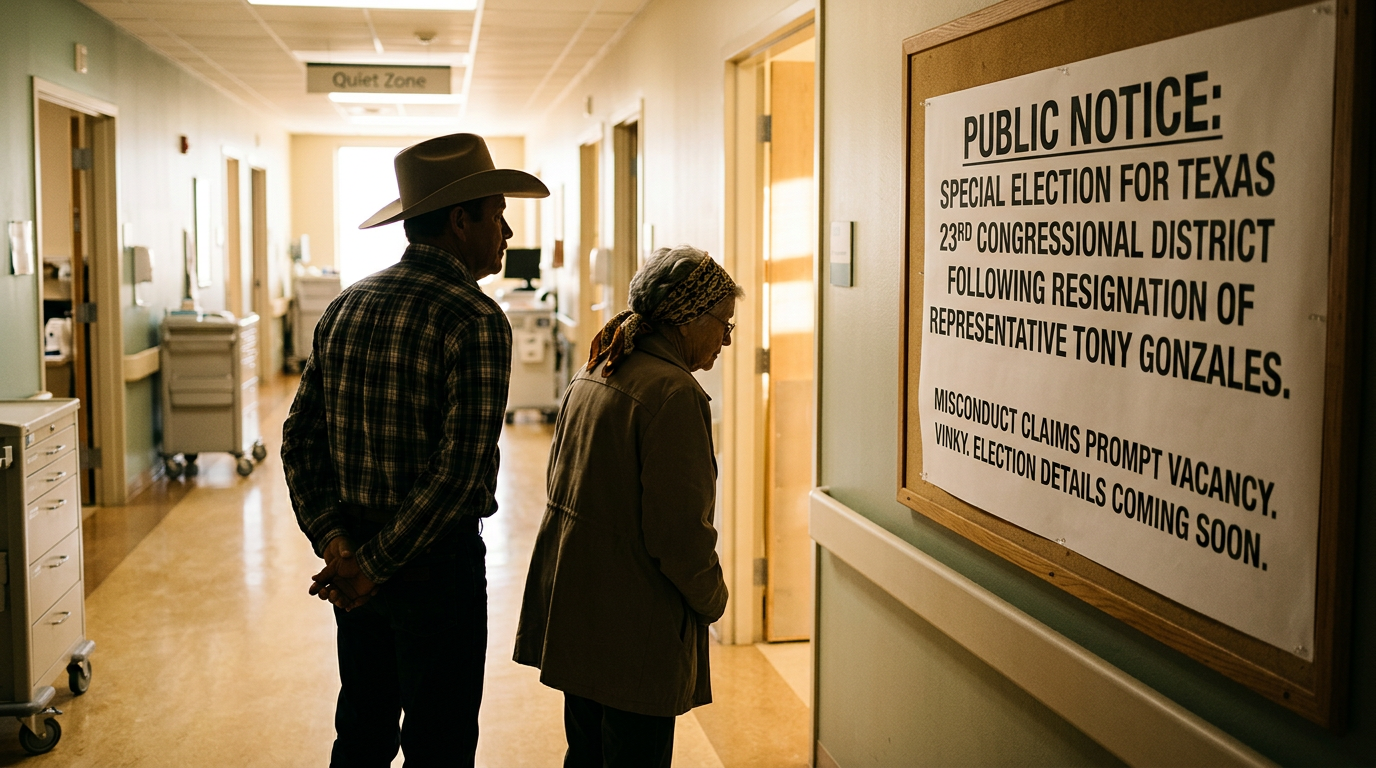
Representative Tony Gonzales, a Republican who has represented Texas's 23rd Congressional District since 2021, has officially announced his resignation from the United States House of Representatives. This sudden departure follows a series of internal and public misconduct allegations that have recently surfaced, creating a political vacuum in one of the most geographically diverse and strategically significant border districts in the nation. Historically, the 23rd District has been a swing region, though Gonzales had successfully navigated its complexities by focusing on veterans' issues and border security during his tenure. The resignation activates a mandatory legal timeline for filling the seat, requiring Governor Greg Abbott to call for a special election to ensure the residents of West Texas and the border region maintain representation in Washington D.C. Contextually, this resignation adds to a period of heightened volatility within the Texas congressional delegation. The 23rd District stretches from San Antonio to El Paso, encompassing more of the U.S.-Mexico border than any other single district. Previous incumbents have frequently found themselves at the center of both state and national policy debates, and Gonzales was no exception, often maneuvering between traditional conservative principles and the specific needs of a bilingual, economically varied constituency. His exit comes at a time when the balance of power in the House is razor-thin, making the upcoming special election a focal point for both national parties as they look to secure or flipped seats ahead of the general cycle. Government transparency advocates have noted that the speed of the resignation suggests a desire to reset the political narrative quickly rather than enduring a protracted ethics investigation process.
Texas relevance
The 23rd District of Texas is a massive jurisdictional area that covers roughly one-fourth of the entire state's landmass, making this resignation a matter of extreme logistical and political importance for Texas. This district acts as the primary frontline for many of the state's most pressing issues, including international trade, cross-border security, and rural healthcare access. Because the district represents a significant portion of the Texas borderlands, the vacancy creates an immediate gap in direct advocacy for border-area landowners and local law enforcement who rely on federal coordination. Texas election law dictates specific windows for special elections, which means state officials must now reroute resources and administrative focus to organize an unscheduled vote across numerous counties, impacting the state's political calendar and budgetary allocations for electoral oversight.
Details of the Allegations and Resignation Timeline
While the specific legalities of the misconduct claims remain under internal review, the decision to resign effectively halts any formal House Ethics Committee proceedings that might have otherwise lasted for months. The representative indicated in his official statement that the decision was made to avoid becoming a distraction to the legislative goals of his party and the needs of his constituents. Sources close to the office suggests that the allegations involve interpersonal conduct within the workplace, though no formal charges have been filed in a court of law as of this writing.
The timeline for the transition is expected to be swift. Gonzales will vacate his office within weeks, triggering the constitutional requirement for a special election. This vacuum means that for a period of several months, several hundred thousand Texans will not have a voting voice on the floor of the House. Staffers for the 23rd District will likely remain in a 'caretaker' status to manage constituent services, such as help with Social Security or VA benefits, but the legislative policy-making capability for the district will be suspended until a successor is sworn in.
Impact on the 23rd District Frontier
The 23rd District is often described as the most competitive district in Texas, spanning 29 counties including Val Verde, Brewster, and Maverick. The loss of a sitting representative during an active session of Congress means that major projects, such as upgrades to the Bridge of the Americas or funding for rural high-speed internet, may lose their primary advocate in committee hearings. Local leaders in cities like Del Rio and Eagle Pass have expressed concern that the lack of a representative could slow down federal response times for border-related infrastructure needs.
In terms of territorial logistics, running a special election in this district is a monumental task. It requires coordination across two time zones and dozens of county clerks. The geographic span makes campaigning incredibly expensive, as candidates must purchase media spots in both the San Antonio and El Paso markets to reach the full breadth of the electorate. This ensures that the upcoming special election will likely be one of the most expensive and closely watched short-cycle races in recent Texas history.
Gubernatorial Requirements and Election Law
Under the Texas Election Code, Governor Greg Abbott is required to issue a proclamation for the special election within a specific timeframe following the formal vacancy. The Governor has some discretion on the date, but it typically must occur on a Tuesday within a prescribed window unless an emergency is declared. This sets the stage for a 'jungle primary' format where candidates from all parties appear on the same ballot. If no single candidate receives more than 50% of the vote, a runoff between the top two finishers will be required, regardless of party affiliation.
This legal framework often benefits candidates with high name ID and well-established ground games. Because the turnout for special elections is traditionally lower than general elections, the core bases of both the Republican and Democratic parties in Texas will be highly mobilized. For the GOP, maintaining control of this seat is vital for their majority in the House; for Democrats, it represents their best chance to gain a foothold in a border district that has trended away from them in recent cycles.
Political Future of Tony Gonzales
The resignation likely marks the end of Gonzales’s career in federal elective office for the foreseeable future. A former Navy cryptologist, Gonzales entered politics with a narrative of service and moderate conservatism. However, the misconduct allegations have tarnished that image, making a return to public life in Texas a difficult uphill battle. His departure follows a trend of several high-profile Texas politicians exiting the stage amidst controversy, reflecting a shifting culture of accountability within both state and national politics.
Supporters of the outgoing representative point to his work on the Bipartisan Safer Communities Act and his role in the House Appropriations Committee as evidence of a legacy focused on results rather than rhetoric. Critics, conversely, argue that the allegations were the final straw for a representative who had already alienated the more conservative grassroots of the Texas GOP. His next steps remain unclear, though most analysts expect him to move into the private sector or the consulting world away from the public eye.
Stakeholder Reactions Across the State
Reaction from the Texas Republican Party was swift, with leaders emphasizing the need to keep the seat red while largely avoiding the specifics of the misconduct claims. State party officials are already vetting potential candidates who can bridge the gap between the suburban voters of San Antonio and the rural voters of the Big Bend region. The goal for the state party is to find a unifying figure who can prevent a costly and divisive internal fight that might drain resources ahead of the next major election cycle.
Democratic strategists in Austin and D.C. have already identified the 23rd District as a top-tier target. They argue that the misconduct allegations and the subsequent resignation are indicative of a larger instability within the Texas Republican delegation. They intend to frame the special election as a referendum on the GOP's ability to govern effectively and plan to run a candidate focused on healthcare and economic stability. Local activists in the border counties are calling for a representative who prioritizes humanitarian concerns alongside security.
Analysis
The resignation of Tony Gonzales is a double-edged sword for the Texas GOP. While it allows the party to distance itself from the immediate fallout of the misconduct allegations, it also exposes a vulnerable flank in a district that is notoriously difficult to maintain. Gonzales had often been a target of the more hardline elements of his own party, particularly concerning his votes on gun safety and border policy; however, he was also a proven fundraiser who could appeal to centrist voters in San Antonio. Without a clear frontrunner to replace him, there is a risk that a contested primary for the special election could lead to internal fractures, giving Democrats an opening they haven't seen in this region for years. The timing is particularly inconvenient for Governor Abbott, who must now weigh the political risks of seat vacancy against the potential for an embarrassing loss if a weak candidate is selected to carry the Republican banner into the special vote.
Source attribution
This story was reported using a public release from the Texas Congressional Delegation (Google News). Keep TX Red rewrote the coverage independently and links to the official statement for verification.
Frequently Asked Questions
- When will the special election for District 23 take place?
- The exact date will be determined by a proclamation from Governor Greg Abbott, usually occurring on a Tuesday within a few months of the official vacancy.
- Can Tony Gonzales run for his seat again in the special election?
- While legally possible to run in some jurisdictions, a resignation under the cloud of misconduct usually precludes a candidate from seeking the same office in the immediate special election due to party withdrawal and lack of support.
- What happens to the constituents of the district until the election?
- The office remains open under the supervision of the Clerk of the House. Staff members continue to handle non-legislative constituent services, but they cannot cast votes on bills.
Official Sources
Take the next step
Browse the Newsroom →Read more about Keep Texas Red → Our full guide to what Keep Texas Red means and why Texans support it.
Get Texas updates delivered weekly.
Independent Texas reporting on politics, policy, and daily life. One email a week. Unsubscribe anytime.
Keep TX Red Newsroom
The Keep Texas Red Editorial Staff produces nonpartisan explainers, policy breakdowns, and educational resources to help Texans understand how their government works. All content is reviewed for accuracy and updated regularly.
About Keep TX Red →