Texas Hemp Retailers Face Increased Police Raids Amid Cannabinoid Confusion
Law enforcement agencies in Texas and across the country are ramping up enforcement actions against hemp shops over product compliance.
Editorial disclaimer: Opinions and analysis on Keep TX Red are editorial content — not statements of fact. See our editorial standards.
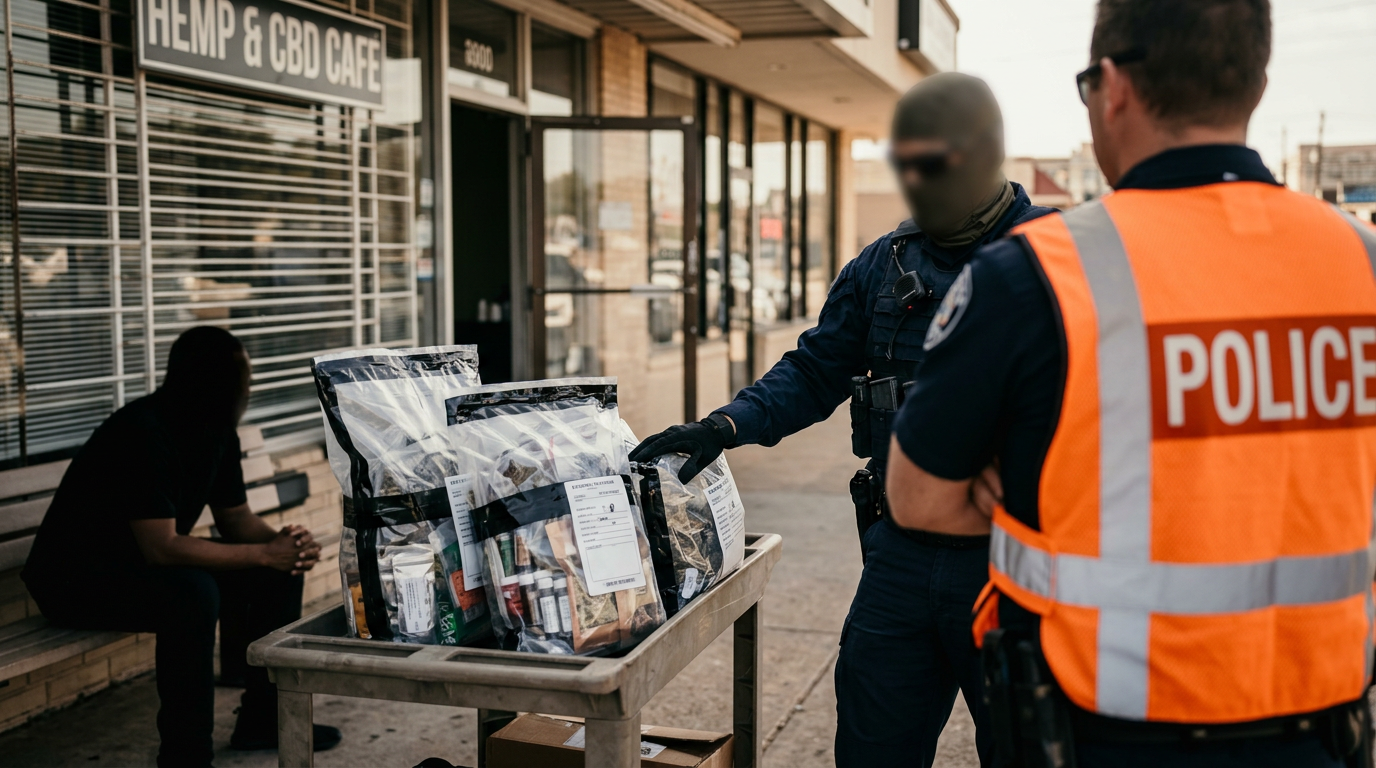
Law enforcement agencies in North Texas and across the broader United States have recently initiated a series of raids targeting retail hemp establishments. According to reports from the Dallas Observer on December 22, 2023, these actions involve the execution of search warrants and the seizure of merchandise from storefronts that legally sell hemp-derived products. These incidents are not isolated to a single city but represent a growing trend of enforcement activity as authorities look closer at the chemical composition of products sold under the 2018 Farm Bill. The sudden increase in police intervention has caught many business owners off guard, particularly those who believed they were operating within the letter of both state and federal law. Historically, the legalization of hemp at the federal level created a massive new industry in the Lone Star State. Following the passage of House Bill 1325 in 2019, Texas established a regulatory framework for the production and sale of hemp, which is defined as cannabis containing less than 0.3% Delta-9 THC. However, the subsequent rise of alternative cannabinoids such as Delta-8 and THCA has created a legal gray area that police are now navigating through active investigations. These raids often center on allegations that the products on the shelves exceed the legal THC limits, effectively categorizing them as illegal marijuana under current Texas statutes.
Texas relevance
The recent wave of law enforcement actions is particularly significant for the Texas business community and residents across the Dallas-Fort Worth metroplex. Texas has one of the most robust hemp markets in the country, with thousands of licensed retailers and distributors operating in urban and rural areas alike. Because the Texas Department of State Health Services and local law enforcement have sometimes differed in their interpretation of cannabinoid legality, business owners in cities like Dallas find themselves at the center of a jurisdictional tug-of-war. The outcome of these raids and any subsequent legal proceedings will likely set the tone for how hemp is regulated and sold in the state for years to come.
The Evolution of Hemp Regulation in Texas
Since the adoption of the Farm Bill and the subsequent alignment of Texas law through HB 1325, the state has seen a proliferation of shops dedicated to hemp-derived products. These businesses operate under the oversight of the Texas Department of Agriculture for cultivation and the Department of State Health Services for retail distribution. Despite these formal channels, the specific chemistry of what constitutes 'hemp' remains a point of intense legal debate.
The primary issue lies in the distinction between different forms of THC. While Delta-9 THC is strictly capped at 0.3% by weight, other compounds like Delta-8 THC or THCA have traditionally been viewed as legal under the federal definition of hemp. Law enforcement agencies, however, are increasingly testing these products for total THC content, which can sometimes lead to results that trigger criminal thresholds.
Operational Impact of Search Warrants
When law enforcement executes a raid on a Texas hemp shop, the process typically involves more than just a cursory inspection. Under the authority of a judicial search warrant, officers frequently seize entire inventories, point-of-sale systems, and financial records. This effectively shutters a business indefinitely, regardless of whether a criminal conviction is eventually secured in a court of law.
Reports indicate that these raids are often the culmination of undercover operations where investigators purchase products and send them to state labs for testing. If the lab results show a THC concentration above the legal limit, the shop is flagged for a full-scale raid. For retailers, the lack of standardized testing protocols between private labs and state-run facilities remains a significant hurdle to ensuring compliance.
National Context of Cannabis Enforcement
The trend identified in the Dallas area is not unique to Texas. Throughout the country, local and state police departments are re-evaluating their approach to hemp retail. In states where recreational marijuana remains illegal, hemp shops are often the only source for cannabinoid products, making them high-priority targets for agencies concerned with public health and safety.
This national crackdown suggests a coordinated or at least synchronized re-evaluation of the hemp industry's boundaries. As federal authorities provide little updated guidance on the specific legality of synthetic or derived cannabinoids, local law enforcement agencies have taken it upon themselves to enforce strict interpretations of existing drug laws to control the market.
Legal Defense and Business Rights
Retailers facing these raids are not without recourse, but the legal path is often long and expensive. Many shop owners argue that they are selling products that are certified as compliant by their suppliers through 'Certificates of Analysis.' These documents are supposed to prove that the product meets the legal definition of hemp before it reaches the store shelves.
In many Texas cases, the legal defense hinges on the intent of the retailer and the reliability of the testing methods used by the state. Defense attorneys often challenge the validity of search warrants by questioning the chain of custody of tested samples and the chemical standards used by police laboratories, which may not always differentiate between various THC isomers accurately.
Financial Risks for Local Entrepreneurs
The financial impact of a police raid can be devastating for a local entrepreneur. In addition to the loss of physical products—which can value in the tens or hundreds of thousands of dollars—the temporary or permanent closure of a shop results in lost revenue and potential job losses for staff. Insurance policies often do not cover losses resulting from government seizure or illegal activity allegations.
Furthermore, the stigma of a raid can damage a business's reputation within its community. Even if no charges are filed or if a case is dismissed, the public perception of the shop being 'raided' can drive away customers who prefer to shop at establishments they perceive as fully compliant with the law.
Looking Forward: Legislative and Judicial Steps
As the frequency of these raids increases, the pressure on the Texas Legislature to provide more concrete definitions grows. Lawmakers may be forced to choose between further restricting hemp products or providing a clear legal 'safe harbor' for retailers who act in good faith. Until such a change occurs, the environment remains volatile for businesses in the industry.
Judicial rulings from ongoing cases in Dallas and other Texas cities will also play a critical role. If courts begin to rule consistently against law enforcement's testing methods or seizure practices, it could slow the rate of raids. Conversely, if judges uphold the current enforcement tactics, we may see an even more significant contraction of the hemp market in Texas.
Analysis
The increase in raids marks a shift from passive regulation to active criminal enforcement in the hemp sector. While the 2018 Farm Bill was intended to provide a clear path for industrial hemp, the molecular similarity between hemp-derived cannabinoids and traditional marijuana has created an evidentiary challenge for police. For small business owners in Texas, these raids represent an existential threat, often resulting in the total loss of inventory and high legal fees before a case even reaches a courtroom. This aggressive posture may be an attempt by authorities to force a legislative clarification or a total ban on certain hemp derivatives during the next state legislative session.
Source attribution
This story was reported using a public release from the Unusual Texas / Only In Texas (Google News). Keep TX Red rewrote the coverage independently and links to the official statement for verification.
Frequently Asked Questions
- Is hemp legal to sell in Texas?
- Yes, hemp and hemp-derived products are legal to sell in Texas provided they contain no more than 0.3% Delta-9 THC by weight, following the passage of House Bill 1325 in 2019.
- Why are police raiding shops that claim to be legal?
- Police often raid these shops after undercover test buys suggest that products contain higher levels of THC than allowed by law. There is an ongoing dispute over the testing methods and the legality of specific compounds like Delta-8 or THCA.
- What happens to the inventory seized during a raid?
- Inventory seized during a raid is typically held as evidence for a criminal investigation. If the products are found to be illegal, they may be destroyed. If the owner is cleared, they may seek the return of their property, though this is often a difficult legal process.
Official Sources
Take the next step
Browse the Newsroom →Read more about Keep Texas Red → Our full guide to what Keep Texas Red means and why Texans support it.
Get Texas updates delivered weekly.
Independent Texas reporting on politics, policy, and daily life. One email a week. Unsubscribe anytime.
Keep TX Red Newsroom
The Keep Texas Red Editorial Staff produces nonpartisan explainers, policy breakdowns, and educational resources to help Texans understand how their government works. All content is reviewed for accuracy and updated regularly.
About Keep TX Red →