Texas early voting: 500,000 ballots cast in first week of elections
Secretary of State Jane Nelson reports high participation for the November 4 election as 500,000 Texans hit the polls during the first week of early voting
Editorial disclaimer: Opinions and analysis on Keep TX Red are editorial content — not statements of fact. See our editorial standards.
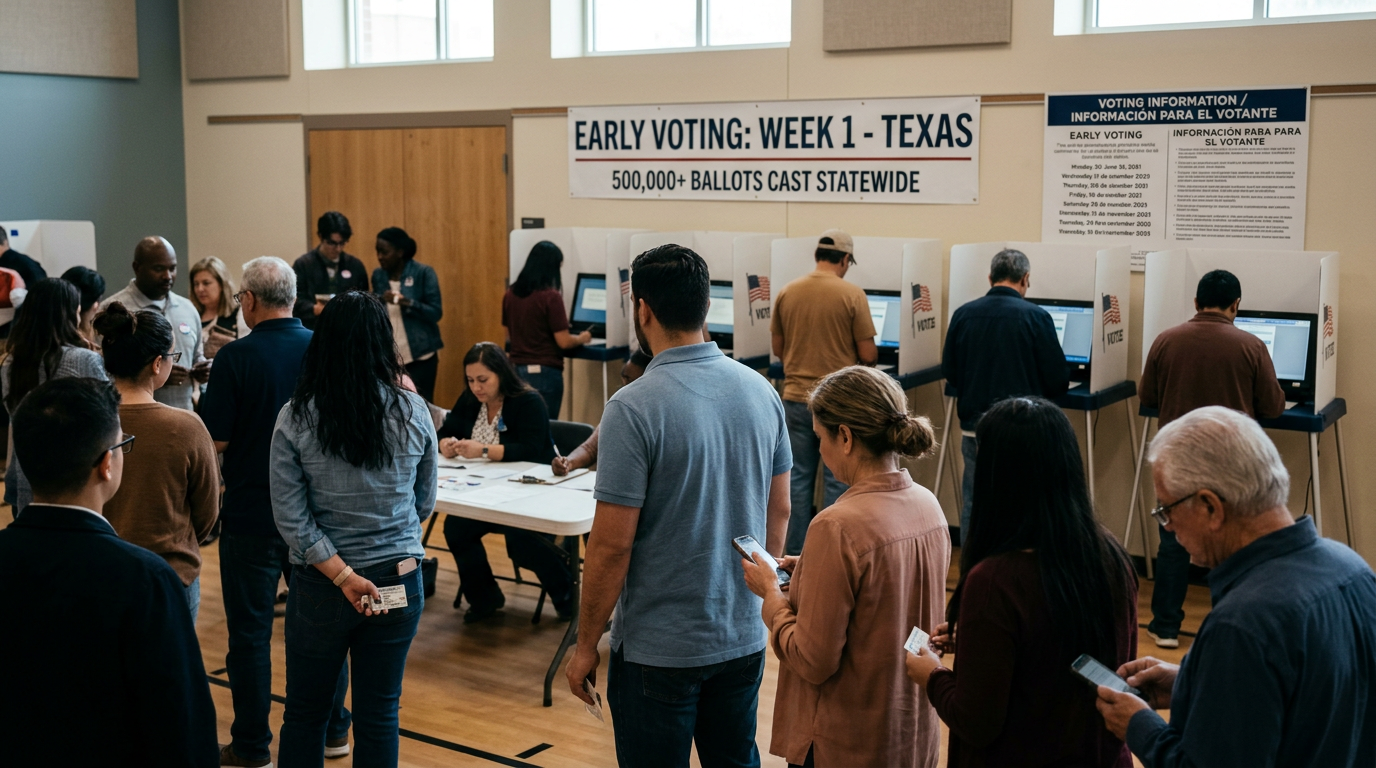
The Texas Secretary of State's office has confirmed a significant wave of civic participation as over 500,000 residents cast their ballots during the inaugural week of early voting for the upcoming November 4 election. Secretary Jane Nelson released the official figures today, highlighting a robust start to the voting period which serves as a precursor to the general election day. Historically, Texas has seen a steady increase in early voting preferences over the last two decades, as voters move away from the traditional single-day voting model in favor of the flexibility provided by the multi-day early window. This trend reflects a broader shift in state electoral logistics aimed at managing large populations and reducing congestion at polling places on the final Tuesday of the cycle. This early data provides a snapshot of the state's logistical readiness and the public's engagement level. Under the direction of the Secretary of State, local election officials across all 254 counties have been implementing updated security measures and processing workflows to ensure that these early tallies are recorded accurately and securely. The 500,000 mark is viewed by many analysts as a benchmark of high interest, particularly for a cycle that includes various local and state-level decisions. As the early voting period continues, officials anticipate that these numbers will continue to climb, potentially setting new records for non-presidential cycles if the momentum persists throughout the second week of the window.
Texas relevance
The surge in early voting is directly relevant to every community in Texas, from the high-density urban corridors of the I-35 triangle to the expansive rural counties in West Texas and the Panhandle. Texas law provides for a standardized early voting period, but the execution relies heavily on county clerks and elections administrators who must manage staffing and equipment for nearly two weeks of continuous operation. In previous cycles, high early turnout in major hubs like Harris, Dallas, and Tarrant counties has often indicated how the final statewide margins might shake out, making these initial numbers critical for candidates and policy advocates watching the Texas political landscape.
Breaking Down the First Week Metrics
The first seven days of the early voting period represent a critical phase for election administrators. By reaching the 500,000-voter milestone, the state has demonstrated that its infrastructure is capable of handling significant volume without widespread reports of failure or systemic delays. This volume is distributed across a diverse array of polling locations, including libraries, community centers, and mobile units, which have become staples of the Texas voting experience.
Secretary Nelson's announcement serves not just as a statistical update but as a call to action for those who have yet to participate. The data shows a consistent stream of voters throughout the day, suggesting that the expanded hours provided by many counties are being utilized by working families and professionals who cannot easily visit a booth during standard business hours. This rhythmic flow of voters is a sign of a healthy, functioning democratic process in the Lone Star State.
The Role of the Secretary of State in Oversight
As the chief election officer for Texas, Jane Nelson is responsible for ensuring that all 254 counties adhere to the Texas Election Code. The release of these numbers is part of a broader mandate to provide transparency and ensure that the public remains informed about the progress of the election. This oversight includes monitoring the functionality of electronic voting machines and the integrity of the paper audit trails that are now required across the state.
The Secretary's office works in tandem with local officials to troubleshoot any issues that arise during this early window. By publicizing the half-million mark, the office reinforces the legitimacy of the process and encourages remaining eligible voters to utilize the remaining days of early voting. This coordination is the backbone of the Texas electoral system, ensuring that every legal vote is counted and every voter has access to a secure ballot box.
Impact on Local County Resources
While the 500,000 figure is a statewide total, the burden of managing this turnout falls on individual counties. Larger counties like Bexar and Travis often see the highest raw numbers, requiring extensive staffing and hundreds of individual polling machines. These counties have had to allocate significant portions of their annual budgets to cover the costs of the early voting period, which includes facility rentals and the training of thousands of temporary poll workers.
Smaller, rural counties also face unique challenges, such as ensuring that voting locations are accessible to residents who may live dozens of miles from the nearest town. Despite these geographic hurdles, the early voting data indicates that participation is not limited to urban centers. The commitment of local officials to maintain these sites for the full duration of the early period is a testament to the localized nature of Texas governance.
Security and Integrity Measures
With half a million ballots already cast, the focus on election security has never been higher. Texas has implemented several layers of protection to ensure that only eligible citizens are voting. This includes strict photo identification requirements at the point of check-in and the requirement for voting machines to remain offline to prevent any form of digital interference. These precautions are designed to bolster voter confidence and prevent fraud.
Furthermore, the use of verifiable paper receipts allows for accurate audits and recounts if necessary. Secretary Nelson has emphasized that these security protocols are consistently applied throughout the early voting window, just as they will be on November 4. The successful processing of the first 500,000 voters without major security breaches provides a strong foundation for the remainder of the election cycle.
Future Outlook for the November 4 Stand
As Texans look toward the final date of the election on November 4, the momentum from the first week is expected to build. Historically, the final days of early voting often see the highest daily totals, as procrastinators and those with shifting schedules rush to the polls before the window closes. If the current trajectory holds, the total number of early votes could easily double or triple before the final deadline.
The Secretary of State’s office will continue to provide updates as the election nears. This constant stream of information allows campaigns to adjust their outreach strategies and ensures that the public is aware of how their fellow citizens are participating. The high turnout reported today suggests that the November 4 results will be a true reflection of the will of the Texas people, driven by a high level of engagement and an efficient voting system.
Analysis
The reported turnout of half a million voters suggests a highly motivated electorate. While high turnout is often debated in terms of which political party it benefits, the primary takeaway from a 'Keep TX Red' perspective is the importance of voter mobilization and the effective administration of state laws. Secretary Nelson's transparency in releasing these figures helps maintain public trust in the electoral process. The sheer volume of early participants indicates that Texans are taking their localized issues seriously, ensuring their voices are heard well before the crowds of election day arrive. This proactive behavior is essential for maintaining a stable and representative state government.
Source attribution
This story was reported using a public release from the Texas Secretary of State. Keep TX Red rewrote the coverage independently and links to the official statement for verification.
Frequently Asked Questions
- When does early voting end for the November 4 election?
- Early voting typically concludes the Friday before election day. However, voters should check their specific county's schedule, as hours and locations can vary depending on local decisions and population size.
- Do I need identification to vote in Texas?
- Yes, Texas law requires voters to present one of seven acceptable forms of photo identification. These include a Texas driver's license, a Texas election identification certificate, a Texas personal identification card, a Texas handgun license, a U.S. military ID with photo, a U.S. citizenship certificate with photo, or a U.S. passport.
- Where can I find my nearest early voting location?
- Voters can find their specific polling locations by visiting the 'VoteTexas.gov' website or by contacting their local county elections administrator. During early voting, many counties allow voters to cast their ballot at any polling site within their county of residence.
Official Sources
Take the next step
Browse the Newsroom →Read more about Keep Texas Red → Our full guide to what Keep Texas Red means and why Texans support it.
Related Articles

Get Texas updates delivered weekly.
Independent Texas reporting on politics, policy, and daily life. One email a week. Unsubscribe anytime.
Keep TX Red Newsroom
The Keep Texas Red Editorial Staff produces nonpartisan explainers, policy breakdowns, and educational resources to help Texans understand how their government works. All content is reviewed for accuracy and updated regularly.
About Keep TX Red →