Texas election integrity: Sec. Nelson moves to use federal databases
Texas Secretary of State Jane Nelson completes a massive citizenship audit of the state registration list using the federal SAVE database system.
Editorial disclaimer: Opinions and analysis on Keep TX Red are editorial content — not statements of fact. See our editorial standards.
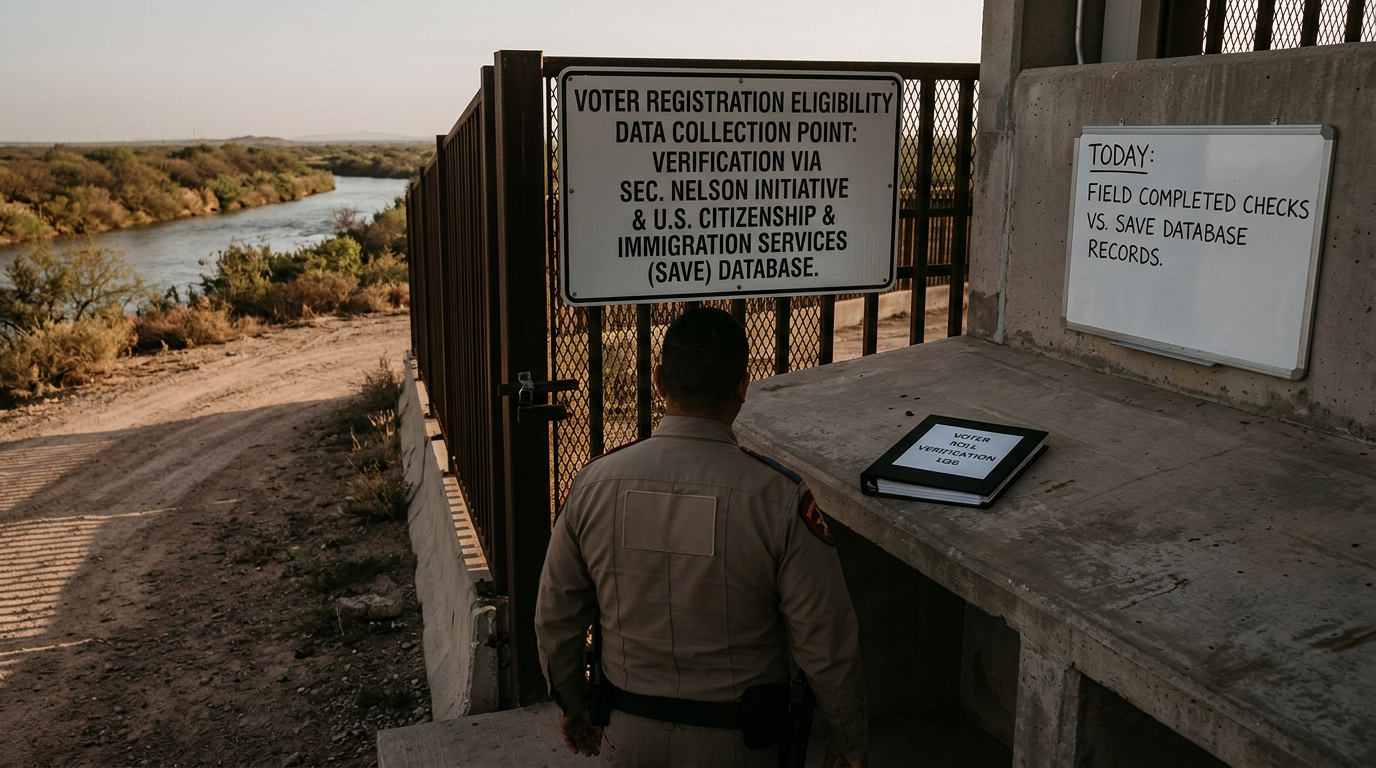
Texas Secretary of State Jane Nelson has finalized a comprehensive review of the state's voter registration records by cross-referencing them with the federal Systematic Alien Verification for Entitlements (SAVE) database. This initiative, facilitated by the U.S. Citizenship and Immigration Services, represents a significant step in the ongoing effort to ensure that only eligible citizens participate in Texas elections. The process involved comparing names on the current voter rolls against federal records that track legal residency and citizenship status for foreign-born individuals. Historically, Texas has faced challenges in maintaining perfectly updated voter lists due to the lag time between a person's change in status and their removal from state databases. This recent audit seeks to close those gaps using high-accuracy federal data. The completion of this verification process follows years of legislative and administrative efforts to tighten electoral security within the Lone Star State. By leveraging the SAVE database, the Secretary of State’s office can identify registered voters who may have provided documentation indicating non-citizenship at the time of their driver’s license application but have not subsequently updated their records to reflect naturalization. This effort is not a one-time event but part of a broader, modernized approach to list maintenance that emphasizes data-driven accuracy over manual, error-prone methods. The Secretary of State's office maintains that this procedure is essential for building public trust in the democratic process and ensuring every legal vote carries its full weight.
Texas relevance
Texas has long been at the center of the national debate over election security and voter eligibility. As a border state with a rapidly growing population, the integrity of the voter rolls is a top priority for state legislators in Austin and local county election administrators. The use of the SAVE database provides Texas officials with a unique tool to verify the status of registered voters who are not U.S. born, a demographic that is significant in a state of nearly 30 million people. This specific action by Secretary Nelson addresses concerns raised by Texas voters regarding the potential for non-citizens to cast ballots, ensuring that the state remains a leader in balancing access to the polls with strict adherence to constitutional eligibility requirements.
Understanding the SAVE Database Mechanism
The Systematic Alien Verification for Entitlements (SAVE) program is a web-based service administered by the U.S. Citizenship and Immigration Services. While originally designed to help government agencies verify the immigration status of applicants for public benefits, its application in election integrity has become increasingly vital. The database contains millions of records related to individuals who have been issued immigrant or non-immigrant visas, work permits, and other legal residency documents.
For Texas officials, the SAVE database serves as a secondary verification tool. When a voter registers in Texas, they must attest to their citizenship. However, the Secretary of State’s office can now check those names against SAVE to see if there is a record of that person identifying as a non-citizen in other federal contexts. This two-factor check ensures that names flagged for potential removal are vetted against the most current federal information available before any administrative action is taken by local registrars.
The Role of County Registrars in the Process
While the Secretary of State’s office conducts the data comparison at the state level, the actual maintenance of voter rolls happens at the county level. Once the Secretary's office identifies a potential non-citizen on the rolls based on the SAVE data, that information is passed down to the respective county elections department. The county registrars are then responsible for following the statutory notification process required by Texas law.
Under the Texas Election Code, individuals identified as potential non-citizens are sent a notice requesting proof of citizenship. These individuals have a 30-day window to provide documentation—such as a naturalization certificate or a U.S. passport—to verify their eligibility. If the individual fails to respond or cannot provide proof within the allotted time, their registration is canceled. this decentralized approach ensures that local officials, who know their communities best, oversee the final determination of a voter’s status.
Historical Context of Texas Voter List Maintenance
Texas has a long history of attempting to refine its voter registration lists. In previous decades, the state relied heavily on jury summons data, where individuals who checked a box indicating they were not a citizen to avoid jury duty were flagged. However, this method was often criticized for being outdated or reflecting a status that had changed since the summons was issued. The move to the SAVE database represents a technological leap forward, providing real-time data from federal immigration encounters.
Previous administrations in the Secretary of State’s office have faced legal challenges regarding the methodology of voter purges. To avoid these pitfalls, the current administration has emphasized a more collaborative approach with federal agencies. By securing access to the SAVE database through formal agreements with the Department of Homeland Security, Texas has established a more robust and legally defensible process for identifying ineligible voters while protecting the rights of those who have recently naturalized.
Navigating Federal and State Legal Frameworks
The intersection of state election laws and federal immigration data is a complex legal landscape. The National Voter Registration Act (NVRA) sets certain limits on when and how states can remove names from voter rolls, particularly as an election approaches. Texas officials have been careful to conduct these SAVE database comparisons in a manner that complies with these federal mandates, ensuring that the cleanup occurs well outside the restricted windows preceding a general election.
Furthermore, the Texas Legislature has passed several bills in recent sessions aimed at standardizing how data is shared between the Department of Public Safety (DPS) and the Secretary of State. Because many voters register when they obtain or renew their driver's licenses, the accuracy of the information provided to DPS is paramount. The integration of SAVE data acts as a safeguard against errors that may occur during the DMV registration process, providing a higher level of scrutiny for applicants who were not born in the United States.
Impact on Public Confidence and Future Safeguards
The completion of this audit is expected to have a significant impact on public confidence in Texas elections. In an era where election results are frequently scrutinized, the ability of state officials to point to concrete data-driven audits is essential. By verifying that the rolls are limited to eligible citizens, the Secretary of State is addressing one of the most frequently cited concerns regarding the security of the ballot box.
Looking ahead, the Secretary of State’s office plans to make these database checks a recurring feature of state election administration. Rather than waiting for large-scale audits every few years, the goal is to create a seamless pipeline where new registrations are periodically checked against SAVE data. This proactive stance is intended to prevent the accumulation of ineligible names on the rolls, making the maintenance process more manageable for county officials and more transparent for the Texas electorate.
Analysis
Opinion: The decision to utilize the SAVE database is a commonsense victory for those who prioritize the rule of law in our electoral system. While critics often claim such audits are unnecessary, the fact remains that a clean voter roll is the best defense against administrative errors that could compromise an election's outcome. By proactively comparing state records with federal immigration data, Secretary Nelson is demonstrating a commitment to transparency that should be a model for other states. This is not about disenfranchisement; it is about ensuring that the laws already on the books—which limit voting to citizens—are actually being enforced. Texans deserve to know that their elections are decided by their fellow citizens, and this audit provides that much-needed peace of mind.
Source attribution
This story was reported using a public release from the Texas Secretary of State. Keep TX Red rewrote the coverage independently and links to the official statement for verification.
Frequently Asked Questions
- What is the SAVE database and how does it help Texas?
- The SAVE (Systematic Alien Verification for Entitlements) database is a federal system managed by U.S. Citizenship and Immigration Services. It tracks the immigration and citizenship status of non-U.S. born individuals. Texas uses it to ensure that people who registered to vote but are not citizens—or whose status has not been confirmed—are identified and reviewed for eligibility.
- What happens if a voter is flagged by the SAVE audit?
- If a registered voter is flagged as a potential non-citizen, the Secretary of State notifies the relevant county registrar. The county then sends a notice to the voter, who has 30 days to provide evidence of U.S. citizenship. If no proof is provided within that timeframe, the individual's voter registration is officially canceled.
- Does this audit prevent naturalized citizens from voting?
- No. The process includes a notification period specifically designed to allow newly naturalized citizens to provide proof of their status. If an individual has become a citizen since they last interacted with the federal government or the DPS, they can simply provide their naturalization papers to maintain their active voter registration status.
Official Sources
Take the next step
Browse the Newsroom →Read more about Keep Texas Red → Our full guide to what Keep Texas Red means and why Texans support it.
Get Texas updates delivered weekly.
Independent Texas reporting on politics, policy, and daily life. One email a week. Unsubscribe anytime.
Keep TX Red Newsroom
The Keep Texas Red Editorial Staff produces nonpartisan explainers, policy breakdowns, and educational resources to help Texans understand how their government works. All content is reviewed for accuracy and updated regularly.
About Keep TX Red →