Texas Secretary of State Jane Nelson steps down after tenure of reform
Outgoing Secretary of State Jane Nelson reflects on major election reforms, economic growth, and modernized state services during her leadership.
Editorial disclaimer: Opinions and analysis on Keep TX Red are editorial content — not statements of fact. See our editorial standards.
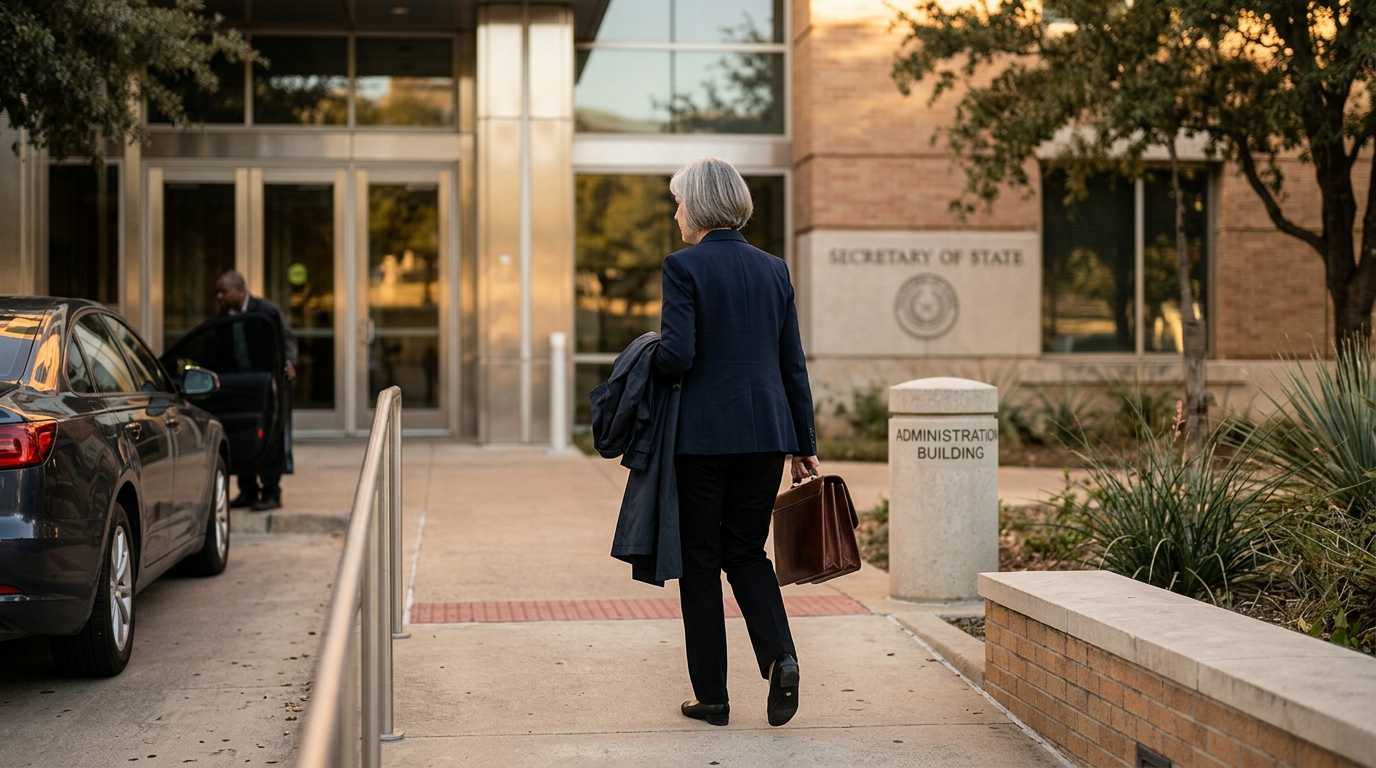
Jane Nelson, the 115th Texas Secretary of State, is concluding her historic tenure after more than three years of guiding one of the state’s most influential administrative bodies. Appointed as a respected former legislator, Nelson brought a focus on bureaucratic efficiency and structural modernization to an office that oversees critical functions ranging from business filings to international relations. Historically, the Secretary of State serves as the chief election officer, making the role a focal point for legislative debate and public scrutiny over the last several cycles. Nelson’s leadership followed a period of intense transition for the agency, during which the state navigated shifting federal guidelines and heightened public interest in the mechanics of democracy. Her departure marks the end of a chapter defined by her efforts to bridge the gap between technical agency modernization and the frontline needs of Texas citizens and business owners alike. Unlike many purely political appointments, Nelson utilized her decades of legislative experience to navigate the complexities of constitutional mandates and the practicalities of a rapidly expanding state population.
Texas relevance
The Secretary of State holds a unique position in the Texas government, serving as the bridge between the Governor's office, the Legislature, and the local officials who manage the 254 counties across the state. In Texas, the Secretary of State is not an elected official but an appointee of the Governor, yet the role carries the heavy burden of ensuring that election laws passed in Austin are implemented uniformly from El Paso to Beaumont. Nelson’s work focused heavily on providing these local election administrators with the tools and training necessary to conduct secure processes during a time when legislative eyes were fixed on transparency and verification. Furthermore, for the millions of entrepreneurs who call Texas home, Nelson’s agency acted as the gatekeeper for new business formations, ensuring that the 'Texas Miracle' of economic expansion was not bogged down by outdated paper systems or slow processing times.
Modernizing the Texas Business Climate
One of the primary responsibilities of the Texas Secretary of State is managing the registration and filings for hundreds of thousands of businesses. During her time in office, Nelson prioritized the transition to digital-first systems, recognizing that a growing economy requires a streamlined entry point for new ventures. By updating the state's filing portals, her team aimed to reduce the backlog that had historically plagued agency processing times during peak economic windows.
The impact of these improvements was felt most by small business owners who rely on timely certifications to secure loans and permits. Nelson’s administration worked to ensure that Texas remained the top destination for relocation in the United States by making the administrative barriers as low as possible. This focus on the 'business of government' helped maintain the state’s reputation for having a friendly regulatory environment while ensuring that all legal documentation was preserved with modern security standards.
Strengthening Election Uniformity Across 254 Counties
As the lead official for Texas elections, Nelson was tasked with the monumental job of coordinating with 254 different county clerks and election administrators. Her legacy in this arena is defined by a push for greater uniformity. Before her tenure, many counties operated with varying degrees of technological sophistication and procedural interpretation. Nelson’s office worked to standardize the training provided to poll workers and the instructions sent to county officials regarding the implementation of new state laws.
She also oversaw significant audits and reviews of election processes, which were aimed at identifying vulnerabilities and improving public confidence in the results. By providing a clear line of communication between the state capital and local election boards, the agency was able to resolve disputes more efficiently and ensure that the Texas Election Code was followed meticulously. This effort was not just about security, but about ensuring that every legal voter had access to a consistent experience regardless of which county they lived in.
International Relations and Economic Diplomacy
The Secretary of State also serves as the Governor's lead liaison for border affairs and international protocol. Nelson represented Texas on the world stage, meeting with foreign dignitaries and trade representatives to promote the state's export capabilities. Given that Texas frequently ranks as the nation’s top exporter, these diplomatic efforts are essential for maintaining the state's gross domestic product and supporting local jobs in the energy, agriculture, and technology sectors.
Under Nelson’s watch, the agency maintained a strong dialogue with Mexican officials to facilitate cross-border trade while addressing security and infrastructure needs. These international missions help solidify the state's standing as an independent economic powerhouse on the global stage. By fostering these relationships, Nelson ensured that Texas remains at the forefront of international trade discussions, providing a stable platform for companies looking to expand their reach beyond North American borders.
Improving Customer Service Standards
Administrative agencies are often criticized for being slow and unresponsive, a problem Nelson sought to tackle directly through an internal overhaul of customer service protocols. By implementing new tracking systems for inquiries and expanding the capacity of the agency's help desks, the office saw a measurable improvement in how quickly citizens could get answers regarding their official documents, such as notary commissions or legislative recordings.
This push for better service was rooted in Nelson’s background as a representative who understood that government exists to serve the taxpayer. The agency took steps to simplify complex forms and provide more resources online, reducing the need for citizens to travel to Austin or wait for weeks for mail-in responses. This internal cultural shift toward efficiency is expected to be a lasting part of the agency's institutional knowledge.
Protecting the Integrity of Public Records
Beyond business and elections, the Secretary of State is the official keeper of the state’s Seal and many of its formal records. Nelson oversaw the digitization of these historical documents, ensuring they are accessible to future generations of researchers and legal professionals. This preservation work is vital for maintaining the legal chain of custody for gubernatorial appointments, executive orders, and legislative acts.
The security of these records is a matter of state importance, and the Nelson administration invested in cybersecurity measures to protect sensitive data from breach or loss. In an era where digital records are the primary source of truth, these upgrades were necessary to protect the legal foundations of the state government. Her commitment to archival integrity ensures that the history of Texas remains documented and secure.
Preparing for the Future of Texas Governance
As Nelson steps down, the infrastructure she leaves behind is designed to withstand the pressures of a state that is adding millions of new residents every decade. The systems put in place during her term were built with scalability in mind, acknowledging that the demands on the Secretary of State’s office will only increase. Her departure serves as a moment of reflection for the state leadership on the qualities needed in the next Secretary.
The roadmap established over the last few years emphasizes technology, transparency, and training. For the next appointee, the challenge will be to build upon these foundations while navigating the ever-evolving landscape of state and federal law. Nelson’s tenure has proven that even the most complex state agencies can be reformed with a steady hand and a clear focus on the practical needs of the people of Texas.
Analysis
Jane Nelson’s departure highlights a critical transition for the executive branch in Texas. While many secretaries focus on a single niche like international diplomacy or election audits, Nelson’s legacy will likely be viewed as one of 'operational stabilization.' By focusing on the internal mechanics of the Secretary of State’s office, she reduced the friction between state mandates and local execution. From an editorial standpoint, her tenure served as a buffer during one of the most contentious periods of election policy in modern Texas history. Her ability to remain focused on the statutory requirements of the office, rather than getting mired in purely partisan rhetoric, provided a steadying hand for the state’s administrative infrastructure. Moving forward, the successor will face the challenge of maintaining this momentum as Texas prepares for the next major election cycle and continued population growth that will strain existing digital and physical government resources.
Source attribution
This story was reported using a public release from the Texas Secretary of State. Keep TX Red rewrote the coverage independently and links to the official statement for verification.
Frequently Asked Questions
- What is the primary role of the Texas Secretary of State?
- The Secretary of State serves as the Chief Election Officer for Texas, oversees the registration of business entities, and acts as the official keeper of state records. The office is also responsible for maintaining the Great Seal of Texas and advising the Governor on border and international affairs.
- How is the Texas Secretary of State chosen?
- Unlike the Governor or Attorney General, the Secretary of State is an appointed position. The Governor of Texas selects an individual for the role, and that appointment must be confirmed by the Texas Senate.
- What were Jane Nelson's major accomplishments in office?
- Nelson focused on improving the efficiency of business filings, standardizing election procedures across the state, and representing Texas in international trade missions. She is also credited with modernizing the agency's digital infrastructure to better serve the expanding population.
- What happens after a Secretary of State leaves office?
- The Governor will appoint a successor, who must then be confirmed by the Texas Senate. During the transition, the Deputy Secretary of State or a designated interim official typically handles the agency's daily operations until the new Secretary is sworn in.
Official Sources
Take the next step
Browse the Newsroom →Read more about Keep Texas Red → Our full guide to what Keep Texas Red means and why Texans support it.
Get Texas updates delivered weekly.
Independent Texas reporting on politics, policy, and daily life. One email a week. Unsubscribe anytime.
Keep TX Red Newsroom
The Keep Texas Red Editorial Staff produces nonpartisan explainers, policy breakdowns, and educational resources to help Texans understand how their government works. All content is reviewed for accuracy and updated regularly.
About Keep TX Red →