Secretary of State Refers Potential Noncitizen Vote Cases for Investigation Following Database Audit
Texas Secretary of State Jane Nelson refers 33 cases of potential noncitizen voting in the 2024 election to the Attorney General.
Editorial disclaimer: Opinions and analysis on Keep TX Red are editorial content — not statements of fact. See our editorial standards.
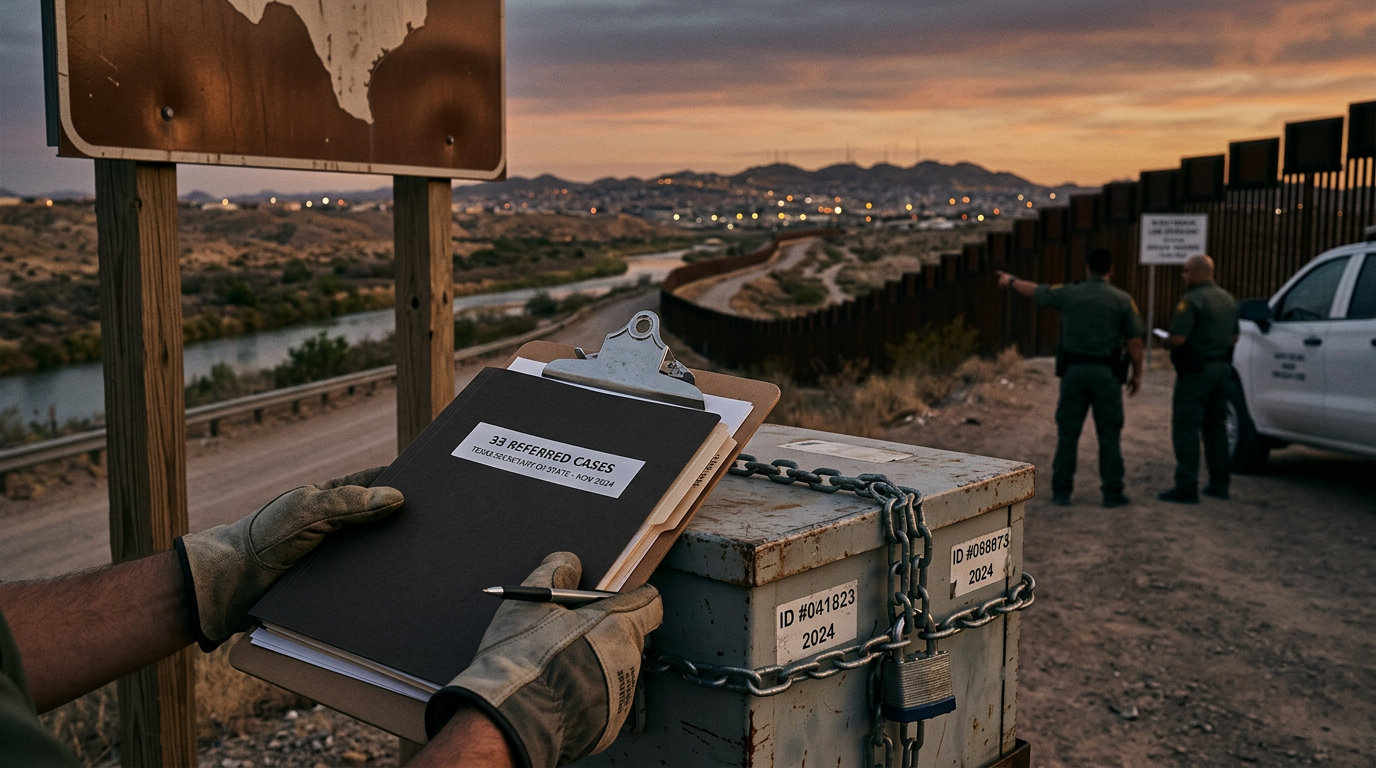
Texas Secretary of State Jane Nelson has officially initiated a law enforcement referral concerning 33 individuals suspected of casting illegal ballots during the November 2024 General Election. This action follows a rigorous cross-referencing process between Texas voter rolls and federal immigration records. Historically, Texas has been a leader in litigating for access to federal data to ensure that only eligible citizens participate in the democratic process. This specific batch of referrals marks a turning point in state-federal cooperation regarding the use of the Systematic Alien Verification for Entitlements (SAVE) database, which the state has long sought to utilize for election maintenance. The individuals identified are suspected of maintaining active voter registrations and participating in the most recent presidential election despite lacks of citizenship documentation at the time of their interaction with state agencies.
Texas relevance
The security of Texas elections is a paramount concern for taxpayers and residents from El Paso to Beaumont. This development is particularly relevant to Texas because the state has frequently clashed with federal authorities over the transparency of immigration data required to maintain clean voter rolls. Since the passage of Senate Bill 1 in 2021, Texas has doubled down on its commitment to election integrity, making these findings a critical test of the state’s current enforcement infrastructure. Any instance of noncitizen voting in a Texas election is a violation of state law, specifically under the Texas Election Code, and impacts the weight of every legal vote cast by a Texan citizen.
Utilization of the SAVE Database
The Systematic Alien Verification for Entitlements (SAVE) database is managed by U.S. Citizenship and Immigration Services. For years, Texas officials have requested direct or streamlined access to this data to verify the citizenship status of individuals who possess state-issued driver's licenses but are not natural-born citizens. The recent referral indicates that the state has successfully integrated this data into its auditing workflow.
Previously, the state relied heavily on jury summons responses where individuals would check a box indicating they were not citizens. While that method caught some ineligible voters, it was often criticized as being reactive rather than proactive. The use of the SAVE database allows the Secretary of State to match records in real-time against federal immigration status, providing a more empirical basis for investigations and potential prosecutions.
The Role of the Attorney General
Under Texas law, the Secretary of State has the authority to identify irregularities but lacks the power to prosecute. By referring these 33 cases to the Office of the Attorney General, Secretary Nelson is handing the baton to Ken Paxton’s investigators. It is now up to the state's top lawyer to determine if these individuals knowingly violated the law or if there were administrative errors involved in their registration.
The Attorney General’s Election Integrity Unit is expected to lead these investigations. This unit was specifically revitalized to handle cases involving illegal voting and voter fraud. If evidence of a crime is found, these individuals could face significant legal consequences, as voting by a noncitizen is a felony under Texas law. The outcome of these cases will likely be used to inform future legislative sessions on how to further tighten registration requirements.
Impact on Voter Roll Maintenance
This batch of referrals is only one component of a broader effort to scrub the Texas voter rolls of ineligible participants. The Secretary of State's office is required to conduct periodic audits and work with county registrars to ensure that deceased individuals, non-residents, and noncitizens are removed. The addition of refined federal data makes this process significantly more accurate than in previous decades.
Critics often argue that such audits lead to the accidental removal of eligible citizens. However, Secretary Nelson’s office has emphasized that the SAVE database is a precise tool designed to minimize false positives. By focusing on 33 high-probability cases, the state is attempting to demonstrate a surgical approach to election law enforcement rather than a broad-brush strategy.
Historical Context of Texas Election Law
Texas has a complex history with the National Voter Registration Act (NVRA) and departmental cooperation. In 2019, a previous attempt to flag potential noncitizen voters was met with legal challenges and questions regarding the accuracy of the data used. That incident led to a settlement and a more cautious approach by the Secretary of State’s office in subsequent years.
The current administration appears to have learned from those past hurdles by ensuring that any data used, such as the SAVE database, is vetted for timeliness. The shift toward using federal verified records rather than old Department of Public Safety (DPS) records is intended to avoid the pitfalls of the 2019 audit. This marks a new era of data-driven election security in the Lone Star State.
Legislative Support and Future Proposals
Members of the Texas Legislature have been vocal in their support of the Secretary of State’s use of federal databases. Leaders in the House and Senate have previously expressed that the state should use every tool at its disposal to verify the eligibility of voters. These 33 referrals will likely provide ammunition for proponents of stricter 'proof of citizenship' laws during the next legislative session.
There is already talk among some lawmakers to mandate even more frequent cross-referencing of the voter rolls with SAVE and other federal databases. The goal is to move Toward a system where eligibility is verified at the point of registration rather than years after a person has been added to the rolls. These cases serve as a proof-of-concept for such a transition.
Public Perception and Trust
Restoring public confidence in the electoral system is a primary driver behind these investigations. Following the 2020 and 2024 elections, many Texas voters expressed concern over the possibility of noncitizens influencing local and national outcomes. Even if the numbers are statistically small, the state argues that maintaining the integrity of the ballot box is essential for the health of a republic.
The transparency of this referral process is designed to show voters that there are consequences for violating election laws. By announcing these referrals publicly, the Secretary of State’s office aims to deter future attempts by ineligible individuals to register or vote. This proactive stance is seen by supporters as a necessary step in securing the future of Texas's democratic institutions.
Analysis
Analysis: This referral represents more than just a legal procedure; it is a political statement regarding the state’s ability to police its own elections. By moving these 33 cases to the Attorney General’s office, Secretary Nelson is signaling that the 'save' database is now an active tool in the state's arsenal. While the number of individuals is small relative to the millions of votes cast, the symbolic value of these investigations is high. It validates the long-standing concerns of election hawks who argued that federal databases held proof of system vulnerabilities. Moving forward, the burden shifts to the Office of the Attorney General to prove criminal intent, which is a higher bar than administrative removal from the rolls.
Source attribution
This story was reported using a public release from the Texas Secretary of State. Keep TX Red rewrote the coverage independently and links to the official statement for verification.
Frequently Asked Questions
- What is the SAVE database?
- The Systematic Alien Verification for Entitlements (SAVE) database is a federal service that allows state and local agencies to verify an individual’s immigration status or naturalized citizenship based on records from U.S. Citizenship and Immigration Services.
- What happens to the 33 individuals now?
- Their cases have been handed over to the Texas Attorney General. The AG’s office will investigate whether these individuals knowingly committed a crime by voting. If evidence is sufficient, they could be prosecuted for a felony offense.
- Why is this only coming out now after the 2024 election?
- The process of cross-referencing voter rolls with federal records takes time, and the Secretary of State's office had to finalize the data match after the election results were certified to confirm which individuals actually cast ballots.
- Does this mean the 2024 election results will change?
- No. The 33 votes are officially counted, and the number is too small to have altered the outcome of statewide or most local races. These investigations are intended to address illegal activity and prevent future occurrences rather than overturn past results.
Official Sources
Take the next step
Browse the Newsroom →Read more about Keep Texas Red → Our full guide to what Keep Texas Red means and why Texans support it.
Get Texas updates delivered weekly.
Independent Texas reporting on politics, policy, and daily life. One email a week. Unsubscribe anytime.
Keep TX Red Newsroom
The Keep Texas Red Editorial Staff produces nonpartisan explainers, policy breakdowns, and educational resources to help Texans understand how their government works. All content is reviewed for accuracy and updated regularly.
About Keep TX Red →