Texas Primary Runoff: Secretary Jane Nelson Issues Voter Guidelines
Texas Secretary of State Jane Nelson provides essential voting information and deadlines for the statewide primary runoff elections scheduled for May 26.
Editorial disclaimer: Opinions and analysis on Keep TX Red are editorial content — not statements of fact. See our editorial standards.
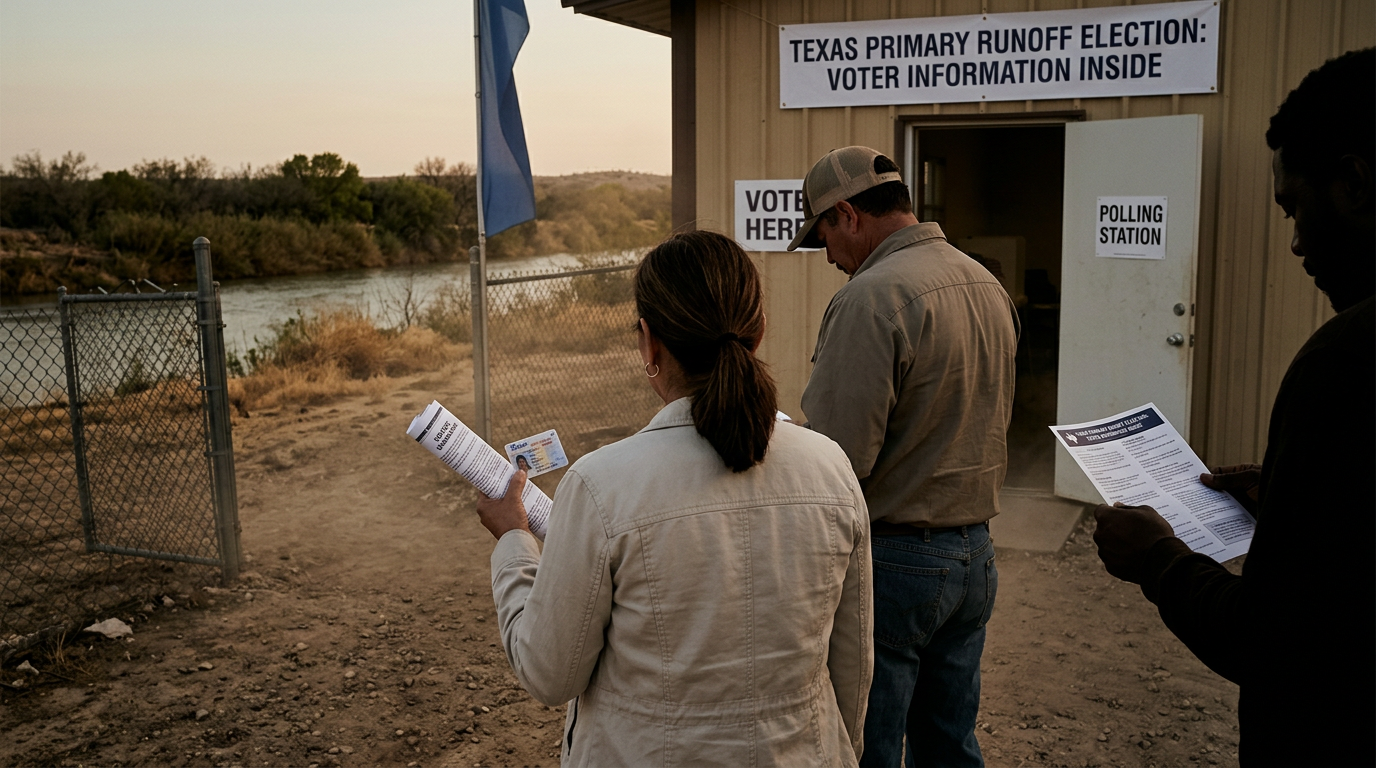
As the May 26 primary runoff election approaches, Texas Secretary of State Jane Nelson is emphasizing the importance of voter preparation and awareness of state-specific polling requirements. The primary runoff serves as a critical secondary phase in the electoral cycle, narrowing down candidates for the general election when no single individual secured a majority during the initial primary. Historically, Texas runoff elections see lower participation rates than general cycles, making proactive outreach from the Secretary of State's office a standard procedure to ensure the electorate is informed about their rights and responsibilities. Secretary Nelson’s recent announcement serves as a final checklist for millions of registered voters across the state's 254 counties. To ensure a smooth experience at the polls, the Secretary of State’s office is highlighting the necessity of verifying registration status and locating correct precinct information. Under Texas law, voters must cast ballots in the specific precinct where they are registered unless a county participates in the countywide polling place program. This year's runoffs involve a variety of positions ranging from local judicial seats to high-stakes legislative nominations, depending on the specific results from the earlier primary vote. Nelson’s guidance is intended to mitigate confusion regarding which races appear on specific ballots and to clarify the rules regarding cross-party voting in the runoff phase.
Texas relevance
These runoff elections are central to the political landscape of Texas, determining who will represent major parties in federal, state, and local contests this November. In the context of Texas election history, the runoff system ensures that candidates have the support of a true majority of their party's voters rather than just a plurality. This process is particularly relevant in deep-red or deep-blue districts where the primary winner is the presumptive favorite for the general election. For residents in major metros like Houston, Dallas, and Austin, as well as rural communities, the outcome of these runoffs can shift the balance of power in the Texas Legislature and impact the state's policy trajectory on issues such as property taxes, border security, and energy regulation.
Understanding the Texas Runoff System
In Texas, if a candidate fails to secure more than 50% of the vote in the initial primary, the top two finishers must face off in a runoff. This system is designed to prevent a candidate from winning with a small fraction of the vote in a crowded field. It forces a more direct comparison between the two leading options and often results in intense, short-term campaigning as the candidates pivot to court the supporters of those who were eliminated in the first round.
A common point of confusion for Texas voters is the 'party lock' rule. If a voter participates in a specific party’s primary in March, they are legally required to stick with that same party for the runoff election. If a voter skipped the initial primary entirely, they are free to choose either the Republican or Democratic runoff, but they cannot switch parties between the primary and the runoff. This ensures party consistency throughout the selection process and prevents strategic 'crossover' voting that could skew results.
Identification Requirements at the Polls
Texas remains one of the states with the most specific photo identification requirements for voting. Secretary Nelson’s office reminds citizens that they must present one of seven approved forms of identification. These include a Texas driver's license, a Texas election identification certificate, a Texas personal ID card, a Texas handgun license, a U.S. military ID with a photograph, a U.S. citizenship certificate with a photograph, or a U.S. passport.
For those who cannot reasonably obtain one of these seven forms of photo ID, the state allows for an alternative. Voters may sign a Reasonable Impediment Declaration and provide a supporting form of ID, such as a certified birth certificate, a current utility bill, a bank statement, or a government check. This balance is intended to secure the ballot box while remaining compliant with federal court rulings regarding voter access. Bringing the correct documentation is the primary way Texas voters can avoid using a provisional ballot, which requires additional steps to verify and count.
The Role of the Secretary of State
As the chief election officer for Texas, Jane Nelson is responsible for overseeing the conduct of elections and providing uniform application of election laws across the state. While individual counties manage the logistics of polling places and ballot counting, the Secretary of State provides the framework and legal guidance to ensure that every county is operating under the same set of rules. This includes the management of the statewide voter registration database and the certification of voting equipment.
The Secretary's office also acts as a liaison between the state and local election officials. In the days leading up to the May 26 runoff, Nelson’s team is tasked with responding to inquiries from county clerks and elections administrators who may face technical or legal hurdles. By issuing these public reminders, the Secretary also aims to reduce the burden on local poll workers by ensuring that the public arrives at the voting booth with the correct information and expectations.
Logistics and Polling Location Verification
One of the most frequent issues on election day is voters showing up to the wrong polling site. Because runoff elections often have fewer polling locations than general elections—sometimes consolidating precincts to save on costs—it is imperative for voters to check the 'VoteTexas.gov' website before leaving their homes. This site provides a 'My Voter Page' feature where individuals can enter their details to find their specific polling location and see a sample ballot.
Furthermore, some Texas counties utilize 'Countywide Polling Places,' which allow voters to cast their ballot at any location within their county of residence. However, this is not a statewide standard. In counties that do not participate in this program, showing up at the wrong precinct will result in being redirected or being forced to vote provisionally. Secretary Nelson encourages all Texans to verify the status of their county’s program to avoid unnecessary travel and delays on May 26.
Impact on Local and State Governance
While national media often focuses on the general election, the runoff is where many of the most significant decisions regarding Texas governance are made. Many legislative districts in Texas are heavily weighted toward one party, meaning the winner of the runoff is effectively the winner of the seat. These contests decide the individuals who will be voting on the state budget, education funding, and infrastructure projects for the next two to four years.
Local races, including those for District Attorney, Sheriff, and County Commissioner, are also frequently decided in these runoffs. These positions have a direct and immediate impact on the daily lives of Texans, influencing local law enforcement priorities and the management of county resources. Secretary Nelson’s call to action highlights that every vote in a runoff carries significant weight due to the typically lower turnout, meaning a small group of engaged citizens can determine the outcome of a major public office.
Final Preparations and Early Voting Context
The reminder from the Secretary of State comes just as the early voting period concludes and the state prepares for the final push on Election Day. Early voting results often provide a glimpse into the level of engagement, but the final tally on May 26 is what determines the winners. Voters who did not take advantage of the early window are encouraged to plan their trip to the polls during off-peak hours, typically in the mid-morning or mid-afternoon, to avoid the rush associated with the start and end of the workday.
Polls in Texas are open from 7:00 AM to 7:00 PM on May 26. As long as a voter is in line by 7:00 PM, they must be allowed to cast their ballot. Secretary Nelson’s office has also reiterated that electronic devices, including cell phones and tablets, are not permitted within 100 feet of a voting station. Voters are encouraged to bring any notes or sample ballots on paper rather than relying on digital copies to ensure they remain in compliance with polling place regulations.
Analysis
The push for voter education by the Secretary of State's office suggests a continued focus on election integrity and efficiency within the Texas model. By highlighting the seven acceptable forms of photo identification, Secretary Nelson is reinforcing the state's stringent voter ID laws while providing pathways for those who may lack traditional documentation via the Reasonable Impediment Declaration. From a strategic standpoint, runoff elections are often battles of attrition where ground games and voter education are paramount. The emphasis on 'VoterReady' initiatives reflects an administrative effort to minimize long lines and procedural errors that have occasionally drawn scrutiny during higher-turnout cycles. For conservative voters, these runoffs represent the final opportunity to vet candidates on their adherence to party platforms before the general election field is finalized.
Source attribution
This story was reported using a public release from the Texas Secretary of State. Keep TX Red rewrote the coverage independently and links to the official statement for verification.
Frequently Asked Questions
- Can I vote in the Republican runoff if I voted in the Democratic primary?
- No. In Texas, once you vote in a party's primary, you are considered affiliated with that party for the remainder of the election year. You can only vote in that same party's runoff. If you did not vote in any primary, you may choose either party's runoff to participate in.
- What should I do if my photo ID is expired?
- For voters aged 18 to 69, the acceptable photo ID may be expired for up to four years. For voters aged 70 or older, the photo ID may be expired for any length of time as long as it is otherwise valid. If your ID has been expired longer than four years and you are under 70, you may need to use the Reasonable Impediment Declaration process.
- Where can I find a sample ballot for the runoff?
- Sample ballots are generally available on your specific County Clerk or Elections Administrator's website. You can also visit VoteTexas.gov and use the 'What's on the Ballot' tool to see the specific contests you are eligible to vote in based on your registration address.
Official Sources
Take the next step
Browse the Newsroom →Read more about Keep Texas Red → Our full guide to what Keep Texas Red means and why Texans support it.
Related Articles

Get Texas updates delivered weekly.
Independent Texas reporting on politics, policy, and daily life. One email a week. Unsubscribe anytime.
Keep TX Red Newsroom
The Keep Texas Red Editorial Staff produces nonpartisan explainers, policy breakdowns, and educational resources to help Texans understand how their government works. All content is reviewed for accuracy and updated regularly.
About Keep TX Red →