Texas primary: Early voting begins with high voter engagement recorded
Texas Secretary of State Jane Nelson updates voters on primary participation and reminds residents to use official resources for accurate ballot info.
Editorial disclaimer: Opinions and analysis on Keep TX Red are editorial content — not statements of fact. See our editorial standards.
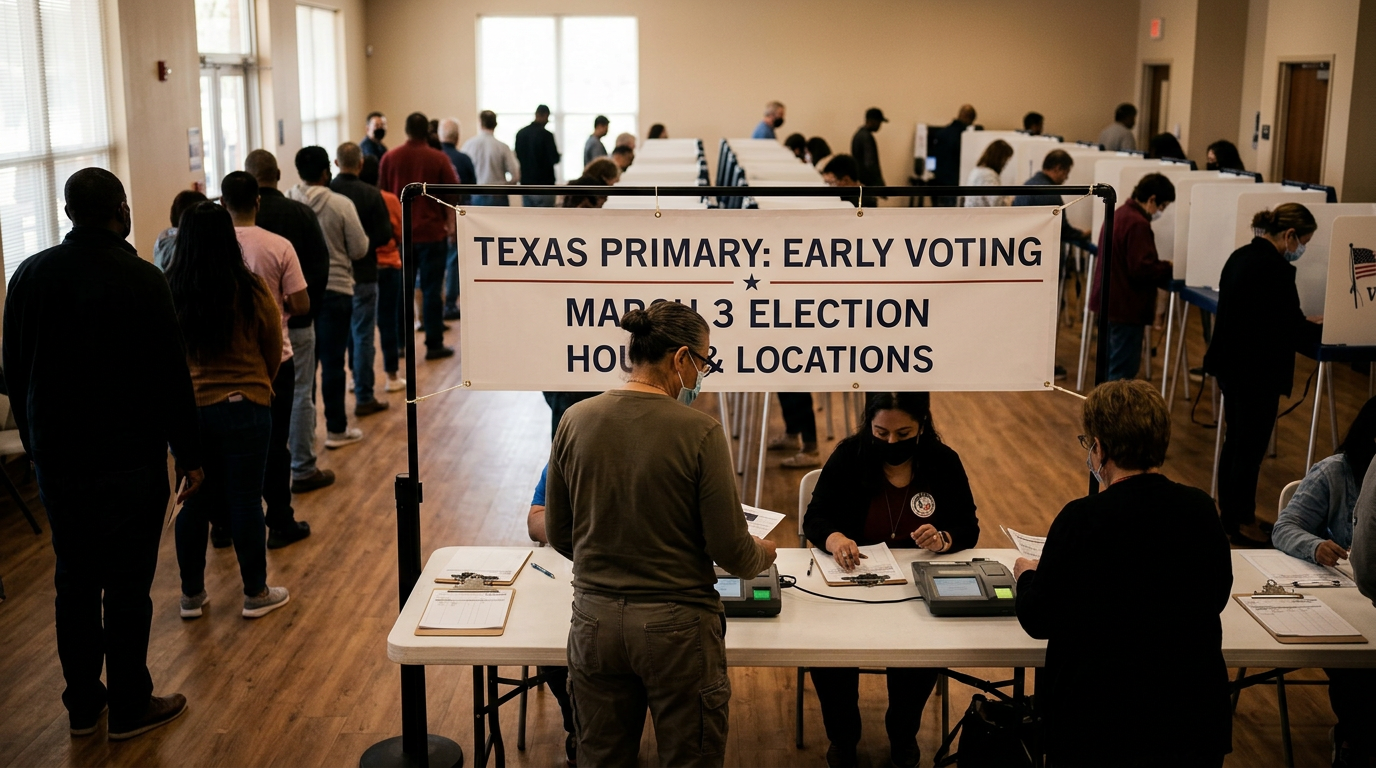
As the March 3 Primary Election nears, Secretary of State Jane Nelson has officially inaugurated the early voting period, reporting a significant surge in voter interest across the state’s 254 counties. This period is a critical window for Texas residents to cast their ballots before the traditional Tuesday rush, providing a flexible schedule for those balancing work and family commitments. The Secretary’s office is currently monitoring polling location operations to ensure that the infrastructure of Texas democracy remains robust and secure during this high-traffic timeframe. Historically, Texas has seen a steady increase in early voting participation since the state transitioned to more flexible voting windows in the late 20th century. By allowing residents to vote up to seventeen days before an actual election day, Texas has consistently sought to mitigate long lines and technical bottlenecks that can occur during high-stakes primary contests. Secretary Nelson’s recent updates emphasize that the state is prepared for the influx of voters, though she stresses the importance of individual preparedness regarding identification and polling locations.
Texas relevance
Every primary cycle in Texas serves as a litmus test for the state's logistical capacity to handle millions of unique ballots. Given Texas’s status as one of the fastest-growing states in the union, the pressure on county election administrators in hubs like Harris, Dallas, and Tarrant is immense. This current early voting window is particularly relevant because primary results in Texas often dictate the long-term policy direction of the state, given the historical dominance of certain party platforms in specific geographic regions. Local voters must be aware that participating in the primary is the most direct way to influence the candidate pool for the upcoming general election in November, making these early weeks essential for civic health.
The Evolution of Early Voting in the Lone Star State
Texas was one of the early adopters of expansive early voting periods, recognizing that a single day of voting was insufficient for a state with such vast geographic distances. Over the decades, the legislature has fine-tuned the process to allow for consistent hours and standardized procedures across diverse jurisdictions, from the high-rises of Houston to the rural stretches of West Texas. This system allows election officials to identify and troubleshoot mechanical or software issues in polling machines before the peak demand of Election Day.
The current window for the March primary follows this tradition of accessibility. Voters are no longer bound to a single precinct on their neighborhood block during the early voting phase; in many counties, they can utilize any authorized ‘vote center’ within their county of residence. This convenience is a cornerstone of the modern Texas election framework, designed to maximize turnout by fitting the democratic process into the busy lives of modern residents.
Security Protocols and Voter Identification Requirements
A central component of Secretary Nelson’s update involves the strict adherence to Texas voter ID laws. To participate in the current primary, Texans must present one of the seven acceptable forms of photo identification. This list includes a Texas driver's license, a Texas election identification certificate, a Texas personal identification card, a Texas handgun license, a United States military identification card, a United States citizenship certificate, or a United States passport.
For those who cannot reasonably obtain one of these seven forms of photo ID, the state provides a 'Reasonable Impediment Declaration' process. These security measures are promoted by the Secretary of State as vital tools for preventing fraud and ensuring that every vote cast is legitimate. The state's focus on identity verification is intended to build transparency and trust in the final tally, which is especially critical during a primary where thin margins often decide the winner.
Technical Infrastructure and Polling Site Readiness
Behind the scenes, the Secretary of State’s office works in tandem with the Texas Department of Information Resources to protect the digital components of the election. While the actual act of voting in Texas is typically done on machines that are not connected to the internet, the registration databases and reporting systems require high-level cybersecurity protocols. Secretary Nelson’s report indicates that these systems have been thoroughly audited ahead of the March 3 date.
Local officials have also been tasked with ensuring that all physical polling locations are compliant with the Americans with Disabilities Act (ADA). This ensures that every Texan, regardless of physical ability, can navigate the voting booth with dignity and privacy. The state provides specialized equipment, such as tactile ballot markers and audio-assisted voting devices, to accommodate those with visual or mobility impairments.
The Strategic Importance of the March Primary
The March 3 Primary is not merely a preliminary round; for many Texas districts, it is the most consequential vote of the year. Because of the way district lines are drawn, many seats in the Texas House and Senate are effectively decided during the primary. This makes the early voting period the primary battlefield for different factions within the political parties to present their visions for the state’s fiscal and social future.
Issues such as property tax relief, border security funding, and the allocation of the state’s massive budget surplus are all at stake in these races. Candidates who successfully mobilize their supporters during the early voting phase often build an insurmountable momentum. Therefore, the Secretary of State’s efforts to increase awareness are aimed at ensuring that the eventual nominees truly represent the will of their respective party’s constituents.
Navigating Official Resources for Voter Information
Secretary Nelson has been vocal about the dangers of misinformation during the election cycle. She encourages all Texans to verify their registration status and find their specific polling hours through the official state portal. This reduces the risk of voters arriving at shuttered locations or carrying the wrong documentation. The 'VoteTexas.gov' website serves as the definitive clearinghouse for all such data, providing real-time updates as they become available.
The push for utilizing official channels also extends to the interpretation of election results. On the night of March 3, the Secretary of State’s website will be the primary source for certified returns. By centralizing this information, the state aims to provide a clear, unvarnished look at the numbers as they come in from the 254 county clerks, preventing the spread of unverified rumors that can sometimes circulate on partisan platforms.
Future Outlook: Preparing for the General Election
While the current focus is on the March 3 Primary, the logistical operations being tested now serve as a blueprint for the General Election in November. The turnout rates observed during this early voting period will give state officials an idea of where more resources might be needed later in the year. If certain counties see record-breaking participation, the state may look into expanding the number of machines or staff allocated to those regions to prevent bottlenecks.
Furthermore, the primary serves as a training ground for the thousands of volunteers and election judges who staff the polls. These individuals are essential to the functioning of Texas elections. Their experience during this current window will refine the state's ability to execute a seamless statewide election when the national spotlight turns back toward Texas in the fall.
Analysis
Opinion: The push for Texans to rely on official sources from the Secretary of State's office is more than just a logistical reminder; it is a defensive measure against the fragmented information landscape of the digital age. By steering voters toward 'VoteTexas.gov' and away from third-party social media aggregators, state officials are attempting to standardize the voting experience. This strategy helps maintain public confidence in the integrity of the count, ensuring that discrepancies in polling hours or location changes do not lead to disenfranchisement through confusion. Furthermore, the emphasis on the primary highlights a shift in Texas political strategy, where the most significant battles for the state's future are now fought within party ranks rather than solely across party lines during the general election cycles.
Source attribution
This story was reported using a public release from the Texas Secretary of State. Keep TX Red rewrote the coverage independently and links to the official statement for verification.
Frequently Asked Questions
- What identification do I need to vote in the Texas primary?
- You must present one of seven forms of valid photo ID, such as a Texas Driver License, Passport, or Military ID. If you cannot obtain one, you may fill out a Reasonable Impediment Declaration and provide a supporting document like a utility bill or bank statement.
- Can I vote at any location during the early voting period?
- In many Texas counties that use the 'Countywide Polling Place Program,' you can vote at any location within your county. However, you should check with your specific county elections office or the Secretary of State’s website to confirm the rules for your jurisdiction.
- Why is the March 3 Primary important for Texans?
- Texas primaries determine which candidates will represent each political party on the November ballot. Because many areas in Texas lean heavily toward one party, the winner of the primary is often the presumed winner of the general election.
Official Sources
Take the next step
Browse the Newsroom →Read more about Keep Texas Red → Our full guide to what Keep Texas Red means and why Texans support it.
Related Articles

Get Texas updates delivered weekly.
Independent Texas reporting on politics, policy, and daily life. One email a week. Unsubscribe anytime.
Keep TX Red Newsroom
The Keep Texas Red Editorial Staff produces nonpartisan explainers, policy breakdowns, and educational resources to help Texans understand how their government works. All content is reviewed for accuracy and updated regularly.
About Keep TX Red →