Texas Mail-In Ballot Deadlines Approach for March 2026 Primary Elections
Texas Secretary of State Jane Nelson reminds eligible voters that mail ballot applications must be received by local clerks no later than February 20.
Editorial disclaimer: Opinions and analysis on Keep TX Red are editorial content — not statements of fact. See our editorial standards.
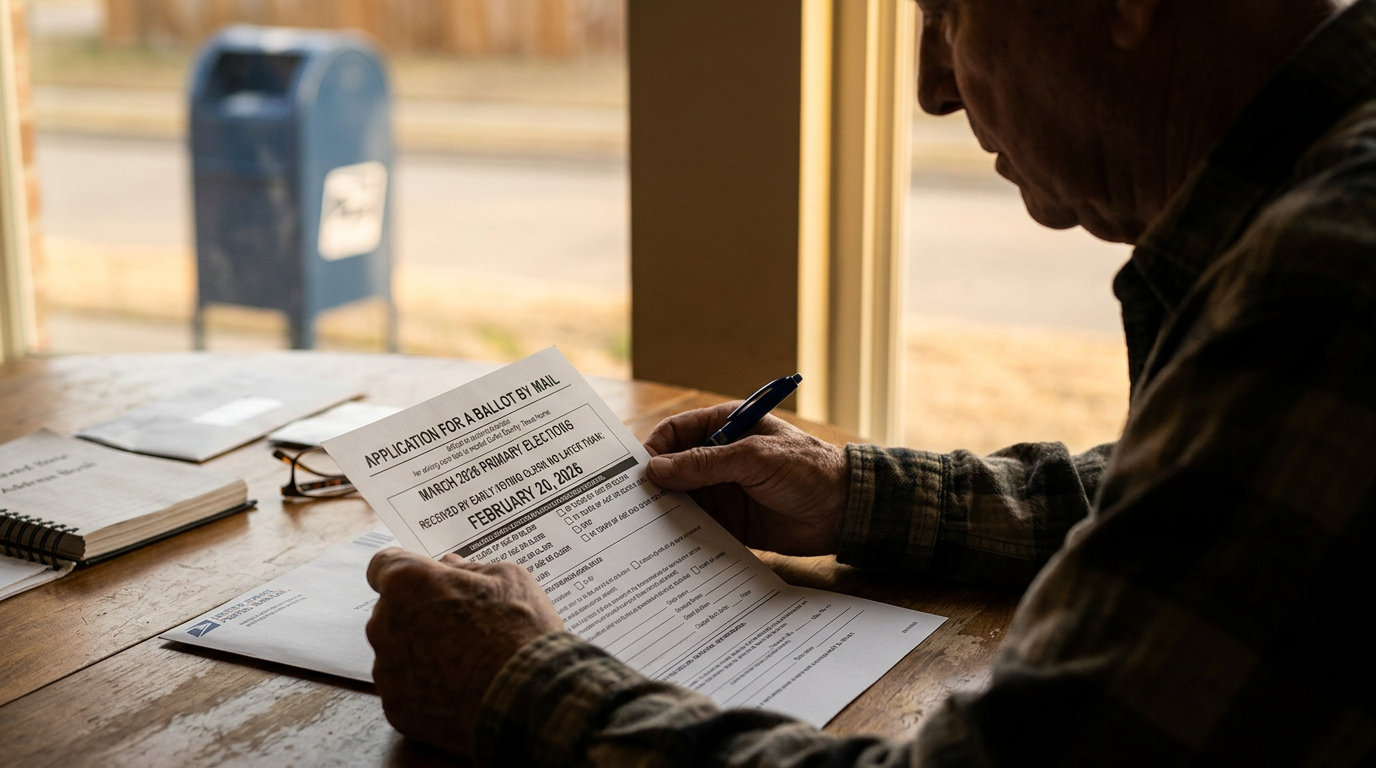
As the 2026 primary election cycle gains momentum, Texas Secretary of State Jane Nelson has issued a formal reminder regarding the fast-approaching deadline for mail-in ballot requests. Eligible voters across the state's 254 counties must ensure their applications for a ballot by mail are received by their respective early voting clerks no later than February 20, 2026. This date serves as a firm cutoff for participation via the postal system, and state officials emphasize that mere postmarking by this date is insufficient; the physical application must reach the clerk's office by the close of business. Historically, Texas has maintained some of the most specific eligibility requirements in the nation for mail-in voting, a policy rooted in the state's long-standing preference for in-person democratic participation. Over the last several legislative sessions, Texas lawmakers have refined these laws to enhance security protocols, requiring voters to provide specific identification numbers that match their registration records. This upcoming deadline represents the first major administrative hurdle for voters preferring to cast their ballots from home due to age, disability, or absence from their county of residence.
Texas relevance
This update is critical for all 254 counties in Texas, from suburban hubs like Collin and Fort Bend to the vast rural stretches of West Texas. Since election administration is decentralized to the county level in the Lone Star State, the February 20 deadline requires coordinated efforts between citizens and local election administrators. Failure to meet this deadline effectively limits a voter's options to in-person early voting or Election Day participation, which may not be feasible for those with mobility issues or those working outside their home county. Furthermore, recent changes to the Texas Election Code mean that voters must be hyper-vigilant about filling out their forms correctly to avoid rejection under the state's strict ID verification laws.
Specific Eligibility Requirements for Texas Voters
In Texas, voting by mail is not a universal right but a privilege reserved for specific categories of citizens. To be eligible to request a mail-in ballot for the March Primary, a voter must meet at least one of five criteria established by the Texas Election Code. This include being 65 years of age or older, having a certified disability, or being out of the county during the entire early voting period and on Election Day.
Additionally, voters who are expected to give birth within three weeks before or after Election Day, or those confined in jail but otherwise eligible to vote, may also apply. It is important for voters to remember that even if they qualify, they must submit a new application every calendar year. An application submitted for a previous November general election does not automatically carry over to the following year's primary cycle, necessitating a proactive approach from the electorate.
Secretary Nelson’s office has emphasized that voters should check their status and eligibility well before the February deadline. Because the state requires specific ID numbers—either a Texas Driver’s License number or the last four digits of a Social Security number—on the application, voters often face rejection if they provide a number that does not match their original voter registration file. This dual-verification system is designed to prevent fraudulent requests.
Navigating the Identification Verification Process
One of the most significant changes to Texas voting laws in recent years is the requirement for matching identification numbers on mail-in ballot applications. When filling out the request form, voters are encouraged to provide both their driver's license number and the last four digits of their Social Security number if they are unsure which one is on their original registration record. This 'belt and suspenders' approach reduces the likelihood of the application being flagged for a mismatch.
If an application is rejected due to an ID error, the county clerk is required to notify the voter. However, if the rejection occurs close to the February 20 deadline, there may be insufficient time for the voter to correct the error and receive a ballot via mail. This makes early submission an essential strategy for those who rely on this method of voting to make their voices heard.
The Secretary of State’s office provides an online portal for tracking the status of both the application and the subsequent ballot. This transparency tool allows Texans to see when their request was received, when the ballot was mailed, and finally, when the completed ballot was received back at the county office. Utilizing this digital resource can provide peace of mind in a high-stakes primary season.
The Role of County Early Voting Clerks
While the Secretary of State provides the guidelines and oversight, the actual heavy lifting of election administration falls to the local Early Voting Clerks in each county. These officials are responsible for reviewing thousands of applications in the weeks leading up to the February deadline. In large counties like Harris, Dallas, and Tarrant, the volume of mail can be immense, requiring dedicated staff to ensure every valid request is processed accurately.
Once a clerk receives an application, they must verify the voter's registration status and ensure the applicant is truly eligible for a mail-in ballot. For voters who are out of the county, the clerk must mail the ballot to an address outside of that county, such as a college dormitory or a temporary job site. This level of logistical detail ensures that the system is not being abused while still serving those who are genuinely unable to reach a polling place.
Communication between the state and the counties is vital during this period. Secretary Nelson has been active in providing training and resources to local clerks to ensure the law is applied consistently across all jurisdictions. Consistency is key to avoiding legal challenges and ensuring that every Texan who qualifies for a mail-in ballot receives one in a timely manner.
Deadlines and Delivery Methods
The February 20 deadline is fixed by law, but the method of delivery is flexible. Voters can submit their applications via the U.S. Postal Service, common contract carriers like FedEx or UPS, or in person at the county election office until the deadline. Some counties also allow for applications to be sent via fax or email, but there is a significant catch: the hard copy must still be received by the clerk within four business days of the electronic transmission.
Because of the complexity of the 'fax then mail' rule, election experts generally advise sticking to traditional mail or in-person delivery well in advance of the cutoff. Relying on the mail system during the final week can be risky, especially in rural areas where mail transit times can fluctuate. The 2026 primary cycle serves as a dry run for the high-turnout midterms and gubernatorial races, making these administrative habits more important than ever.
Voters should also be aware that the actual ballot, once received, has its own set of deadlines. For the March primary, the completed ballot must generally be received by 7:00 PM on Election Day if it is not postmarked, or by 5:00 PM the following day if it was postmarked by Election Day. However, the first hurdle—the application—is the most common stumbling block for voters.
Impact of the March Primary on Texas Policy
Primary elections in Texas are often more consequential than the general elections due to the state's political climate. In many districts, the winner of the primary is the de facto winner of the seat. Therefore, ensuring that all eligible voters can participate through their preferred and legal method is a cornerstone of the state's political infrastructure. The March 2026 primary will determine the direction of major state agencies and legislative priorities for years to come.
Issues such as property tax reform, border security, and education funding are frequently decided during the primary debates. For elderly voters or those with disabilities, the ability to vote by mail allows them to weigh in on these topics without the physical strain of waiting in long lines at polling stations. Secretary Nelson’s reminder is a call to action for these specific demographics to secure their participation early.
As the landscape of Texas continues to shift with population growth and demographic changes, the Secretary of State's role in disseminating clear, accurate information becomes more vital. By clarifying the February 20 deadline, the state aims to reduce confusion and ensure that the primary election runs smoothly, maintaining the integrity of the Texas electoral system.
Analysis
The upcoming deadline underscores the tension between convenience and security that defines Texas election policy. While some states have moved toward universal mail-in voting, Texas continues to treat it as a limited exception rather than the rule. By maintaining a firm receipt deadline (rather than a postmark deadline), the Secretary of State's office places the burden of logistics on the voter, a move that proponents argue prevents last-minute administrative chaos and ensures that only valid, timely requests are processed. This strict adherence to statutory deadlines is a hallmark of the current Texas executive branch's approach to election integrity.
Source attribution
This story was reported using a public release from the Texas Secretary of State. Keep TX Red rewrote the coverage independently and links to the official statement for verification.
Frequently Asked Questions
- What happens if my application is postmarked February 20 but arrives later?
- Under Texas law, the application will be considered late and will be rejected. The law specifies that the clerk must 'receive' the application by the deadline, meaning physical possession by the office is required, not just the act of mailing it.
- Can I apply for a mail-in ballot if I just don't want to go to the polls in person?
- No. Texas does not allow 'no-excuse' absentee voting. You must meet one of the specific legal criteria, such as being 65 or older, having a disability, being incarcerated but eligible, being pregnant near the election date, or being absent from the county during the voting period.
- How can I fix an error on my application if it is rejected?
- You can use the Secretary of State's Ballot Tracker website to identify and correct certain identification errors. However, if the error is related to something other than your ID number, you may need to submit a brand-new application, provided the February 20 deadline has not passed.
Official Sources
Take the next step
Browse the Newsroom →Read more about Keep Texas Red → Our full guide to what Keep Texas Red means and why Texans support it.
Get Texas updates delivered weekly.
Independent Texas reporting on politics, policy, and daily life. One email a week. Unsubscribe anytime.
Keep TX Red Newsroom
The Keep Texas Red Editorial Staff produces nonpartisan explainers, policy breakdowns, and educational resources to help Texans understand how their government works. All content is reviewed for accuracy and updated regularly.
About Keep TX Red →