Dallas Mavericks: Dominating the Southwest Division Landscape
Discover how the Dallas Mavericks are shaping the future of the Southwest Division. From generational superstars to defensive anchors, explore the roster identity that keeps North Texas in title contention every year.
Editorial disclaimer: Opinions and analysis on Keep TX Red are editorial content — not statements of fact. See our editorial standards.
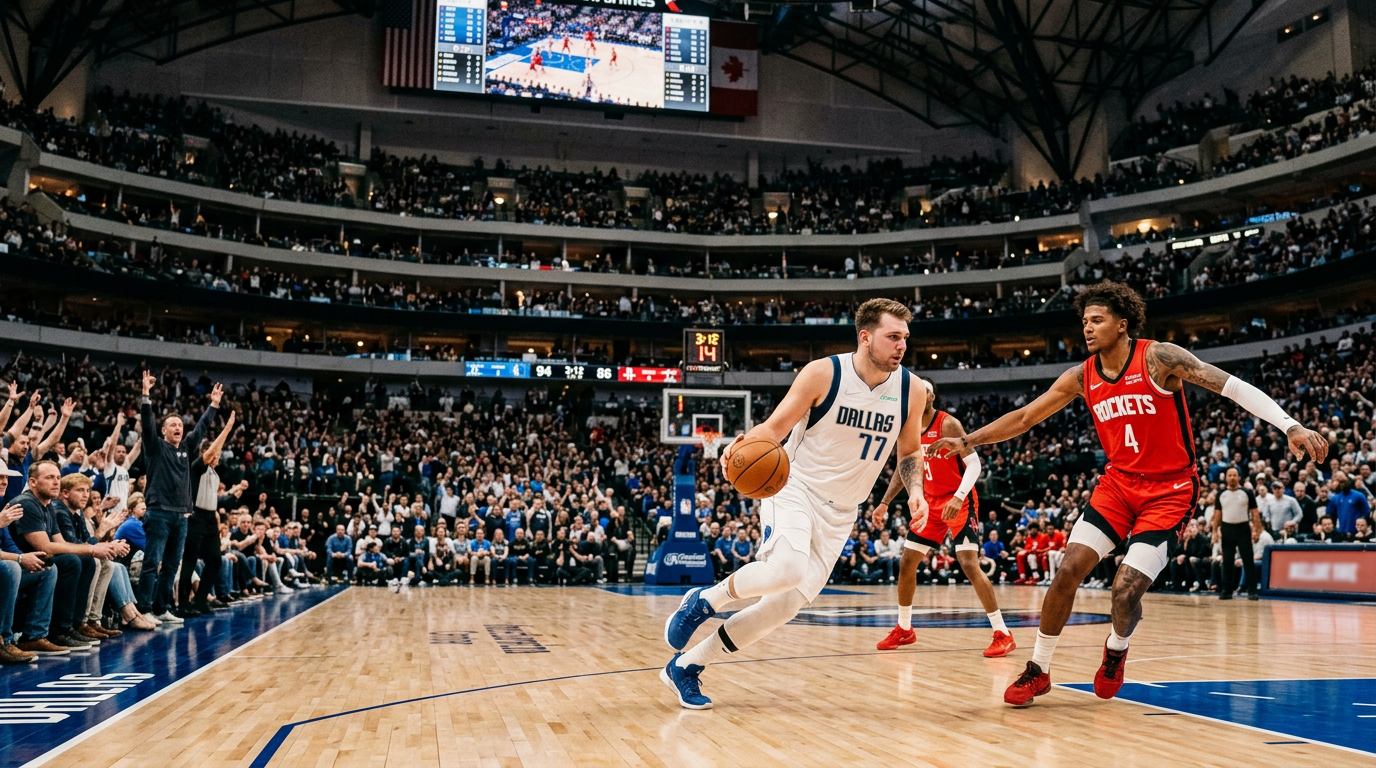
In the heart of North Texas, the Dallas Mavericks have established themselves as a perennial powerhouse, not just within the state, but across the entire NBA landscape. Since the turn of the millennium, the franchise has transformed from an underdog to a gold standard of consistency, fueled by legendary superstars and a passionate fanbase known as MFFL—Mavs Fans For Life. As the team navigates the rigors of the Southwest Division, their identity remains rooted in high-octane offense and a growing commitment to defensive grit.
The modern era of Mavericks basketball is defined by a blend of international flair and veteran savvy. Playing out of the American Airlines Center, the team carries the weight of a championship legacy while striving to add a second Larry O'Brien Trophy to the display case. For fans following the team, the Southwest Division provides a unique gauntlet of rivalries, featuring intense battles against Texas neighbors and regional foes that test the Mavs' resolve throughout the long 82-game campaign.
Understanding the Mavericks' position requires a deep dive into how the roster is constructed and the philosophy behind their coaching staff. Under the leadership of head coach Jason Kidd, a franchise icon himself, the team has shifted its focus toward a balanced approach. While the brilliance of elite playmaking remains the centerpiece, the integration of versatile wings and athletic rim protectors has become the blueprint for postseason success in the modern NBA.
The Engine of the Offense: Elite Playmaking
At the core of the Dallas Mavericks' strategy is a heavy reliance on elite individual playmaking that creates opportunities for the entire roster. The offensive system is designed to maximize the vision and scoring gravity of their primary ball-handlers. This approach often forces opposing defenses into impossible split-second decisions: either commit to stopping the drive and leave shooters open on the perimeter, or stay home on shooters and allow a layup.
This dynamic has allowed the Mavericks to consistently rank among the most efficient offensive units in the league. By surrounding their primary stars with '3-and-D' specialists—players who can both knock down three-pointers and defend multiple positions—Dallas creates space on the floor. This spacing is vital in the Southwest Division, where defensive schemes are often tailored specifically to slow down the high-speed Dallas attack.
Beyond just individual brilliance, the offensive philosophy emphasizes the 'extra pass.' Even with dominant scorers on the floor, the Mavericks' success often hinges on the willingness of the supporting cast to move the ball. When the ball is swinging from side to side, the Mavs become an unpredictable force that can exploit even the most disciplined defensive rotations in the Western Conference.
Rivalries in the Southwest Division
The Southwest Division is arguably one of the most culturally rich and competitive divisions in professional sports. For the Dallas Mavericks, this means frequent matchups against the Houston Rockets and San Antonio Spurs. These 'I-35' and 'I-45' rivalries are more than just games on a schedule; they are battles for regional bragging rights that stretch back decades. Each victory against a Texas rival resonates deeply with the local fanbase.
While the Texas teams form the heart of the division, the inclusion of the Memphis Grizzlies and New Orleans Pelicans adds layers of complexity to the season. Each of these teams brings a different style of play—from the grit and grind of Memphis to the high-flying athleticism of New Orleans. To win the division, the Mavericks must prove they can handle physical, bruising contests just as well as fast-paced track meets.
The grind of the Southwest Division helps prepare the Mavericks for the intensity of the NBA Playoffs. Facing familiar opponents who know your sets and tendencies forces a level of execution that isn't always required against out-of-conference foes. For Dallas, establishing dominance in their own backyard is the first step toward a deep playoff run and securing home-court advantage in the postseason.
The Defensive Evolution under Jason Kidd
Since taking the helm, Jason Kidd has placed a significant emphasis on the defensive end of the floor, a shift that has redefined the team's ceiling. Historically known as a team that tried to simply outscore opponents, the Mavericks have transitioned into a squad that values stops and transitions. This defensive identity is built on communication, secondary rim protection, and active hands in passing lanes.
The Mavericks' defensive scheme often utilizes a 'bend but don't break' mentality. They prioritize protecting the paint and forcing opponents into contested mid-range jump shots, which are statistically less efficient. This strategy requires immense discipline from the frontcourt, where centers and forwards must be mobile enough to switch onto smaller guards while still recovering to rebound the ball.
Rebounding has become a critical metric for the Mavs' success. By limiting opponents to a single shot per possession, Dallas can transition quickly into their offensive sets before the defense can get set. This synergy between defensive stops and offensive transition is where the Mavericks are most dangerous, often turning a close game into a double-digit lead in a matter of minutes.
The Role of the Supporting Cast
While the headlines often focus on the superstars, the Dallas Mavericks' longevity is supported by a robust group of role players who understand their assignments. The front office has prioritized finding players who fit a specific 'Mavs mold'—unselfish, high-IQ athletes who can thrive in a high-pressure environment. These players often provide the 'dirty work' like setting hard screens and diving for loose balls.
The depth of the roster is particularly important during the grueling mid-season stretch. Injuries and fatigue are inevitable, and the Mavericks rely on their bench to maintain the team's standard of play. Whether it is a backup point guard directing the second unit or a reserve wing providing a spark of energy, the collective effort of the roster ensures that the team remains competitive regardless of who is in the starting five.
Fans have grown to appreciate these 'unsung heroes' who may not lead the box score but contribute to the winning culture. The chemistry in the locker room is often cited as a reason for the team's resilience. In Dallas, the philosophy is that every player, from the first man on the roster to the last, has a role in achieving the ultimate goal of a championship.
American Airlines Center: The MFFL Experience
The American Airlines Center (AAC) serves as the cathedral of Dallas basketball. Known for its incredible acoustics and passionate atmosphere, the arena becomes a literal home-court advantage. Fans in North Texas are some of the most loyal in the NBA, frequently selling out the building and creating a sea of blue and silver that intimidates visiting teams.
Attending a Mavericks game is more than just watching basketball; it is an event. From the high-energy introductions to the 'Mavs ManiAACs' and the 'D-Town Crew,' the entertainment value is top-tier. However, at the center of it all is the basketball knowledge of the crowd. Dallas fans are known for their high 'hoops IQ,' recognizing defensive rotations and celebrating the small victories on the court that casual observers might miss.
The proximity of the fans to the court at the AAC creates an intimate environment that players often praise. The energy of the crowd often fuels late-game comebacks, providing a psychological boost during the 'clutch' minutes of tight Southwest Division battles. For any visiting team, walking into the AAC means preparing for a hostile, loud, and unrelenting environment.
Strategic Roster Construction and Future Outlook
The Mavericks' front office is constantly looking for ways to improve through strategic trades and scouting. The team's philosophy balances immediate win-now moves with long-term sustainability. By navigating the complexities of the NBA salary cap, they aim to keep a competitive window open for as long as possible, ensuring that the franchise remains a destination for top-tier talent.
One of the key aspects of the Mavericks' strategy is their international scouting. Following the success of Dirk Nowitzki, the team has continued to look globally for talent that can adapt to the NBA game. This international influence has given the Mavs a unique stylistic edge, often featuring players with professional experience in Europe who bring a different perspective on ball movement and court vision.
Looking ahead, the Mavericks are positioned to remain a force in the Western Conference for years to come. With a core that blends youth and experience, the team is capable of adapting to the evolving trends of the league. Whether the game shifts toward more perimeter shooting or returns to a more interior-focused style, the Dallas Mavericks have the versatility to compete at the highest level.
Championship DNA and the Legacy of Success
Success for the Mavericks is measured in championships. The 2011 title remains the benchmark for the organization, serving as a reminder of what is possible when talent, coaching, and timing align. The current iteration of the team carries that legacy forward, understanding that wearing the Dallas jersey comes with an expectation of excellence and a 'never quit' attitude.
This championship DNA is reflected in the way the team handles adversity. Throughout a long season, there are inevitable slumps and tough losses, but the Mavericks have built a reputation for bouncing back. The leadership within the locker room ensures that the team stays focused on the bigger picture: arriving at the postseason in peak physical and mental condition.
As the Mavericks continue their journey through the Southwest Division and beyond, they do so with the support of a city that lives and breathes basketball. The connection between the team and the Dallas community is unbreakable, fueled by decades of memorable moments and a shared desire to see the Mavericks back at the top of the NBA mountain. For the MFFL, the best is yet to come.
Frequently Asked Questions
- What teams are in the NBA Southwest Division with the Mavericks?
- The Dallas Mavericks compete in the Southwest Division alongside the Houston Rockets, San Antonio Spurs, Memphis Grizzlies, and New Orleans Pelicans.
- Where do the Dallas Mavericks play their home games?
- The Mavericks play at the American Airlines Center, located in the Victory Park neighborhood of Dallas, Texas.
- Who is the head coach of the Dallas Mavericks?
- The team is currently led by head coach Jason Kidd, who was also a key player on the Mavericks' 2011 championship team.
- How many NBA championships have the Dallas Mavericks won?
- The Dallas Mavericks have won one NBA championship, which they secured in 2011 by defeating the Miami Heat.
- What does 'MFFL' stand for?
- MFFL stands for 'Mavs Fan For Life,' a slogan used to describe the dedicated and loyal fanbase of the Dallas Mavericks.
- How does the team approach the NBA Draft and scouting?
- The Mavericks are known for a global scouting approach, often finding high-impact players from European leagues as well as the traditional collegiate system.
Official Sources
Take the next step
Browse the Newsroom →Read more about Keep Texas Red → Our full guide to what Keep Texas Red means and why Texans support it.
Get Texas updates delivered weekly.
Independent Texas reporting on politics, policy, and daily life. One email a week. Unsubscribe anytime.
Keep TX Red Sports Desk
Texas sports & culture
The Keep TX Red Sports Desk covers the teams and leagues that shape Texas identity — the NFL's Cowboys and Texans, MLB's Rangers and Astros, the NBA's Spurs, Mavericks, and Rockets, plus the Friday-night high-school football culture that defines fall in the Lone Star State.
More from Keep TX Red Sports Desk →