Unlocking the Dallas Cowboys Coaching Vision and Strategy
Explore the coaching philosophies and strategic identity behind the Dallas Cowboys as America's Team continues its pursuit of gridiron excellence and a return to championship glory.
Editorial disclaimer: Opinions and analysis on Keep TX Red are editorial content — not statements of fact. See our editorial standards.
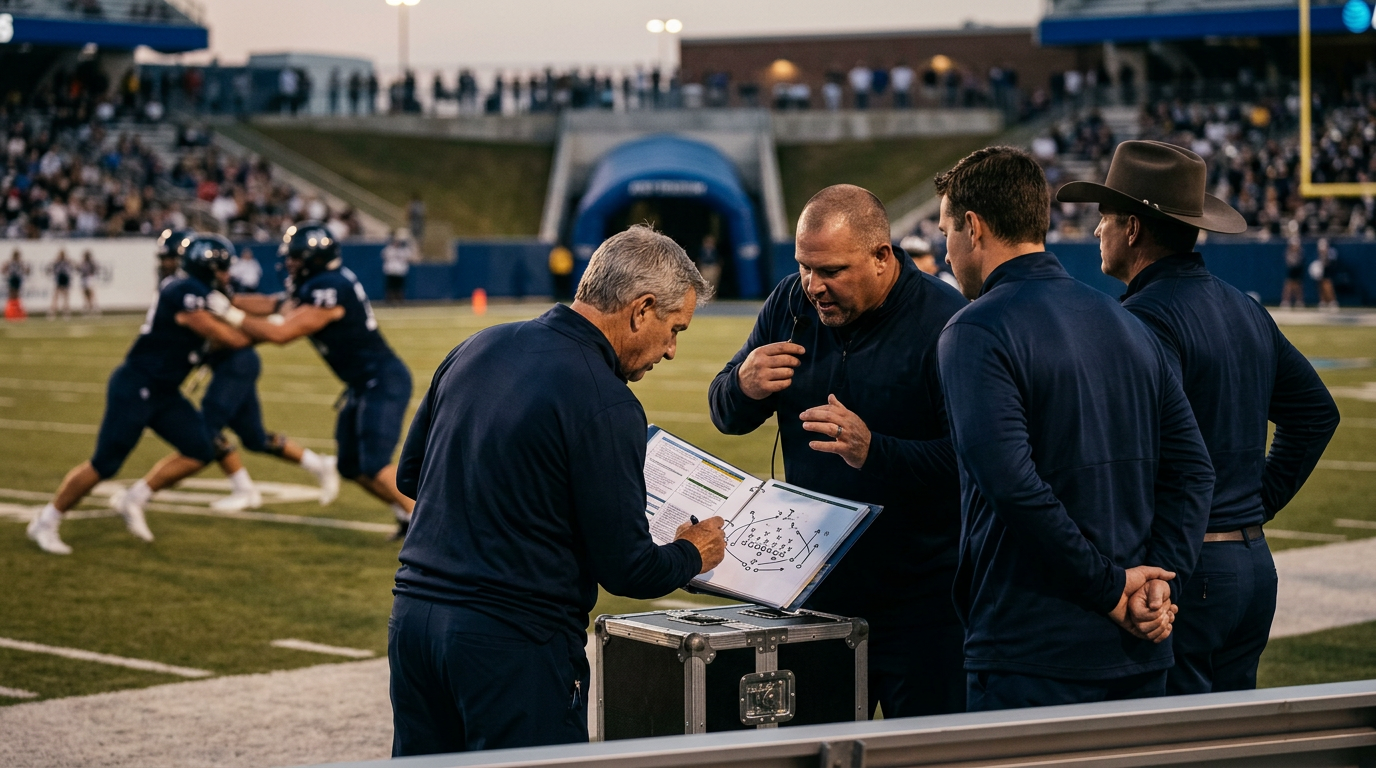
In the heart of the Lone Star State, few institutions carry as much weight, expectation, and prestige as the Dallas Cowboys. For decades, the organization has been defined not just by the stars on their helmets but by the minds on the sidelines. The coaching staff of the Dallas Cowboys operates under a unique microscope, balancing the high-octane demands of an international brand with the gritty, tactical realities of professional football. To understand the current era of Cowboys football is to understand a blend of traditional fundamentalism and modern analytical evolution.
The identity of 'America’s Team' is rooted in a culture of excellence established by legendary figures like Tom Landry and Jimmy Johnson. Today, that torch is carried by a staff tasked with modernizing the approach while maintaining the standards that Texas fans demand. From the intricate details of the West Coast offense to the aggressive, takeaway-oriented schemes on defense, every decision made at The Star in Frisco ripples through the entire NFL landscape. This overview explores the philosophies, leadership styles, and tactical foundations that define the men leading the Dallas Cowboys onto the field each week.
The Head Coach and Offensive Play-Calling Philosophy
At the helm of the Dallas Cowboys' sideline stands a veteran head coach whose philosophy is rooted in a modernized version of the West Coast offense. The central tenet of this approach is to use the passing game as an extension of the run, emphasizing quick timing, precision routes, and putting playmakers in space to maximize yards after the catch. This shift represents a transition from previous vertical-heavy schemes to one that prioritizes efficiency and ball security. By shortening the quarterback's internal clock, the coaching staff aims to neutralize heavy pass rushes and keep the offense in manageable down-and-distance situations.
Beyond the X’s and O’s, the head coaching philosophy in Dallas is built around the concept of 'complementary football.' This means the offense is expected to manage the game clock effectively to aid the defense, while the defense aims to create short fields for the offense through turnovers. For Texas fans, this often translates to a balanced attack. While the modern NFL leans heavily into the pass, the Cowboys' leadership frequently emphasizes the importance of a physical running game to 'wear down' opponents in the fourth quarter, a strategy that aligns with the rugged football identity of the region.
Preparation is another cornerstone of the staff's approach. The coaching cycle at The Star involves rigorous situational football drills, focusing on two-minute drills, red-zone efficiency, and fourth-down decision-making. The goal is to create a team that is mentally resilient and tactically prepared for any scenario. This analytical mindset is paired with a veteran's intuition, allowing the coach to pivot strategies mid-game based on the flow of the contest and the specific weaknesses of the opponent’s secondary or defensive front.
Defensive Identity: Aggression and Takeaways
The defensive side of the ball for the Dallas Cowboys has evolved into a high-risk, high-reward system that thrives on speed and disruption. The philosophy is simple: pressure the quarterback and attack the football. Rather than utilizing a passive 'bend-but-don't-break' style, the Cowboys' defensive coaches prioritize explosive athletes who can win individual matchups at the line of scrimmage. This aggressive posture is designed to force opposing offenses into mistakes, leading to the turnovers that have become a hallmark of the unit in recent seasons.
Positionless football has also become a key part of the defensive ideology in Dallas. Fans often see defensive ends dropping into coverage or safeties creeping up to the line of scrimmage to act as hybrid linebackers. This versatility makes it difficult for opposing quarterbacks to read the pre-snap alignment, often leading to confusion and hesitance. The coaching staff puts a premium on players who possess the lateral quickness to chase down ball carriers from sideline to sideline, ensuring the defense remains fast even in the closing minutes of a game.
Fundamental tackling and gap discipline serve as the bedrock of this unit. While the 'splash plays' like interceptions and sacks garner the headlines, the staff spends countless hours on the 'dark work' of run fits and block shedding. By emphasizing a 'pursuit to the ball' mentality, the coaches ensure that even if one defender misses a tackle, several others are in proximity to finish the play. This collective effort is what allows the Dallas defense to remain competitive throughout the grueling NFL schedule.
The Role of Special Teams and Field Position
Often overlooked by casual observers, special teams are treated with elite-level importance within the Cowboys organization. The coaching philosophy dictates that special teams should not just be a phase for survival, but a phase that wins games. This involves a meticulous approach to kick coverage, punting strategy, and placekicking. The Cowboys look for specialists who can flip the field, putting the opposing offense in deep territory and giving the Dallas defense a strategic advantage from the first snap of a drive.
The return game is another area where the coaching staff looks for an edge. By employing dynamic athletes with vision and speed, the Cowboys aim to create 'explosive plays' that can swing the momentum of a game in an instant. The schematics involve complex blocking patterns designed to create lanes for the returner, reflecting the same level of detail found in the team's offensive playbook. For Texas fans, seeing a big return at AT&T Stadium is often the spark that ignites the home crowd and shifts the energy in the building.
Discipline is the primary requirement for those serving on the 'we-fix-it' units. Penalties on special teams can negate great offensive field position or gift an opponent a first down, so the staff is relentless about technique. From the long snapper to the gunners, every player is coached to understand their specific lane responsibilities. This focus on the 'third phase' of the game ensures that the Cowboys remain a well-rounded team capable of winning tight contests where every yard of field position matters.
Roster Construction and Player Development
The relationship between the coaching staff and the front office is vital in Dallas. The philosophy for roster construction focuses on 'drafting and developing' homegrown talent. Rather than relying solely on high-priced free agents, the Cowboys aim to identify prospects who fit their specific schemes and then mold them through superior coaching. This approach ensures long-term sustainability and creates a locker room culture where players are deeply familiar with the team’s expectations and playbooks.
Position flexibility is a major factor in how the Cowboys evaluate talent. Coaches prefer offensive linemen who can play both guard and tackle, or defensive backs who can rotate between corner and safety. This versatility provides the coaching staff with insurance against injuries and allows them to experiment with different lineup combinations to find the most effective chemistry on the field. It also forces players to have a higher 'football IQ,' as they must learn multiple roles within the system.
Development doesn't stop once a player makes the active roster. The staff utilizes modern technology, including GPS tracking and film analysis software, to monitor player performance and health. Strength and conditioning coaches work hand-in-hand with position coaches to ensure players are peaking physically at the right times during the season. This holistic approach to player management is a key reason why the Cowboys are consistently able to remain competitive in the NFC East year after year.
The Psychology of Leading 'America’s Team'
Coaching the Dallas Cowboys requires a unique psychological approach. The 'star' on the helmet brings a level of scrutiny and media attention unlike any other franchise in sports. The coaching staff must act as a buffer, keeping the players focused on the task at hand while ignoring the outside noise. The philosophy here is one of 'constant improvement,' where the team's internal standard is the only metric that truly matters. This helps foster a brotherhood in the locker room that can withstand the pressures of a long season.
Mental toughness is taught through rigorous practice habits. The coaches often create high-pressure situations in practice to simulate the environment of a playoff game or a late-game drive. By the time Sunday arrives, the players have already faced these stressors in a controlled environment. The leadership emphasizes 'the next play' mentality, encouraging players to move past mistakes quickly and stay focused on the current objective. This resilience is vital in a league where parity is high and games are often decided by a single possession.
Communication is the final piece of the leadership puzzle. The head coach and his coordinators maintain an open-door policy, encouraging feedback from veteran players. This collaborative atmosphere ensures that the players feel invested in the game plan. When the players 'buy in' to the coaching philosophy, the execution on the field is naturally more fluid and confident. For the Cowboys, this unity between the staff and the roster is the foundation upon which all their success is built.
Operational Excellence: The St. James and The Star
The Cowboys' coaching philosophy is supported by world-class facilities specifically designed to streamline the teaching process. The Star in Frisco serves as more than just a practice facility; it is a laboratory for football innovation. With meeting rooms equipped with the latest audiovisual technology and expansive practice fields, the coaching staff has every tool at their disposal to relay complex information to the players efficiently. The environment is designed to be immersive, keeping football at the forefront of the athletes' minds.
The integration of data and analytics has also become a pillar of operations. The coaching staff works with a dedicated analytics department to study probability, such as the likelihood of success on fourth-down conversions or the tendencies of opposing coordinators in specific situations. While the 'eye test' still matters, these data points provide a secondary layer of confirmation for the coaches’ instincts. This blending of traditional scouting and modern metrics is what keeps the Cowboys at the forefront of the NFL's tactical evolution.
Ultimately, the goal of the coaching staff’s philosophy is to provide the players with a clear roadmap to victory. Every meeting, every drill, and every film session is geared toward one objective: winning the next game. For the fans in Texas and across the world, the dedication of the coaching staff is evident in the team's preparation and effort. While the players are the ones scoring the touchdowns, it is the quiet, meticulous work of the coaches that sets the stage for those moments of glory at AT&T Stadium.
Frequently Asked Questions
- What is the primary offensive scheme of the Dallas Cowboys?
- The Cowboys currently utilize a West Coast-inspired offensive philosophy that emphasizes quick passing, timing, and player versatility. This system is designed to get the ball out of the quarterback's hands quickly and allow playmakers to create yards after the catch.
- How does Mike McCarthy's approach differ from previous eras?
- Mike McCarthy brings a heavy emphasis on situational football and 'complementary' play. His approach often involves aggressive fourth-down decision-making and a highly structured weekly schedule that prioritizes player recovery and mental preparation.
- Why do the Cowboys emphasize takeaways on defense?
- The defensive coaching staff believes that turnovers are the most impactful play in football. By prioritizing ball-hawking skills and aggressive pass rushes, they aim to give their offense more opportunities and disrupt the rhythm of opposing teams.
- What role does Jerry Jones play in coaching decisions?
- As the Owner and General Manager, Jerry Jones is heavily involved in the overall direction of the franchise. While the coaching staff handles the day-to-day X’s and O’s, they work collaboratively with Jones on roster construction and long-term team strategy.
- Where do the Dallas Cowboys train?
- The team's official headquarters and training facility is The Star in Frisco, Texas. They also traditionally hold a portion of their summer training camp in Oxnard, California, to build team chemistry away from home.
Official Sources
Take the next step
Browse the Newsroom →Read more about Keep Texas Red → Our full guide to what Keep Texas Red means and why Texans support it.
Get Texas updates delivered weekly.
Independent Texas reporting on politics, policy, and daily life. One email a week. Unsubscribe anytime.
Keep TX Red Sports Desk
Texas sports & culture
The Keep TX Red Sports Desk covers the teams and leagues that shape Texas identity — the NFL's Cowboys and Texans, MLB's Rangers and Astros, the NBA's Spurs, Mavericks, and Rockets, plus the Friday-night high-school football culture that defines fall in the Lone Star State.
More from Keep TX Red Sports Desk →