Texas Gun Laws Explained: What Every Texas Resident Should Know
A plain-English guide to Texas firearm law in 2026 — constitutional carry, License to Carry, purchase and ownership rules, restricted places, castle doctrine, and how state law interacts with federal firearms restrictions.
Editor's NoteReviewed September 2, 2026. Age-related carry and purchase guidance was updated to reflect current Texas DPS enforcement after federal court rulings and ATF guidance distinguishing licensed-dealer transfers from qualifying same-state unlicensed transfers. Firearm law changes quickly; readers should confirm current rules with the cited official sources.
Reporting is based on the sources and public records cited or linked in this article. Opinion and analysis are labeled and follow our editorial standards.
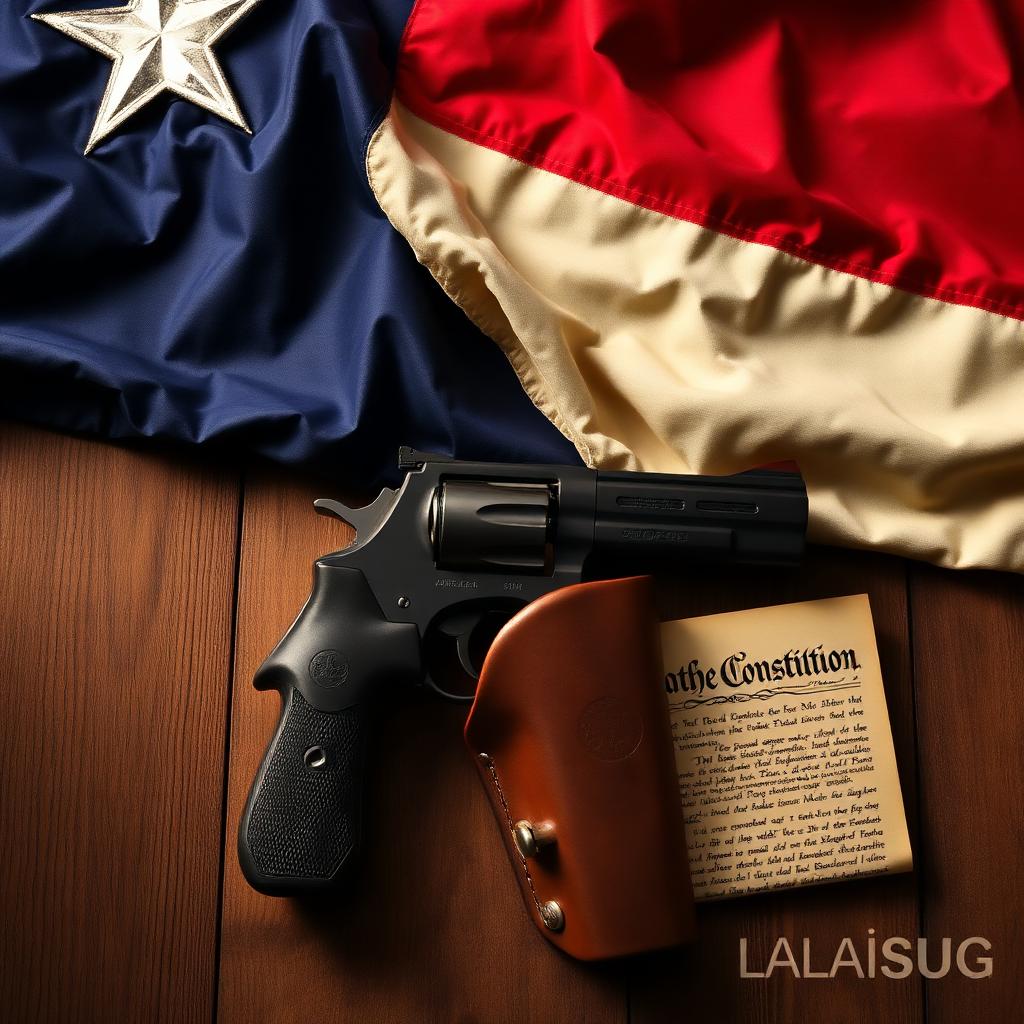
Texas has among the most permissive firearm statutes in the country, but 'Texas gun laws' is a shorthand that hides a real amount of nuance — federal purchase rules apply the same way here as anywhere else, certain places are still off-limits regardless of what you're carrying, and the private-property owner's right to post a firearm notice remains fully enforceable. This guide walks every Texas resident through the framework: who can own, who can carry, where you can't, and what changed after House Bill 1927 made Texas a constitutional-carry state in 2021.
The audience for this guide is broad on purpose. First-time buyers moving into a Houston or DFW suburb, longtime hunters in East Texas trying to make sense of the new License to Carry rules, and out-of-state residents wondering whether their permit is honored here will all find the answers below. For a companion piece focused specifically on the enabling statute, read Constitutional Carry in Texas.
The Legal Framework: State Statute on Top of Federal Law
Texas firearm law lives primarily in Chapter 46 of the Penal Code and Subchapter H of Chapter 411 of the Government Code, layered on top of the federal Gun Control Act of 1968 and the National Firearms Act. That layering matters: even when Texas law permits a specific behavior, federal prohibitions on possession by felons, unlawful drug users, adjudicated mental defectives, and those subject to certain protective orders continue to apply. Nothing at the state level overrides those.
The Texas Constitution's Article I, Section 23 guarantees the right to keep and bear arms 'in the lawful defense of himself or the State,' with the Legislature retaining power to 'regulate the wearing of arms, with a view to prevent crime.' Courts have historically read that clause as protecting individual ownership while allowing reasonable place-and-manner restrictions.
Who Can Legally Own a Firearm in Texas
Under federal law, a licensed dealer (FFL) must run every buyer through the NICS background check. Texas has no state waiting period, no permit-to-purchase, no registry, and no assault-weapons list. Once NICS returns a proceed, the sale completes the same day.
Federal prohibited persons categories still apply: felony conviction, misdemeanor domestic violence conviction, active protective order for family violence, dishonorable discharge, illegal drug use (including state-legal marijuana under federal classification), and adjudicated mental illness with commitment. Texas adds a few of its own: someone under a Chapter 411 or Chapter 46 disability, or a minor in most cases.
Private, in-state, person-to-person sales between two Texas residents are legal without a background check, provided the seller does not have reasonable cause to believe the buyer is prohibited. Serious sellers still route private sales through an FFL for a modest fee — it's the cleanest paper trail if the firearm is ever traced.
Age Requirements — Federal Floor, Texas Ceiling
Federal age rules depend on who is transferring the firearm. ATF states that a federal firearms licensee generally may not transfer a handgun to a person under 21 or a long gun to a person under 18. An unlicensed same-state transfer is different: federal law generally allows an otherwise eligible person age 18 to 20 to acquire a handgun from an unlicensed resident of the same state. State law, prohibited-person rules, and other transfer restrictions still apply.
Texas statutes still contain age-21 language for general handgun carry and LTC eligibility, but current enforcement is affected by federal court rulings. Texas DPS says it no longer denies an otherwise eligible License to Carry application solely because the applicant is 18 to 20. The Texas State Law Library likewise explains that Texas may not prosecute an 18-to-20-year-old for permitless carry based solely on age. Purchase rules are separate from carry rules, so eligibility to carry does not by itself make an under-21 buyer eligible to purchase a handgun from an FFL.
Constitutional Carry: What HB 1927 Actually Did
In September 2021, HB 1927 removed the License to Carry requirement for Texans 21 and older who are not otherwise prohibited from possessing a firearm. Since then, an eligible Texan may carry a handgun openly in a holster or concealed on the person in most public places without any state-issued permit.
'Constitutional carry' did not repeal the LTC — it made it optional. Many Texans still get the license because it unlocks reciprocity with 37 other states, waives the NICS check on future purchases in Texas, and provides an affirmative defense in specific location-based prosecutions. For anyone who travels or crosses state lines regularly, the LTC remains genuinely useful.
HB 1927 did not change where you can and cannot carry, did not authorize carry by prohibited persons, and did not affect federal restrictions in federal buildings, federal courthouses, or on federal property. It also did not modify Section 30.06 and 30.07 signage — the notices private property owners post to prohibit carry — both of which remain fully enforceable.
The License to Carry — Still Worth Getting
The Texas Department of Public Safety issues the LTC. Applicants must be 21 (18 for qualifying military), a legal U.S. resident, not in default on state taxes or child support, not a felon, not chemically dependent, and mentally sound. The process requires a written application, fingerprints, a four-to-six-hour classroom course, and a written and range proficiency test through a state-certified instructor.
The license, once issued, is valid for five years initially and every subsequent renewal. It costs less than most people expect and can be done online for renewals. The reciprocity map — the states that honor a Texas LTC — is maintained by DPS and worth checking before an out-of-state trip.
Where You Cannot Carry, Permit or No Permit
Section 46.03 of the Penal Code lists the places where carry is generally prohibited regardless of LTC or constitutional carry status: school premises, school buses, polling places on election day and during early voting, courts and offices of courts, racetracks, secured areas of airports past the TSA checkpoint, and within 1,000 feet of an execution facility on execution days. Federal law adds federal buildings, post offices, military installations, and secure federal courthouses.
Section 46.035 layers additional restrictions on LTC holders and, by extension, constitutional carriers: bars deriving 51% or more of receipts from on-premises alcohol sales (marked with a red 51% sign), high school and collegiate sporting events, correctional facilities, hospitals with proper notice, nursing homes with proper notice, amusement parks with proper notice, meetings of governmental bodies where proper notice is posted, and civil-commitment facilities.
Private property owners in Texas may prohibit carry by giving effective notice — the classic Section 30.06 sign prohibits concealed carry by LTC holders, and Section 30.07 prohibits open carry by LTC holders. After constitutional carry, the effective standard is essentially that private property owners may exclude firearms by posting statutory notice or by giving verbal notice; ignoring either after receiving notice is a criminal trespass.
Castle Doctrine and the Use of Force in Texas
Texas has a robust castle doctrine codified in Sections 9.31, 9.32, and 9.42 of the Penal Code. A person is presumed to have acted reasonably in using deadly force against an intruder who unlawfully and with force enters or attempts to enter an occupied habitation, vehicle, or place of business or employment, provided the defender was not engaged in criminal activity at the time.
Texas also has a stand-your-ground provision — there is no duty to retreat before using force or deadly force in self-defense, provided the person had a right to be at the location and was not engaged in criminal activity. Section 9.42 permits the use of deadly force to protect property under specific, narrow circumstances (at night, to prevent arson, burglary, robbery, aggravated robbery, or theft during the nighttime), and this is one of the more legally aggressive property-defense standards in the country.
None of this means a shooting is legally uncomplicated. Any use of deadly force triggers a police investigation, a grand jury review, and often a civil suit even after criminal acquittal. Insurance products marketed as 'self-defense coverage' exist for exactly this reason; consulting an attorney immediately after any defensive incident is standard advice.
Carrying in Your Vehicle
Texas has long allowed a non-LTC holder to carry a handgun in their own motor vehicle or watercraft, so long as the person is not otherwise prohibited, not a member of a criminal street gang, and not engaged in criminal activity other than a Class C traffic offense. The handgun must not be in plain view unless the driver has an LTC or is otherwise legally carrying under constitutional carry (which for a person 21+ effectively resolves the plain-view question).
Officers may still ask about firearms during a traffic stop. Texas does not require automatic disclosure, but most instructors recommend calm, factual disclosure at the start of any stop — hands on the wheel, license and insurance ready, and a straightforward statement that a firearm is present and where.
Long Guns, Suppressors, NFA Items, and the Made-in-Texas Statute
Rifles and shotguns are unrestricted at the state level in Texas beyond federal rules. There is no state assault-weapons ban, no state magazine capacity limit, and no state red-flag law.
Suppressors, short-barreled rifles, and other NFA items require the standard federal ATF Form 4 process, a $200 tax stamp, and typically several months of wait time. Texas passed a Firearms Freedom Act arguing that firearms manufactured, sold, and kept exclusively within Texas fall outside federal Commerce Clause jurisdiction. In practice, federal law still governs — the ATF has not conceded the state's theory — and residents are advised to comply with federal NFA rules regardless.
Special Rules by Setting: Home, Work, School, Church, Business
At home, Texas has essentially no restrictions on lawful ownership. Storage requirements only kick in when a child under 17 gains access and causes death or serious injury — a Class C misdemeanor unless reckless, in which case it becomes a Class A. Safe storage is best practice regardless.
At work, private employers may prohibit firearms on the premises but generally cannot prohibit them from being kept locked in an employee's personal vehicle in the parking lot, per Section 52.061 of the Labor Code. Certain regulated employers (school districts, federal contractors, chemical facilities) have carve-outs.
Churches: after 2019 reforms, licensed carriers may lawfully carry in houses of worship in Texas unless the congregation posts effective notice barring firearms. Many congregations have adopted written security plans that welcome trained congregants to carry.
Schools: still prohibited without written authorization from the school district. The 'Guardian' and 'School Marshal' programs allow specifically trained employees to carry on campus with school-board approval.
How Texas Law Interacts with Federal Firearms Law
State permissiveness does not preempt federal restrictions. A Texan cannot use constitutional carry to enter a federal courthouse. A resident cannot buy from an FFL if a federal prohibitor applies. Federal machine-gun rules, silencer rules, and interstate transfer rules still control.
This friction is most visible in the marijuana context. Texas has no adult-use marijuana program, but any user of a federally controlled substance is federally prohibited from possessing a firearm — a question that shows up honestly on ATF Form 4473 during every FFL purchase. The prohibition is well established in federal case law, though currently under litigation in multiple circuits.
Common Situations Texans Ask About
New residents relocating from a permit-required state often ask whether their out-of-state license works here. Texas honors permits from any state that honors ours — DPS publishes the reciprocity list — and constitutional carry means most permitless carriers 21 and over are effectively covered anyway.
Hunters ask about carrying a personal handgun into the field. Legal for anyone 21+ under constitutional carry, and legal for LTC holders regardless of age qualifications, subject to hunting regulations set by Texas Parks and Wildlife.
Business owners ask whether they can post their own establishment. Yes — Sections 30.06 and 30.07 signage, or verbal notice, are enforceable. A number of chain retailers with corporate policies against carry post statewide.
Renters ask whether landlords can prohibit firearms in leased dwellings. Texas has narrow tenant protections here; most reasonable, non-discriminatory firearm rules in a lease are enforceable, but blanket prohibitions in a residence face more scrutiny than similar prohibitions in commercial space.
Frequently Asked Questions
- Do I need any license to carry a handgun in Texas?
- If you are 21 or older, a legal U.S. resident, and not otherwise prohibited under state or federal law, you may lawfully carry a handgun in most public places without a permit under HB 1927. Location restrictions in Sections 46.03 and 46.035 still apply.
- Is the Texas License to Carry still worth getting after constitutional carry?
- Yes for most active carriers — the LTC provides reciprocity with 37 other states, exempts you from NICS on future purchases, gives you an affirmative defense to certain location prosecutions, and often reduces friction with law enforcement.
- Can I carry openly in Texas?
- Open carry of a holstered handgun by someone 21 or older is generally legal in most public places. Long-gun open carry has always been legal but can trigger disorderly conduct scrutiny if used to intimidate.
- Where can I never carry a firearm in Texas regardless of my license?
- Schools, courts, polling places during voting, secured airport areas, federal buildings, correctional facilities, and any private property that has posted effective notice under Sections 30.06 or 30.07.
- Do I have to tell an officer I have a firearm during a traffic stop?
- Texas law does not require automatic disclosure, but calm, prompt disclosure with your hands visible is the standard recommended practice and usually shortens the encounter.
- Can a Texas landlord prohibit firearms in a rented home?
- Landlords can include reasonable, non-discriminatory firearm provisions in a residential lease, though blanket bans in a private residence face more scrutiny than in commercial contexts.
Sources
Take the next step
Explore More Texas Law Guides →Related Articles
Constitutional Carry in Texas: What the Law Actually Says

Texas New Laws 2026: Major Legislative Changes Explained

Texas Election Laws Explained: Voting Rules, Registration, and Requirements
How a Bill Becomes Texas Law: A Citizen's Field Guide to the 88th Legislature
Get Texas updates delivered weekly.
Independent Texas reporting on politics, policy, and daily life. One email a week. Unsubscribe anytime.